Secondary Water Barrier In Florida Roofs What It Is And Costs

If you're comparing reroof bids in Florida, one line item tends to trigger the most confusion: secondary water barrier . One contractor includes it, another "upgrades" it, and a third buries it under "underlayment."
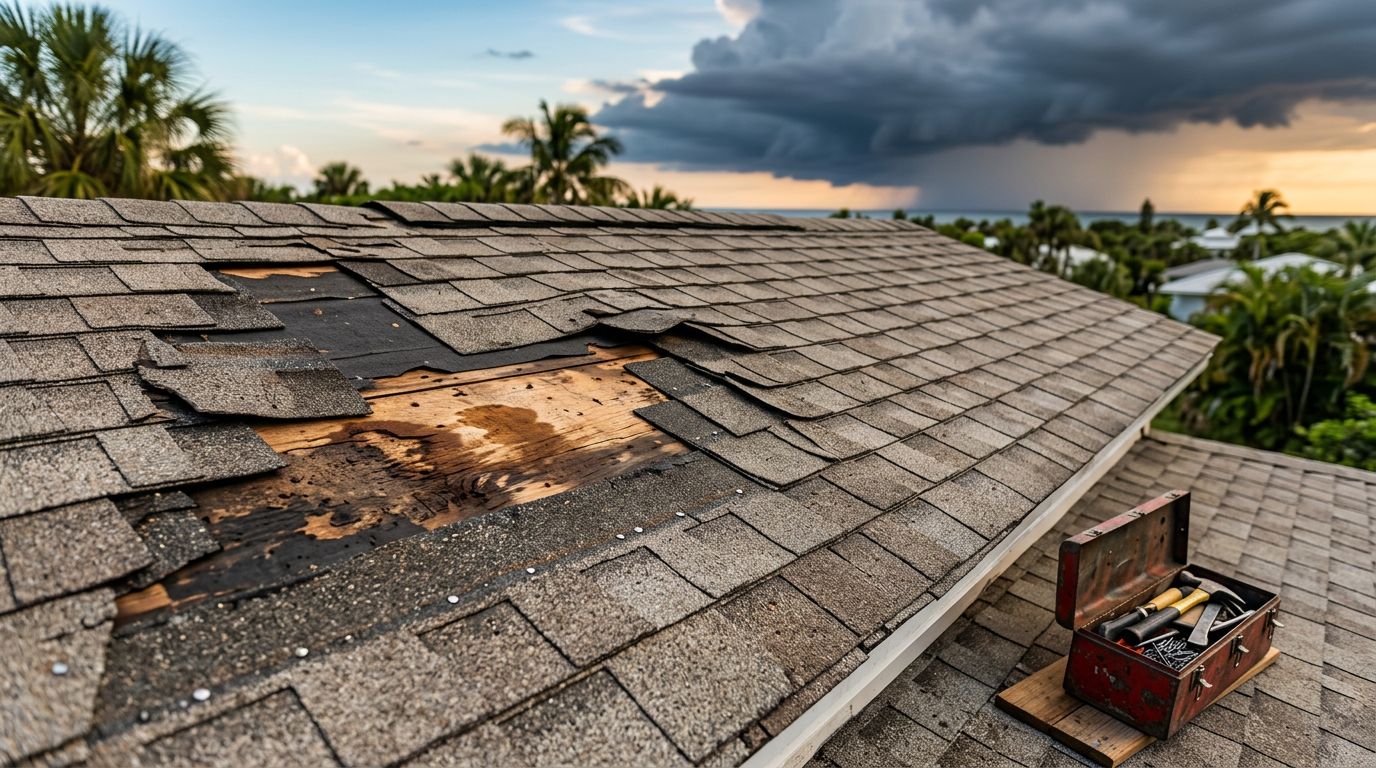
Here's the bottom line for 2026. A secondary water barrier is meant to keep water out after wind-driven rain finds a way under your shingles, tile, or metal. In a hurricane state, that extra layer can be the difference between a wet ceiling and a dry home.
If you're still deciding whether you need a full reroof or can get away with a repair, this roof repair vs replacement Cape Coral guide can help you sort the scope before you price details.
Secondary water barrier Florida homeowners hear about, explained in plain English
Think of your roof like a rain jacket over a hoodie. The jacket is your shingles, tile, or metal. The hoodie is what helps when the jacket fails.
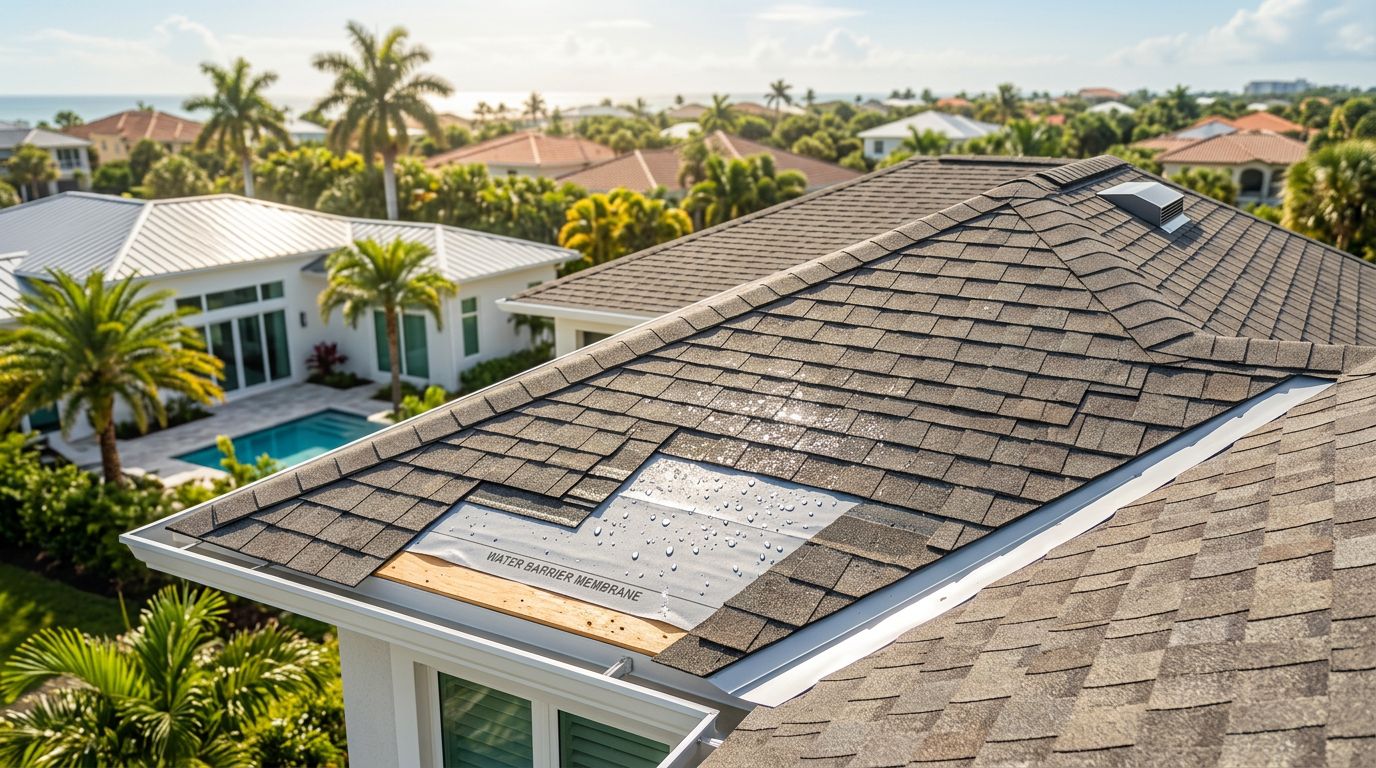
A secondary water barrier (SWB) is that "hoodie." It's a water-resistant layer installed directly on top of the wood decking, under the roof covering. When storms lift shingles or drive rain under flashing, the SWB helps block water from reaching your attic and ceilings.
To keep the terms simple, here are the parts people mix up:
- Roof deck : The wood surface (usually plywood or OSB) that everything attaches to. If the deck is soft or rotted, no membrane can save it.
- Underlayment : A layer installed under the roof covering. In many reroofs, the underlayment and the secondary water barrier are related, but they aren't always the same product or method.
- Self-adhered membrane : A peel-and-stick sheet that bonds to the deck. Roofers also call it "peel-and-stick" or "self-adhering." It seals around nails better than many mechanically fastened sheets.
In Florida, SWB usually shows up in one of three ways. First, a roofer can seal the deck seams with peel-and-stick strips, then install approved underlayment over the full deck. Second, the roofer can apply a full peel-and-stick membrane across the whole deck. Third, some systems use two layers of underlayment applied in a way that sheds water even if the top layer gets compromised.
If your bid only says "felt included," ask what method creates the secondary water barrier. The answer should be clear and written.
Florida SWB requirements in 2026, and what inspectors tend to focus on
Florida doesn't treat reroofing like cosmetic work. The Florida Building Code (Residential) has long required a roof secondary water barrier for many reroofs on site-built single-family homes when the roof covering is removed and replaced. Miami-Dade and Broward (HVHZ) have added requirements, but Southwest Florida homes still fall under statewide rules and enforcement.
In practical terms, that means your roofer should plan for SWB during the "dry-in" stage, which is the period when the deck is covered but the final roof covering is not finished yet. Inspectors and permit offices often want proof that the correct products and methods were used before everything gets hidden.
A few details matter a lot in real life:
Deck condition drives the whole job. If the deck has rot, swelling, or delamination, the crew has to replace wood before installing any membrane. That cost is separate from SWB, but it can show up at the same time, so it's easy to confuse the two.
Attachment and overlaps aren't optional. Even a great membrane can fail if the roofer doesn't follow the manufacturer's pattern, overlap sizes, rolling, and priming rules.
Paperwork can affect your timeline. Florida relies heavily on product approvals and installation instructions. If your contractor can't produce them, you can run into inspection delays.
For a local, homeowner-friendly summary of what tends to change during code cycle years, see these 2026 Florida roofing code updates and how they play out on Cape Coral reroofs.
One more note: not every roof assembly is identical. Low-slope sections, porch tie-ins, and material changes (like moving from tile to shingle) can change how SWB is detailed. Your bid should call out those transitions, not gloss over them.
Secondary water barrier cost in Florida (2026 ranges) and how to compare reroof bids
SWB pricing varies because labor varies. A simple gable roof is faster than a cut-up roof with hips, valleys, and dormers. Heat also matters, because self-adhered products can be harder to handle on hot decks.
Still, most 2026 reroof bids in Florida land in predictable ranges for the SWB portion alone (not shingles, tile, or metal).
Below is a quick cost snapshot that separates SWB from the rest of the reroof.
| SWB method (labor + materials) | Typical SWB cost ($/sq ft) | 1,500 sq ft roof | 2,000 sq ft roof | 3,000 sq ft roof |
|---|---|---|---|---|
| Seal deck seams + synthetic underlayment over deck | $0.75 to $1.25 | $1,125 to $1,875 | $1,500 to $2,500 | $2,250 to $3,750 |
| Full peel-and-stick self-adhered membrane over deck | $1.50 to $2.50 | $2,250 to $3,750 | $3,000 to $5,000 | $4,500 to $7,500 |
| Premium systems (double-layer, thicker mod-bit style approaches) | $2.00 to $3.50 | $3,000 to $5,250 | $4,000 to $7,000 | $6,000 to $10,500 |
The takeaway: SWB is usually a few thousand dollars, not "pennies," but it's also not the whole reroof. When you see a big spread between bids, the difference often sits in what's included around SWB.
Keep SWB separate from other reroof line items
When you compare proposals, push for an itemized scope that separates SWB from common add-ons. Otherwise, you can't tell if you're paying for better protection or just messy paperwork.
Here are line items that should not be lumped into "secondary water barrier":
- Tear-off and disposal
- Permits and inspections
- Deck repairs or re-sheathing (new plywood/OSB)
- Drip edge and edge metal
- Flashing (chimney, wall, step, counter)
- Valley metal or valley membrane details
- Ventilation changes (ridge vent, box vents, soffit work)
If one contractor lists "SWB included" and another lists "underlayment included," you don't have a true comparison yet. Ask each one to name the product type and installation method.
Questions to ask roofers before you sign
A good roofer won't get irritated by these. They'll answer them fast.
- Which SWB method are you using : Seam strips plus underlayment, or full peel-and-stick coverage?
- What product is it : Brand and system name, plus written installation instructions.
- How do you prep the deck : Cleaning, drying, re-nailing, and whether primer is required.
- How do you handle penetrations and valleys : Pipe boots, skylights, and valley transitions should be spelled out.
- Is SWB priced as its own line item : If it's bundled, ask for the dollar amount anyway.
- What happens if you find bad decking : Price per sheet, and who decides what gets replaced.
For contract language that protects you on scope and change orders, use this checklist of Florida roofing contract essentials.
Red flags that can turn SWB into wasted money
Some problems don't show until the first hard rain. Watch for these warning signs in bids and conversations:
- The proposal says "secondary water barrier" but doesn't describe the method .
- The roofer claims peel-and-stick is installed, yet they won't name the product .
- They plan to install over wet or damaged decking without replacing it.
- You hear "We've always done it this way," with no manufacturer instructions .
- The bid ignores tricky areas (valleys, low-slope tie-ins, wall flashings) and calls it "standard."
Conclusion
A secondary water barrier Florida reroofs include in 2026 isn't a luxury item, it's part of how a roof survives wind-driven rain. Once you know the method and the price, it becomes easier to compare bids without guessing. Ask for itemized scope, confirm the product and installation steps, and make sure decking repairs stay separate from SWB pricing. When the next storm tests your roof, you'll be glad the protection was built into the system, not left to chance.