Notice Of Commencement For Florida Roof Replacements Explained

Notice Of Commencement For Florida Roof Replacements Explained

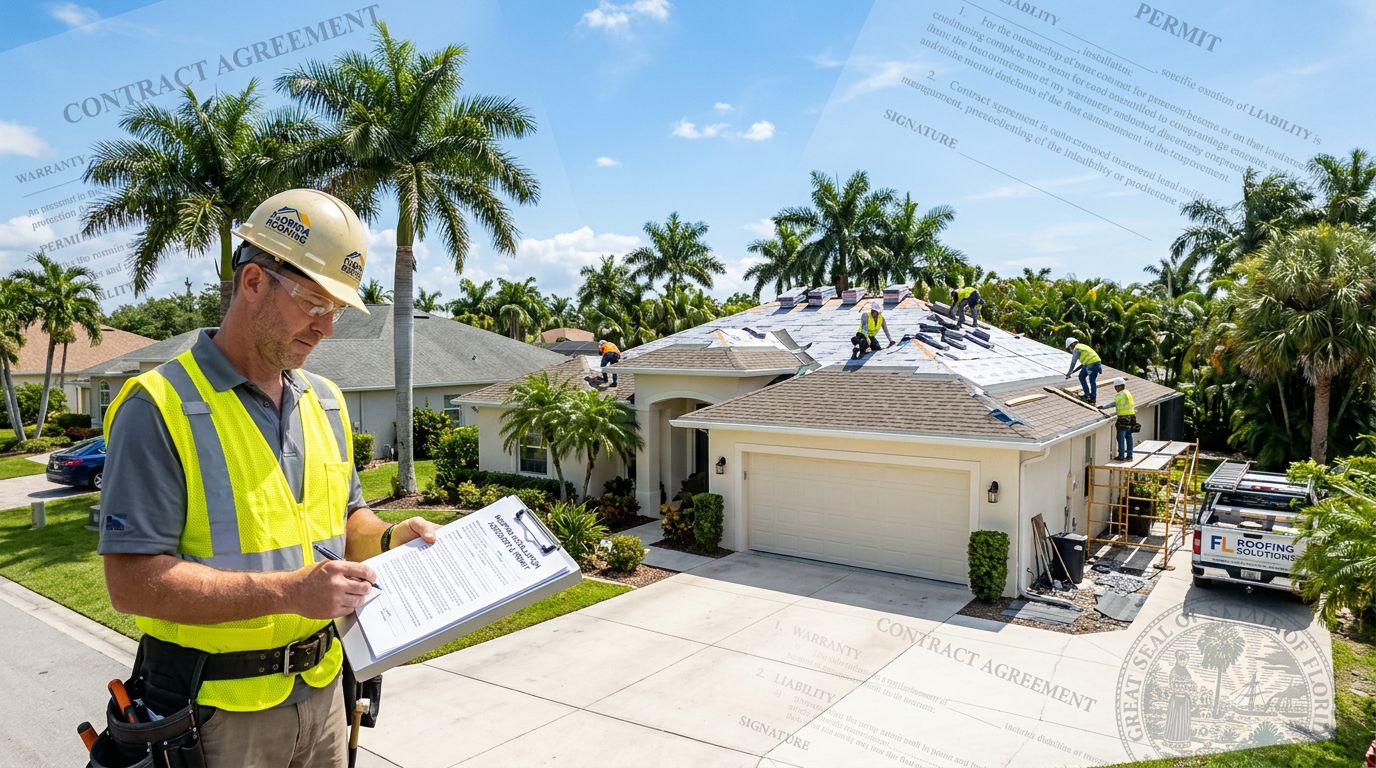
Replacing a roof in Florida comes with more paperwork than most homeowners expect. One form, the Florida notice of commencement , can affect your permit, your timeline, and even whether you face surprise lien claims later.

If your roof replacement is $2,500 or more (most are), Florida's lien law usually expects a Notice of Commencement (NOC) to be recorded before work starts. This post breaks down what it is, when you need it, how to file it, and what information to gather ahead of time.

What a Notice of Commencement does (and why roof jobs trigger it)

A Notice of Commencement is a recorded public notice that an improvement to real property is starting. In plain terms, it tells the world, "Work is happening here, and these are the key parties involved."

Florida's Construction Lien Law ties this document to lien rights and deadlines. The main statute homeowners hear about is Fla. Stat. §713.13 (within Chapter 713). For many private-property projects, including re-roofs, the NOC is required when the job value hits the statutory threshold (commonly $2,500 or more ) and the work requires a permit.

Roof replacements land in this zone because they are permitted work and often involve multiple parties: the roofer, material suppliers, and sometimes subcontractors. The NOC helps set the rules of the road for notices and payments.

Here's the homeowner-friendly reason it matters: Florida lien law can allow certain unpaid parties to place a lien on your property, even if you already paid your contractor. The NOC does not eliminate that risk by itself, but it helps establish the framework that lienors must follow, including notice deadlines.

If your permit office asks for an NOC, don't treat it like "optional paperwork." Record it before work begins, then keep proof in your project file.

When a Notice of Commencement is required for a Florida roof replacement

In most Southwest Florida cities and counties, the permit process and the NOC process run side by side. The building department focuses on code compliance. The clerk's office focuses on the official record.

A few common scenarios help clarify when the NOC comes up:

Situation NOC likely required? Why it matters
Full roof replacement with permit, contract is $2,500+ Yes Fla. Stat. §713.13 ties NOC to permitted improvements over the threshold.
Small repair under $2,500 Often no Many minor repairs do not meet the threshold, but permit rules can still apply.
Roof replacement financed by a construction lender Usually yes, filed by lender Florida law treats some lender-funded jobs differently for filing responsibility.
Insurance-funded roof replacement Usually yes Funding source does not remove lien-law paperwork requirements.

Local practices vary. Some permit offices won't issue, or won't finalize, a roof permit packet without a recorded NOC for qualifying jobs. Also, if you are deciding between a repair and a replacement, it helps to confirm scope early because paperwork changes with scope. This roof repair vs replacement guide can help you sort that out before you're deep into permits.

Step-by-step: How to file and record a Notice of Commencement in your county

Think of recording an NOC like putting a "starter flag" in the county's Official Records. You're not asking permission. You're creating a formal record.

Most counties follow a similar flow, even if the forms and fees look a little different.

1) Gather the information the form asks for

Before you fill anything out, pull together these items (you'll use almost all of them):

  • Owner name and mailing address (as titled)
  • Property address
  • Legal description of the property (from your deed, closing documents, or county property records)
  • Contractor name, address, and Florida license number
  • Surety information, if a payment bond is in play (many roof replacements do not use one, but ask if you're unsure)
  • Lender name and address (if any)
  • Start date and a reasonable estimated completion date
  • Contract amount (or bonded amount, if applicable)

2) Fill out the NOC carefully (small errors cause big delays)

The legal description is the biggest "gotcha." A street address alone often is not enough. If your legal description is wrong, the clerk may still record it, but it can create problems later when someone searches the record.

3) Sign in front of a notary

Counties require notarization for recording. Plan for this step, especially if multiple owners are on title and all must sign.

4) Record it with the county clerk (Official Records)

Record the notarized NOC in the county where the property sits. Many clerks accept in-person recording, mail, and sometimes eRecording. Fees vary by county and page count, so it's smart to confirm current charges with the clerk's recording department.

5) Get a certified copy and post it at the job site

Florida practice often requires posting a certified copy at the job site, in a visible place. On a roof replacement, that usually means inside a window near the permit card, or another spot your inspector can easily see.

6) Keep your NOC active until the job is truly done

Under Fla. Stat. §713.13 , an NOC generally lasts one year unless it states a different expiration date. If the project runs long, you may need an extension recorded before it expires. When the job is complete and you have final paperwork, Florida also provides a path for a Notice of Termination (see Fla. Stat. §713.132 ) in the right situations.

For the construction side of planning, this Cape Coral roof replacement process explains how permitting, inspections, and job milestones usually line up.

Homeowner checklist: what to have ready before your roofer starts

Most NOC stress comes from scrambling at the last minute. A little prep keeps the permit timeline clean and helps you stay in control of payments.

Quick NOC readiness checklist

  • Deed info : legal description, owner names exactly as titled
  • Contractor info : legal business name, address, license number
  • Project basics : start date, estimated end date, contract amount
  • Lender info : name and address (if you're financing)
  • Bond info : surety name and bond amount (only if applicable)
  • Recording plan : which clerk's office, method (in-person, mail, eRecord), and expected fees
  • Job site posting plan : where the certified copy will be displayed

A practical example of "ready-to-file" info

Imagine you're replacing a shingle roof in Lee County. You'd want your subdivision lot and block legal description from your deed, your roofer's CCC license number and address, your lender's mailing address (if any), and a start date that matches the actual mobilization date. That's enough to complete most county NOC forms without guesswork.

Common mistakes that cause delays or headaches

A few issues show up again and again on roof replacements:

  • Listing the wrong contractor name (using a DBA when the permit lists the legal entity)
  • Using the property address instead of the legal description
  • Recording it after materials arrive and work begins
  • Forgetting to post the certified copy for inspections
  • Letting the NOC expire mid-project

If you also want to understand how 2026 code enforcement can affect re-roofs and inspections, review these 2026 Florida Roofing Code updates for Cape Coral re-roofs. Code issues do not change lien law, but they can change your timeline, which affects your NOC dates.

Conclusion

A Florida notice of commencement is a simple form with serious consequences. Record it on time, post it properly, and keep a clean file with your contract, permit, and payment paperwork. If anything about your situation feels unusual (multiple owners, a lender, a bond, or a stalled project), call your county clerk, your permit office, or a Florida construction attorney for guidance before you sign final checks.

By Infinity Roofing March 5, 2026
A roof claim can feel simple. A storm hits, shingles lift, water shows up, you file. Yet Florida roof claim denials still happen every day in 2026, often for reasons that frustrate homeowners because they sound like technicalities. The good news is that many denials follow pat...
By Infinity Roofing March 4, 2026
A new roof is a big deal in Florida. It's also one of the easiest jobs to get burned on if you skip basic checks. Before any deposit, confirm the contractor holds an active Florida roofing license , carries real insurance, and plans to pull the right permits. Think of it like...
By Infinity Roofing March 3, 2026
A roof in Cape Coral isn't just "the top of the house." It's the part that takes the first punch from hurricane wind, flying debris, and wind-driven rain. That's why the Safe Florida Home grant (through the My Safe Florida Home program) gets so much attention when homeowners s...
By Infinity Roofing March 2, 2026
If you're comparing reroof bids in Florida, one line item tends to trigger the most confusion: secondary water barrier . One contractor includes it, another "upgrades" it, and a third buries it under "underlayment." Here's the bottom line for 2026. A secondary water barrier is...