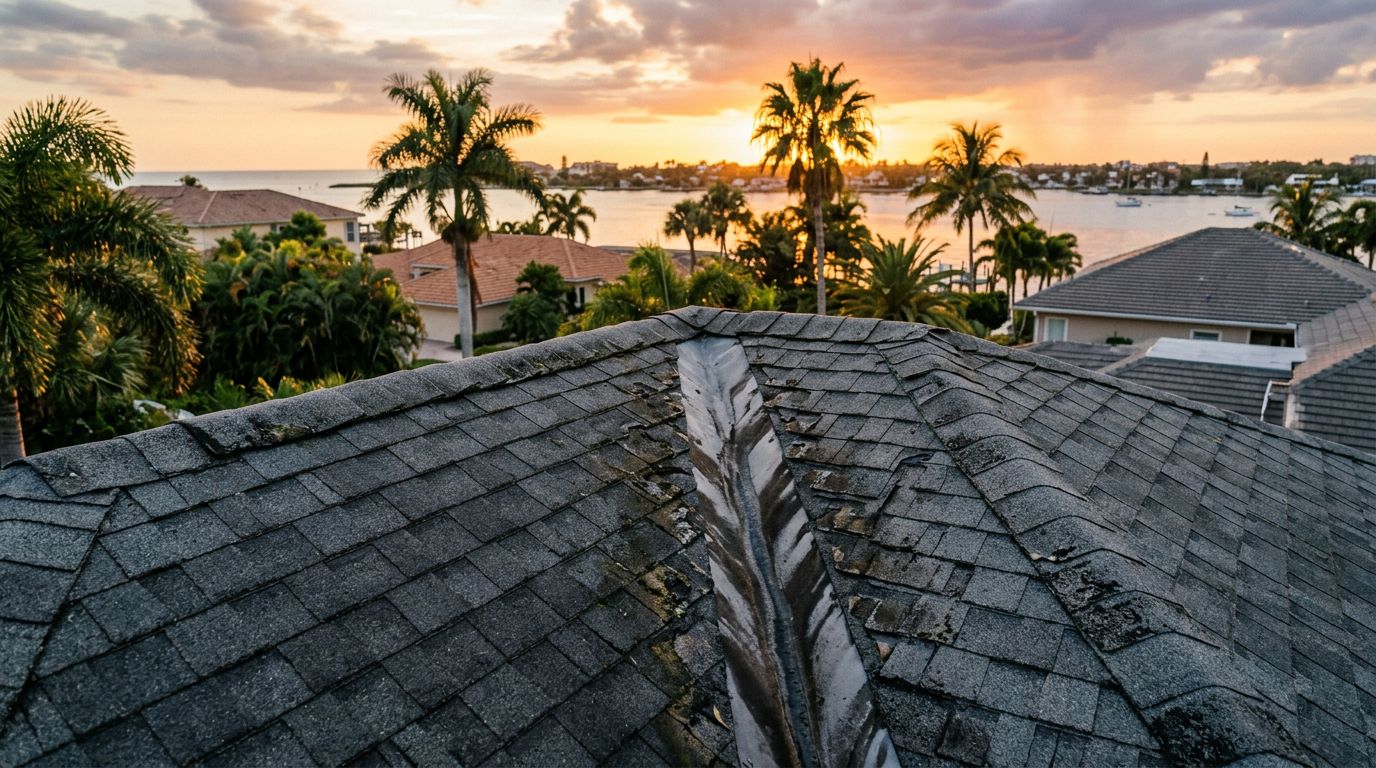
What Causes Shingle Granule Loss in Southwest Florida Homes

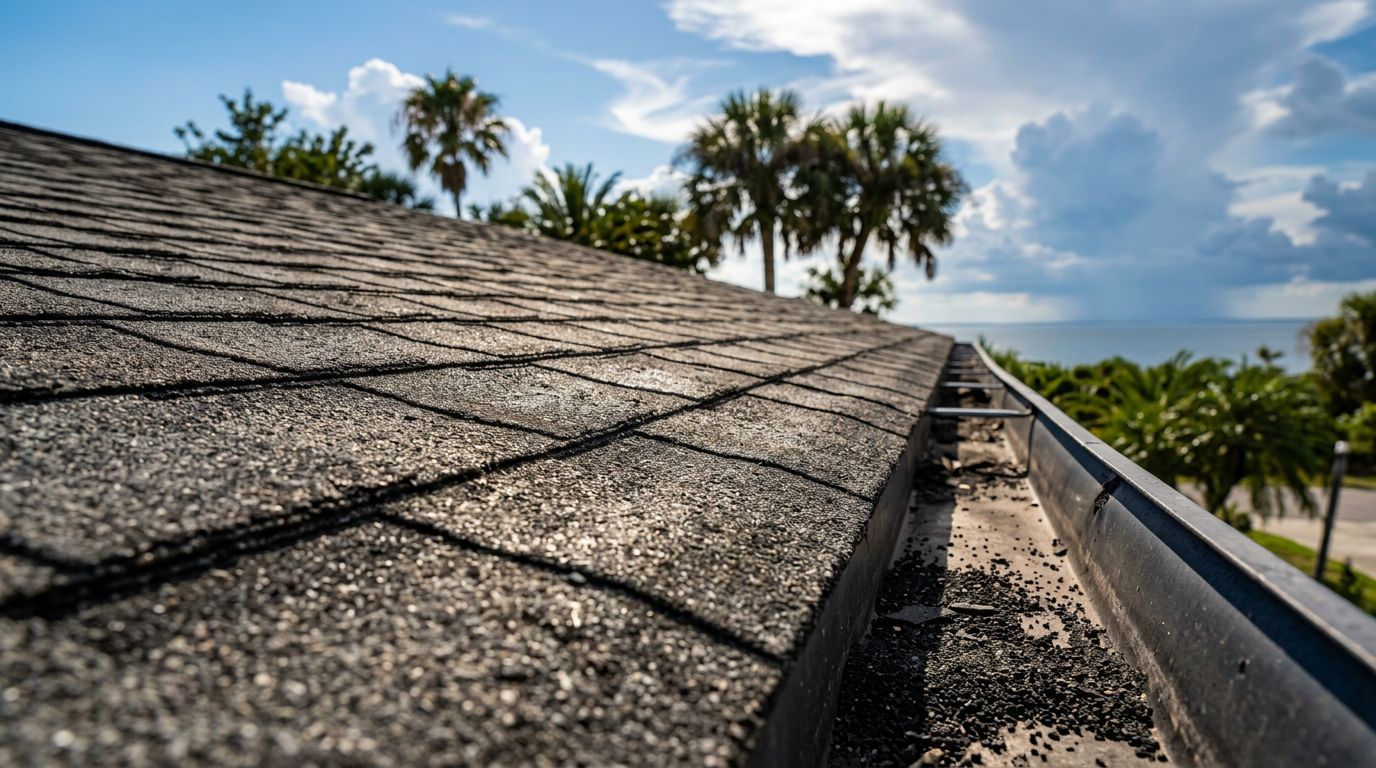
Ever cleaned your gutters and found gritty, black sand? That material is usually shingle granules, and in Southwest Florida, it gets homeowners' attention fast.
The short answer is simple. Some shingle granule loss is normal, especially as a roof ages. However, heavy or uneven loss can point to weather wear, storm damage, or shingles that are nearing the end of their life. In a place like Cape Coral, Fort Myers, Naples, and Lehigh Acres, heat, humidity, salt air, and wind all speed up that process.
Why shingle granules matter in the first place
Granules are the rough outer coating on asphalt shingles. Think of them as the roof's sunscreen and armor. They help block UV rays, slow heat damage, and protect the asphalt layer underneath.
A small amount of shedding doesn't always mean trouble. New shingles can drop a few loose granules after installation. Older roofs may also shed some over time, especially after heavy rain. That's normal wear.
Problems start when the loss becomes widespread, repeated, or easy to see from the ground. If shingles develop thin patches, dark spots, or exposed fiberglass, they lose protection much faster. Then the Florida sun can bake the shingle surface, dry it out, and make it brittle.
Granule loss also tends to snowball. Once a shingle loses its protective layer, it ages faster. Then more granules come off, and the cycle keeps going. That's why a roof can look mostly fine one season and much worse after a hot summer and one active storm period.
A little granule shedding is common. Bare spots, heavy gutter buildup, and exposed shingle mat are not.
If you're already seeing granules in gutters signaling shingle wear , it makes sense to look for other warning signs too, such as cracked tabs, lifted edges, or stains along roof valleys.
The most common local causes of shingle granule loss
Southwest Florida roofs take a beating, even when there hasn't been a named storm. The biggest cause is usually long-term sun exposure . Strong UV light breaks down asphalt, and high roof-surface temperatures dry shingles out faster than many homeowners expect. On darker roofs, that effect is even stronger.
Next comes thermal stress. A roof heats up hard during the day, then cools off after sunset and rain. That constant expansion and contraction weakens the bond that holds granules in place. Over time, shingles become less flexible and more likely to shed their surface coating.
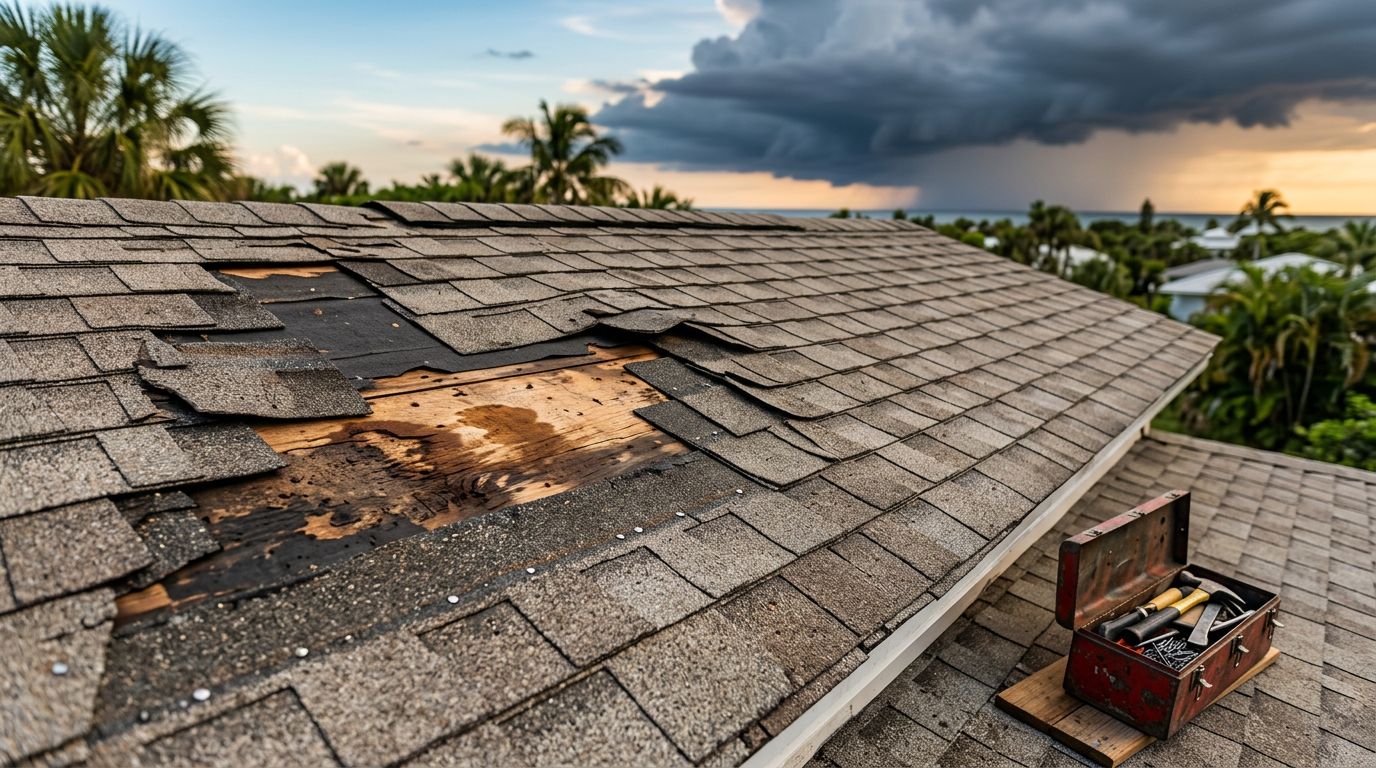
Storms add another layer of wear. Wind-driven rain can scour the roof surface, especially near ridges, eaves, and exposed slopes. Strong gusts can bend shingles just enough to loosen granules, even if the tabs don't fully tear off. Debris matters too. Palm fronds, oak branches, and seed pods can scrape shingles during summer storms.
Coastal homes often age faster because of salt air and open wind exposure . A house near the Gulf or along a canal may face stronger gusts and more airborne grit. Inland homes, including many in Lehigh Acres, don't get as much salt, but they still deal with punishing sun, attic heat, and fast afternoon downpours.
Other common causes are less obvious. Poor attic ventilation traps heat under the roof deck and speeds aging from below. Foot traffic can crush or scuff shingles, especially on warm days. Aggressive cleaning can do the same. In humid areas where algae streaks are common, pressure washing is one of the fastest ways to strip granules off a shingle roof.
When granule loss is cosmetic, and when it points to roof damage
Not every case needs a full replacement. Sometimes granule loss is mostly cosmetic. That's more likely when the roof is newer, the shedding is light, and the shingles still lie flat with no exposed mat, cracks, or leaks.
For example, a newer inland home in Estero or Lehigh Acres might show a small amount of granules in the gutter after a week of hard summer rain. If the roof looks even, the tabs are sealed, and there are no interior issues, that may just be routine wear.
On the other hand, widespread loss is different. A canal-front home in Cape Coral might have heavy shedding on the wind-facing slope, plus lifted shingle edges and repeated gutter buildup after each storm. That pattern suggests real weather wear, not a minor cosmetic issue.
Age matters too. Once an asphalt shingle roof gets older, granule loss often shows up with other symptoms. You may see curling corners, brittle tabs, recurring leaks, or dark bald patches where the sun has burned through the surface. At that stage, the better question may be widespread granule loss vs roof repair , because spot fixes may not solve the bigger problem.
Granule loss alone also doesn't always support an insurance claim. Carriers often treat aging and wear as maintenance issues. That matters because granule loss as wear-and-tear denial reason can weaken a claim when there's no clear storm-created damage.
When a professional roof inspection makes sense
A roof inspection is worth scheduling when the pattern changes, not just when you notice a few loose granules once. In Southwest Florida, timing matters because small problems can get worse fast during storm season.
Call for an inspection if you notice any of these signs:
- Heavy granules in gutters or downspouts : A one-time light washout is different from repeated buildup after every storm.
- Visible bald spots or dark patches : This often means the shingle surface is wearing through.
- Other shingle damage nearby : Lifted tabs, cracks, creases, or missing shingles raise the risk.
- Leaks or ceiling stains inside : Water intrusion means the issue may go beyond surface wear.
- A roof that's older or has unknown history : Age changes how serious granule loss is.
A good inspection should look at more than the shingles. The roofer should also check flashing, roof penetrations, attic ventilation, soft decking, and storm-related damage patterns. For homeowners, that beats guessing from the driveway.
Don't climb up to check it yourself. In Florida heat, shingles can be slick and easy to damage underfoot.
Conclusion
In Southwest Florida, shingle granule loss usually comes from a mix of sun, heat, storms, age, and roof exposure. Some loss is normal, but widespread shedding, bare spots, and repeat gutter buildup deserve a closer look. If your roof is showing several of those signs at once, a professional inspection can tell you whether you're seeing routine aging or damage that needs action before the next round of storms.