Starter Strip Shingles Explained for Cape Coral Re-Roofs

Starter Strip Shingles Explained for Cape Coral Re-Roofs

If you're planning an asphalt shingle re-roof in Cape Coral, the parts you'll never notice from the yard can make the biggest difference in a storm. Starter strip shingles are one of those "small but serious" details.

They sit along the roof's edges, right where wind loves to get under shingles first. When they're installed the right way, they help lock down the first course, seal the eaves and rakes, and reduce the chance of shingles peeling back like a loose zipper.

This guide breaks down what starter strips do, why Cape Coral wind makes them so important, and what you should ask (and look for) during tear-off and installation.

What starter strip shingles are, in plain English

Starter strip shingles are the first row installed along the roof edge before the main shingles (field shingles). They aren't there for looks. They're there for seal, grip, and layout .

A good way to picture it: field shingles are like overlapping scales. The starter strip is the sticky, straight "base layer" that gives the first scale something solid to bond to.

Here's what starter strips typically do on an asphalt shingle roof:

  • They place an adhesive seal line at the edge so the first course can bond down.
  • They help block wind-driven rain from sneaking under the first course.
  • They create the correct offset so joints don't line up where water can track in.
  • They provide better edge stiffness so the shingle line stays clean and supported.

Most roof failures from wind start at the perimeter. That's why starter strip shingles matter so much in coastal Florida.

For a bigger-picture look at asphalt shingle systems (and what goes into a full replacement), see Cape Coral roof replacement process step-by-step.

Why roof edges take a beating in Cape Coral wind

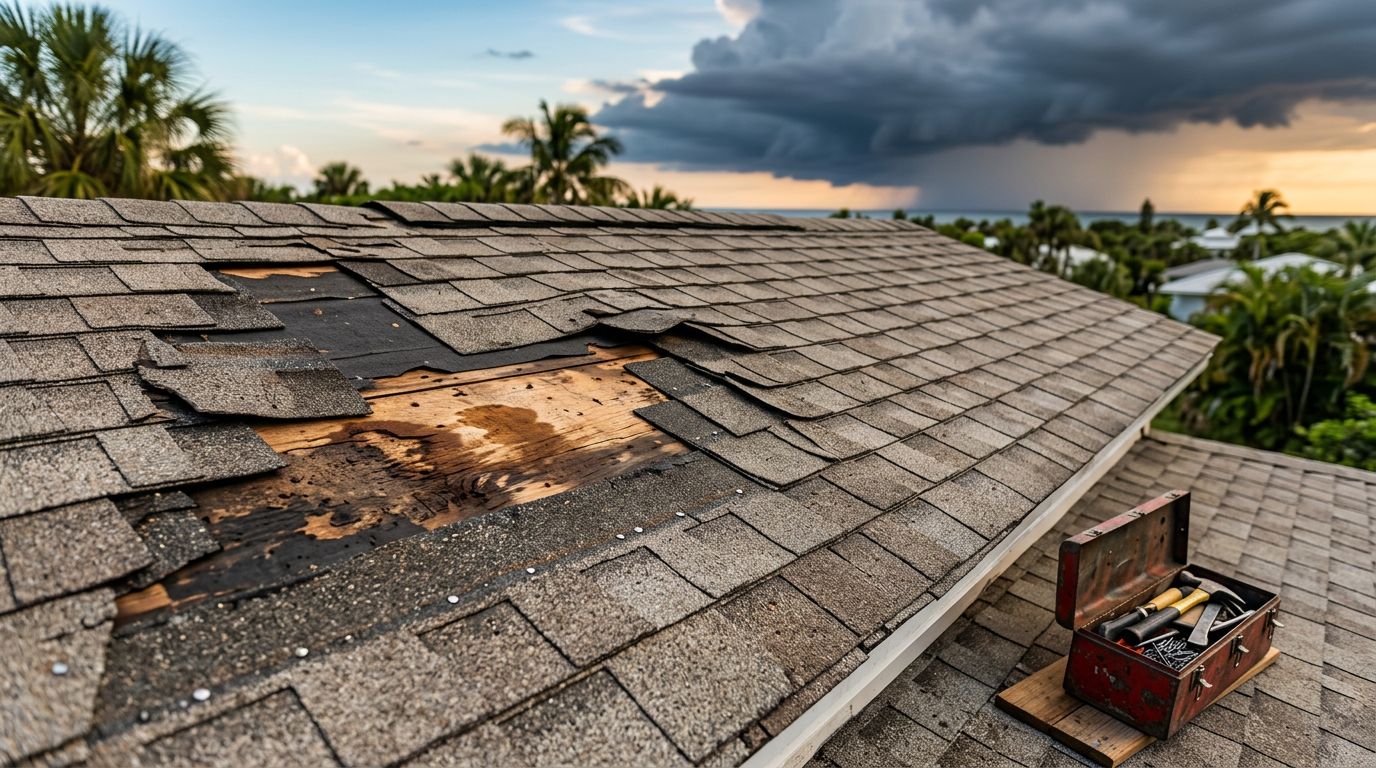
Cape Coral homes often sit near canals and open lots. Wind has room to run, then it hits your roof edge and tries to lift it. That upward pull is called wind uplift , and it targets the eaves and rakes first.

If the first course isn't sealed well, wind can get under the shingle tabs and start a chain reaction. One tab lifts, then the next, then the next. After that, nails can loosen, shingles can crease, and blow-offs become much more likely.

Starter strip shingles help resist that by doing two things at once:

  1. They seal the edge. The adhesive strip bonds the first course down where it matters most.
  2. They support the overhang. The edge feels less "floppy," so gusts have a harder time starting a lift.

In other words, starter strips don't "stop hurricanes," but they reduce easy failure points. And that's the whole game in storm country.

If you only inspect one detail up close during a re-roof, make it the roof perimeter. That's where wind and water usually start trouble.

What correct starter strip installation should look like (what to spot from the ground)

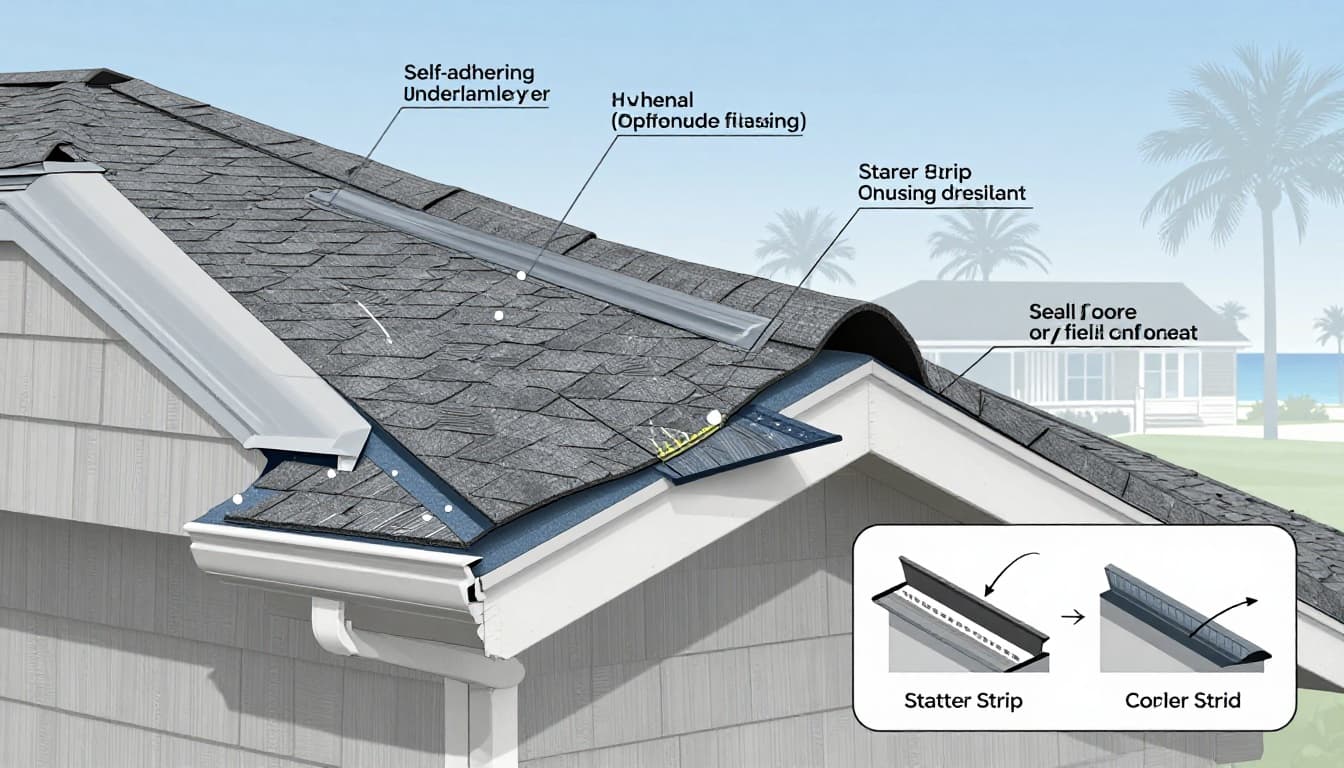
Diagram of a shingle roof edge showing how the starter strip supports sealing and wind resistance, created with AI.

You don't need to climb a ladder to catch most starter-strip problems. You can often spot warning signs during install from the driveway, or by asking for clear progress photos.

Key edge details to confirm during installation

First, safety. Don't walk on the roof, and don't use a tall ladder unless you're trained and equipped. Ask your licensed, insured roofer for photos instead, especially of the eaves and rakes.

Now, here's what "good" usually looks like on a Cape Coral re-roof:

  • Starter strips go on at eaves (and usually rakes). Many high-wind installs wrap protection up the rake edge too, not just the bottom edge.
  • Adhesive faces the right direction. The seal line should bond with the first course, not point the wrong way.
  • Drip edge and underlayment transitions look clean. No gaps, buckles, or loose metal edges.
  • Nails land in the correct zone. Too high or too low can weaken uplift resistance.
  • No fishmouths or wrinkles at the edge. Any bump at the perimeter can become a wind catch point.

This quick table shows the common "pass or fail" items homeowners should watch for.

Edge detail What you want to see What can go wrong
Starter strip orientation Seal strip positioned to bond the first course Adhesive faces the wrong way, weak seal
Eave overhang Straight line, consistent overhang Wavy edge, uneven support
Drip edge fit Tight to deck, clean laps Gaps, lifted metal, water tracking
Nailing pattern Consistent placement per shingle spec Over-driven, under-driven, misplaced nails

What to look for during tear-off (before new materials hide everything)

Tear-off is noisy, but it's also the best time to catch problems you can't see later. Ask your roofer to show you photos of:

  • Roof decking condition at the perimeter (soft wood near edges is common).
  • Old edge metal issues (rust, missing sections, poor laps).
  • Evidence of past blow-offs (creased shingles, exposed nail lines, patchwork starter areas).

If the deck edge is weak, even perfect starter strip shingles won't hold as well. Attachment always starts with solid wood.

Cape Coral re-roof checklist (starter strip and edge-sealing focus)

Use this short checklist to keep your re-roof on track without micromanaging.

  • Confirm perimeter plan: Ask if starter strips will be installed at both eaves and rakes.
  • Ask for edge photos: Request clear photos of drip edge, underlayment laps, and starter strips before field shingles cover them.
  • Check straight lines: From the street, the bottom shingle line should look clean and consistent.
  • Verify sealing approach: Ask how they handle edge sealing and bonding in high-wind areas.
  • Save documentation: Keep permits, product approvals, and install photos in one folder for insurance and resale.

If you want context on how local requirements can affect details like fastening and inspections, read 2026 Florida Roofing Code updates for Cape Coral re-roofs. (Always confirm your specific scope with your contractor and the local building department.)

Questions to ask your roofing contractor before shingles go on

A good contractor won't dodge these. Clear answers now can prevent edge failures later.

  • "Are you using starter strip shingles or cut starters?" Either can work when done correctly, but you want a clear method and consistent results.
  • "Will you run starters up the rakes too?" In high-wind areas, rake edges deserve as much attention as eaves.
  • "How do you prevent edge lift at the first course?" Listen for answers that mention sealing, correct orientation, and proper nailing.
  • "What do you do if you find soft decking at the edge?" The best answer includes replacing compromised wood, not roofing over it.
  • "Can you share progress photos of the edge details?" If you're not going on the roof, photos are your best inspection tool.

For help choosing a shingle system that fits our heat, humidity, and storm cycles, start with best shingle types for Cape Coral's climate. If budgeting is your big question, review shingle roof replacement costs Cape Coral FL.

A quick safety note (because roofs aren't DIY-friendly)

Don't climb onto a roof to "check the starter strips." Falls happen fast, even on dry shingles.

Instead, hire a licensed and insured roofing contractor, ask for edge-detail photos, and keep your inspection questions focused on the perimeter, attachment, and sealing.

Conclusion

Starter strip shingles might look like a minor detail on an invoice, but they play a major role in how an asphalt shingle roof handles Cape Coral wind. When the edge is sealed, straight, and nailed correctly, the first course has a better chance of staying put when storms hit.

If you're scheduling a re-roof, focus your conversations on starter strip shingles , drip edge, and perimeter sealing. Those are the spots where small mistakes can turn into big blow-offs later. For local help with asphalt systems, materials, and installation details, see shingle roofing services in Cape Coral.

By Infinity Roofing February 17, 2026
If you live in Cape Coral, you already know the wind doesn't "visit," it tests your house. One of the biggest hidden weak points is roof to wall attachments , the metal (or not metal) connection that keeps your roof structure tied to the walls. This one detail can affect storm...
By Infinity Roofing February 16, 2026
Picking a metal roof Cape Coral homeowners can trust isn't only about looks. It's about how the whole system handles wind, rain, heat, and salt in the air. Two styles come up again and again: exposed-fastener panels (you can see the screws) and standing seam (fasteners are hid...
By Infinity Roofing February 15, 2026
A roof can look fine from the street, yet still leak at the seams. That's because roof flashing Cape Coral homes rely on is a thin, shaped metal system that seals transitions, where roof planes meet walls, chimneys, and valleys. In Cape Coral and across Lee County, wind-driven...
By Infinity Roofing February 14, 2026
If you own a home in Naples, Fort Myers, Cape Coral, Sarasota, or Marco Island, you already know the roof lives a harder life here. Sun feels stronger, rain hits sideways, and salty air can chew through metal parts faster than you expect. So what's a realistic roof lifespan fl...