Exposed-Fastener vs Standing Seam Metal Roof in Cape Coral, cost, wind performance, rust risk, and upkeep

Picking a metal roof Cape Coral homeowners can trust isn't only about looks. It's about how the whole system handles wind, rain, heat, and salt in the air.
Two styles come up again and again: exposed-fastener panels (you can see the screws) and standing seam (fasteners are hidden). Both can work in Cape Coral, but they don't age the same way, and they don't ask the same things from your budget or your maintenance habits.
Below is a practical comparison for 2026 reroof planning, with the details that actually change outcomes.
What matters more than panel style in Cape Coral
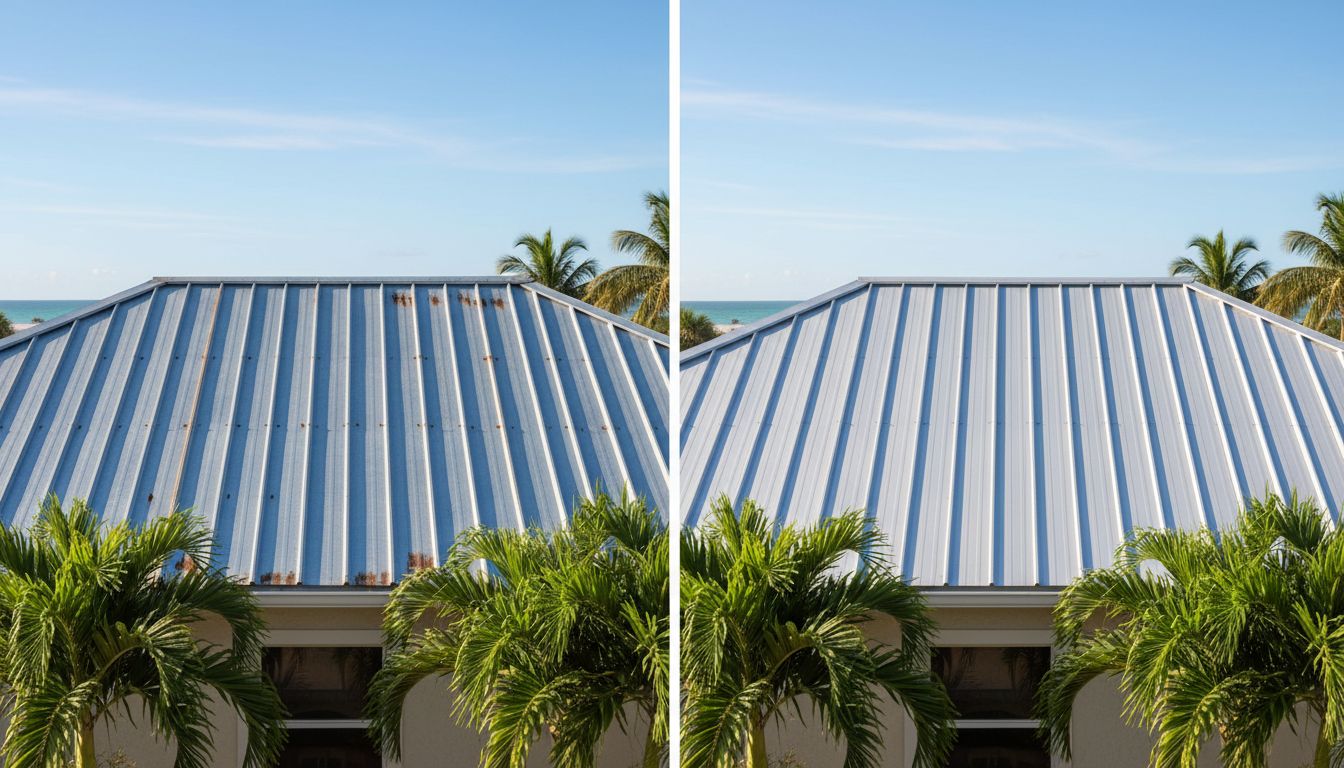
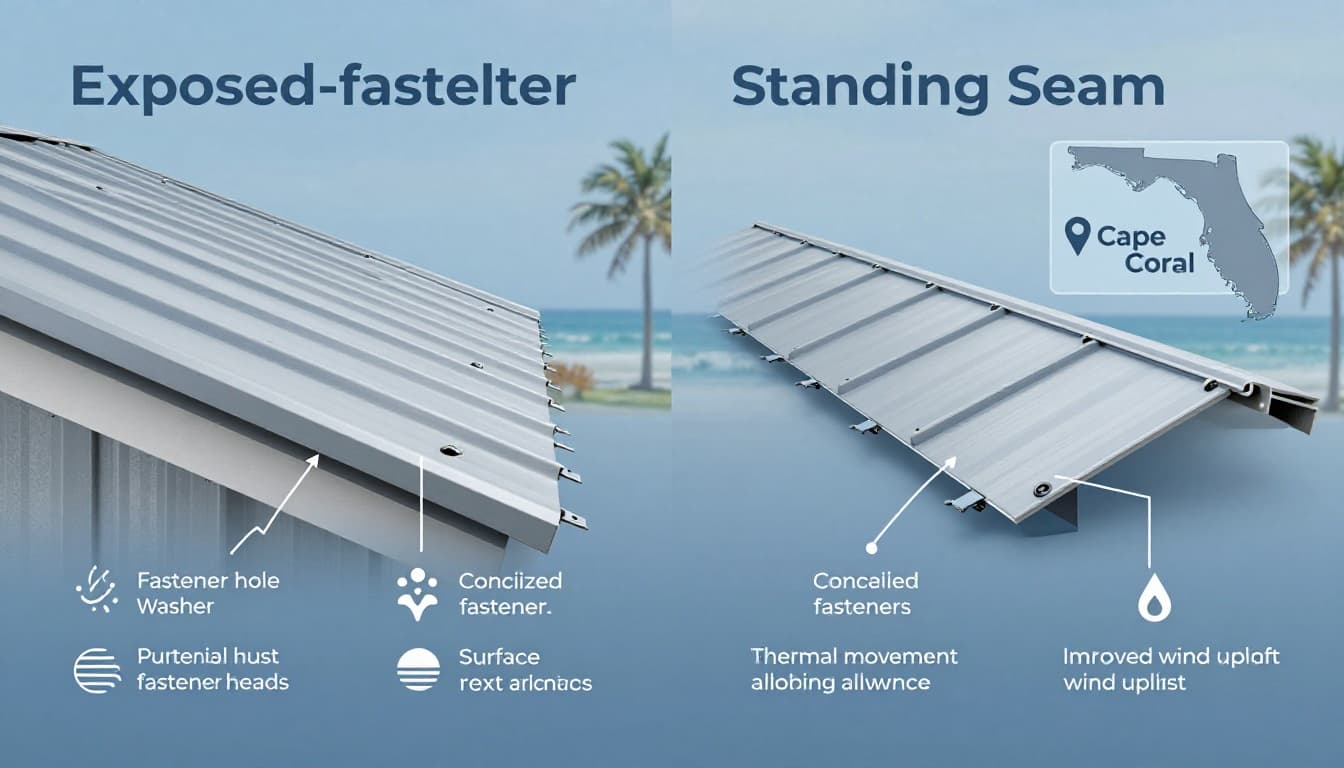
Split comparison of exposed-fastener and standing seam metal roof systems, created with AI.
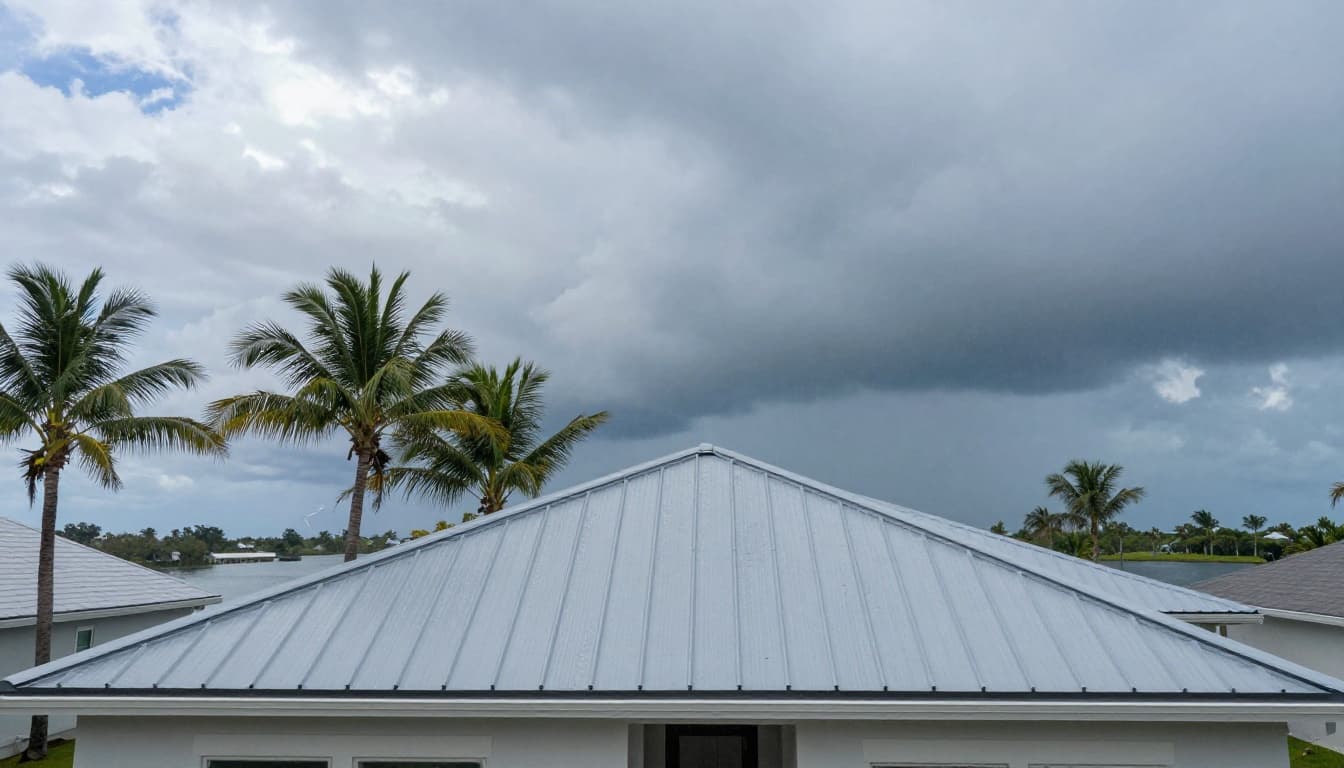
A metal roof isn't just panels on wood. Performance depends on the full assembly: deck condition , underlayment, flashing details, fastener schedule, and the manufacturer's install instructions. In other words, the "system" matters as much as the "style."
Cape Coral adds pressure in four ways:
- Wind uplift : Roof edges and corners see the highest suction. That's where clip spacing, fastener type, and tested assemblies matter most.
- Heavy rain : Summer downpours punish weak details at laps, penetrations, and transitions.
- Thermal movement : Metal expands and contracts daily. If the roof can't move as designed, fasteners and seams take the stress.
- Salt and humidity : Coastal air speeds up corrosion, especially at cut edges, scratches, and fastener heads.
If you want a broader primer before choosing, these guides help: types of metal roofs for Cape Coral homeowners and pros and cons of metal roofing in Cape Coral.
The best-looking panel won't save a roof with weak underlayment, sloppy flashing, or the wrong fasteners.
Exposed-fastener metal roofing: lower cost, higher attention over time
Exposed-fastener panels (often called R-panel or corrugated, depending on profile) get their name from the visible screws and washers. Crews fasten panels through the face of the metal into the deck or framing, then overlap panels to shed water.
Typical 2026 cost in Cape Coral
For many homes, exposed-fastener metal roofing runs about $7 to $15 per square foot installed in 2026. Price moves based on panel gauge, metal type (steel vs aluminum), tear-off needs, roof height, and how complex the layout is.
Wind performance in real life
Exposed-fastener roofs can meet strong wind requirements when they're engineered and installed to a tested approval. Still, the design has more "points of entry" because every screw is also a hole. In high winds, panels flex, and fasteners take load repeatedly. If the schedule is too wide or the wrong screw is used, the system can loosen earlier than you'd like.
Rust risk and leak risk
The weak spot is predictable: fastener heads and washers . Washers age under UV, and screws can back out slightly with thermal cycling. Once that seal relaxes, water has an easy path.
Exposed-fastener can be a smart choice when budget matters and you're comfortable with routine inspections, especially on simpler roof shapes.
Standing seam metal roof: higher upfront cost, stronger long-term "set it and check it" value
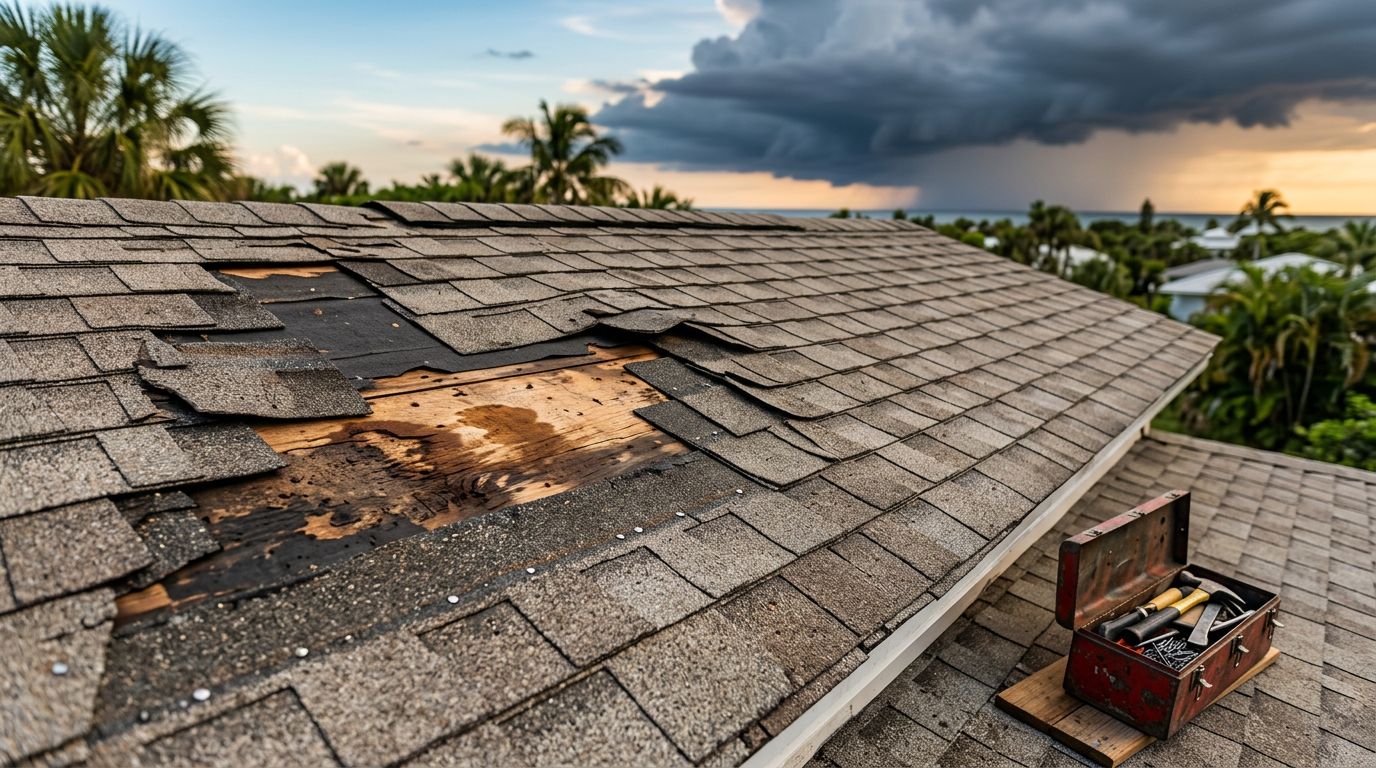
Standing seam metal roof illustrated under storm conditions, created with AI.
Standing seam panels lock together at raised seams, and the fasteners are concealed under the metal (typically clips or a hidden flange). That one design change affects almost everything: water shedding, wind behavior, and maintenance.
Typical 2026 cost in Cape Coral
For Cape Coral reroofs in 2026, standing seam commonly ranges about $12 to $30 per square foot installed . Complex geometry, premium finishes, thicker material, and tear-off can push costs higher.
Wind and movement advantages
Standing seam systems often do well in wind because the seams interlock and the attachment method can spread loads across clips and rails. Many standing seam assemblies also handle thermal movement better, since clips can allow controlled sliding. That helps the roof "breathe" instead of fighting itself.
Where standing seam can still fail
Standing seam isn't magic. Most leaks on a well-made standing seam roof come from penetrations (plumbing vents, skylights, solar attachments) or from bad transitions (wall flashings, valleys). That's why the installer's flashing approach matters as much as the panel brand.
Side-by-side comparison: cost, wind performance, rust risk, and upkeep
Here's a quick way to compare exposed-fastener vs standing seam metal roofing for a typical Cape Coral home.
| Category | Exposed-Fastener Metal Roof | Standing Seam Metal Roof |
|---|---|---|
| Typical installed cost (2026) | $7 to $15 per sq ft | $12 to $30 per sq ft |
| Wind performance | Can perform well, depends heavily on fastener schedule and tested assembly | Often strong uplift performance, depends on clip type, spacing, and tested assembly |
| Leak risk over time | Higher, because each screw is a potential entry point | Lower at field panels, penetrations still need excellent detailing |
| Rust risk | Higher at fastener heads, cut edges, and scratches | Lower in the field, still depends on metal type and coating |
| Upkeep style | More frequent checks and likely fastener service later | Fewer routine issues, focus on flashings and sealants |
The takeaway is simple: exposed-fastener tends to trade upfront savings for more maintenance touchpoints , while standing seam tends to trade higher install cost for less day-to-day worry .
For a deeper general explanation of the two systems, see this exposed-fastener vs standing seam overview.
Rust risk and upkeep schedules that fit coastal Florida
Cape Coral's salt and humidity can punish the wrong material choices. When you compare bids, pay attention to the metal and the small parts, not only the panel profile.
Material choices that usually help near the coast:
- Aluminum often resists corrosion better in salty air than basic steel.
- Coated steel (often Galvalume type coatings) can perform well when the coating and cut-edge protection are right.
- Fasteners matter. A "cheap screw" can age faster than the panel.
Practical maintenance intervals
- Twice a year : Visual check after storm season and again in spring. Look for debris, lifted trim, and sealant gaps at flashings.
- Yearly : Light cleaning where salt film and grime build up, especially near roof edges.
- Every 5 to 10 years (common for exposed-fastener) : Plan for selective fastener replacement or re-sealing, depending on washer condition and screw tightness.
- Every 3 to 5 years (both systems) : Re-check sealants at penetrations and pipe boots. Sun breaks these down.
Questions to ask a roofer before you sign (plus a code note)
A good contractor won't dodge these questions:
- What wind-uplift rating does this exact roof assembly meet, and where is it tested/listed?
- Which product approvals apply (Florida Product Approval, Miami-Dade NOA if used), and can I see them?
- What fastener material and coating are you using (and why for coastal air)?
- What washer spec is used on exposed-fastener panels (material, UV rating)?
- Which underlayment is included, and how are seams sealed?
- What corrosion warranty applies to panels, fasteners, and finish?
- How will you flash vents and pipes , and what boot material will you use?
Finally, treat any online advice (including this article) as general guidance. Final requirements depend on the current Florida Building Code and Cape Coral or Lee County permitting and inspections.
Conclusion
Exposed-fastener and standing seam can both be solid choices for a metal roof Cape Coral homeowners install in 2026, but they age differently. Exposed-fastener usually costs less upfront, then asks for more attention at screws and washers. Standing seam costs more, yet often rewards you with fewer leak paths and simpler long-term upkeep.
If you want the best odds in wind and rain, focus on the whole assembly, verified approvals, and crisp flashing work. The panel style is only the beginning, and installation details decide the ending.