Roof flashing in Cape Coral, FL, chimney, wall, and valley flashing, what fails first and how to spot it early

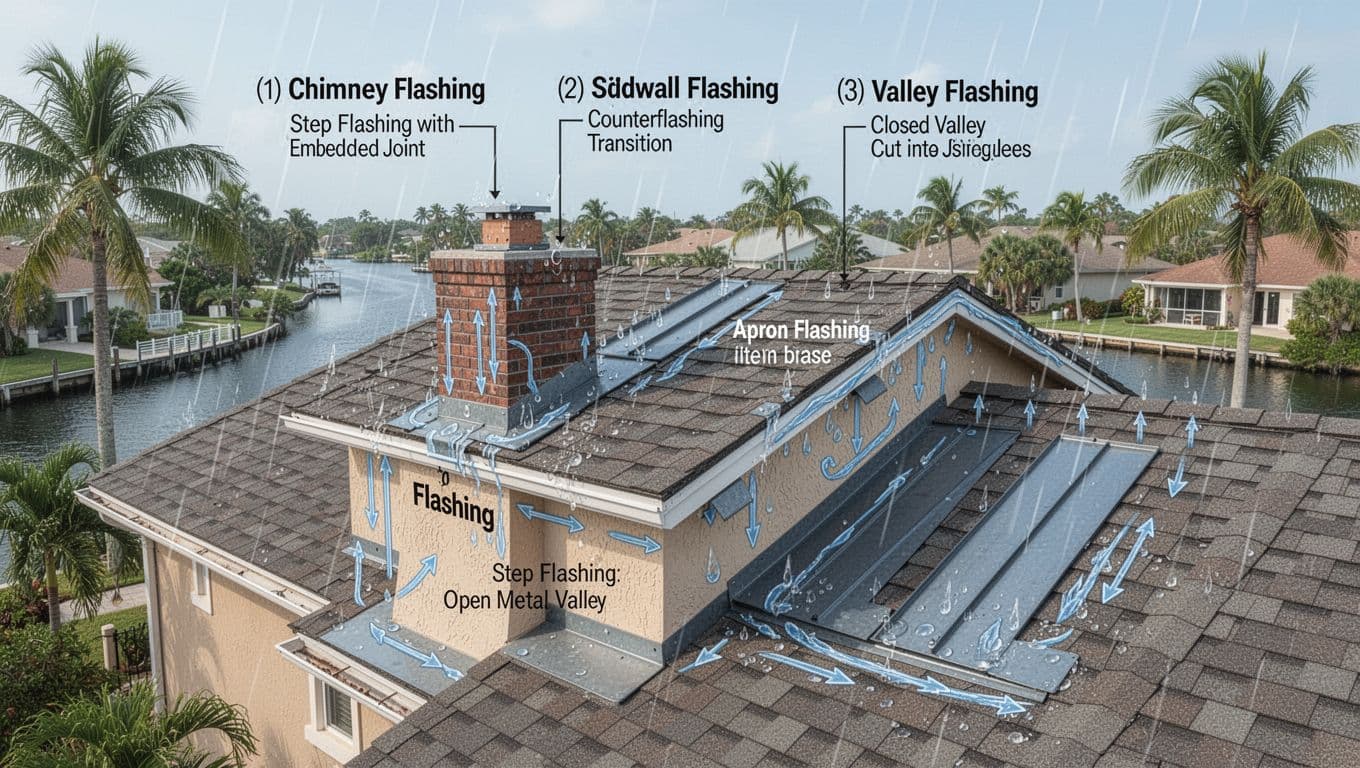
A roof can look fine from the street, yet still leak at the seams. That's because roof flashing Cape Coral homes rely on is a thin, shaped metal system that seals transitions, where roof planes meet walls, chimneys, and valleys.
In Cape Coral and across Lee County, wind-driven rain hits sideways, not straight down. Add salt air, high heat, and summer downpours, and flashing often shows trouble before shingles, tile, or metal panels do. Catch it early and you usually avoid soaked insulation, stained ceilings, and rotten decking.
Roof flashing Cape Coral homes depend on: where leaks usually start
Diagram of chimney, wall, and valley flashing zones on a Florida home, created with AI.
Flashing fails early because it lives at the "joints" of the roof. Joints move. Roofing expands in heat, contracts at night, and flexes in storms. Meanwhile, fasteners, sealant beads, and thin metal edges take constant abuse.
In Cape Coral, what often fails first is one of these:
- Sealant dries and cracks at edges and overlaps.
- Fasteners loosen (or back out) at exposed metal.
- Metal corrodes from salt air, trapped debris, or incompatible metals touching.
Here's a quick way to think about it. Shingles and tiles are like overlapping fish scales. Flashing is the rubber gasket. When the gasket shrinks or lifts, water doesn't need much space.
A simple comparison helps you predict where to look first:
| Flashing area | What usually fails first | Early "tell" you can see | Why it fails fast in SWFL |
|---|---|---|---|
| Chimney | Counterflashing edge or mortar joint | Rust streaks or staining on chimney face | Movement, cracked mortar, wind-driven rain |
| Wall/sidewall | Step flashing line or kickout area | Wall-line staining, lifted shingles at wall | Water tracks behind stucco, sealant fatigue |
| Valley | Metal wear, punctures, debris dams | Granule loss, dark streaks, debris buildup | Valleys carry the most water volume |
If your roof is near a canal or open water, salty air can speed up corrosion. That's when you may see pitting, pinholes, or rust bleeding onto shingles.
Safe ways to spot flashing problems early (without walking the roof)
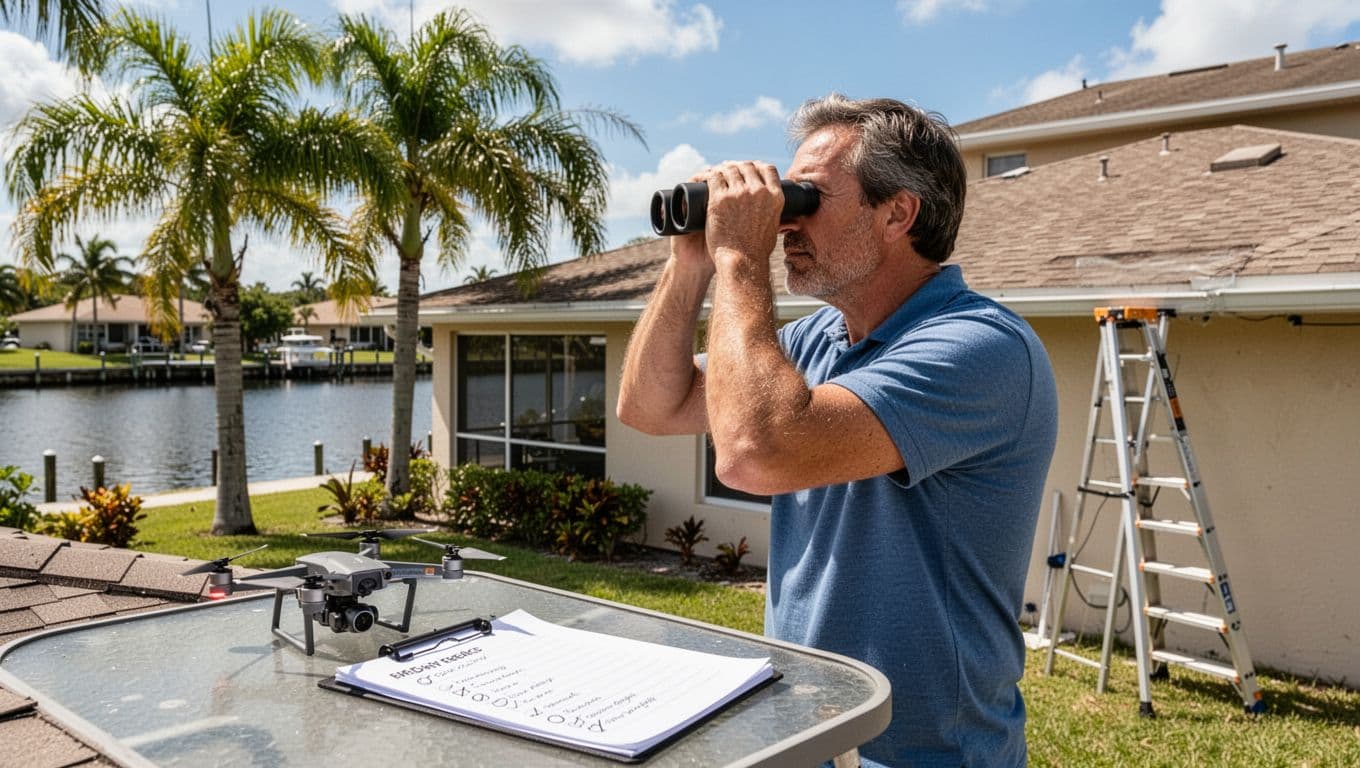
Ground-level inspection using binoculars and a simple checklist, created with AI.
Roof surfaces in Southwest Florida can turn slick fast. Don't walk the roof during rain, right after rain, or when morning dew is still on it. Tile can crack underfoot, and metal can be slippery even when it looks dry.
Instead, stick to safer checks:
- Use binoculars to scan seams and metal edges.
- Take phone photos from the ladder's lower rungs (only if stable and dry).
- Use a drone if you're comfortable and it's legal where you live.
- Check the attic during daylight. Look for staining, damp wood, or rusty nail tips.
Water rarely drips straight down from the entry point. It often travels along underlayment or framing, then shows up several feet away.
Timing matters here. In Cape Coral, it's smart to inspect before storm season ramps up, and again after a heavy squall line. If you want a broader routine that fits Florida weather, use this internal guide: roof maintenance checklist for Cape Coral homeowners.
If you spot active staining, rust, or lifted metal, schedule a licensed local inspection. Flashing repairs usually involve carefully removing and re-sealing materials, not a quick caulk job.
Chimney flashing: what fails first, and what to look for from the ground
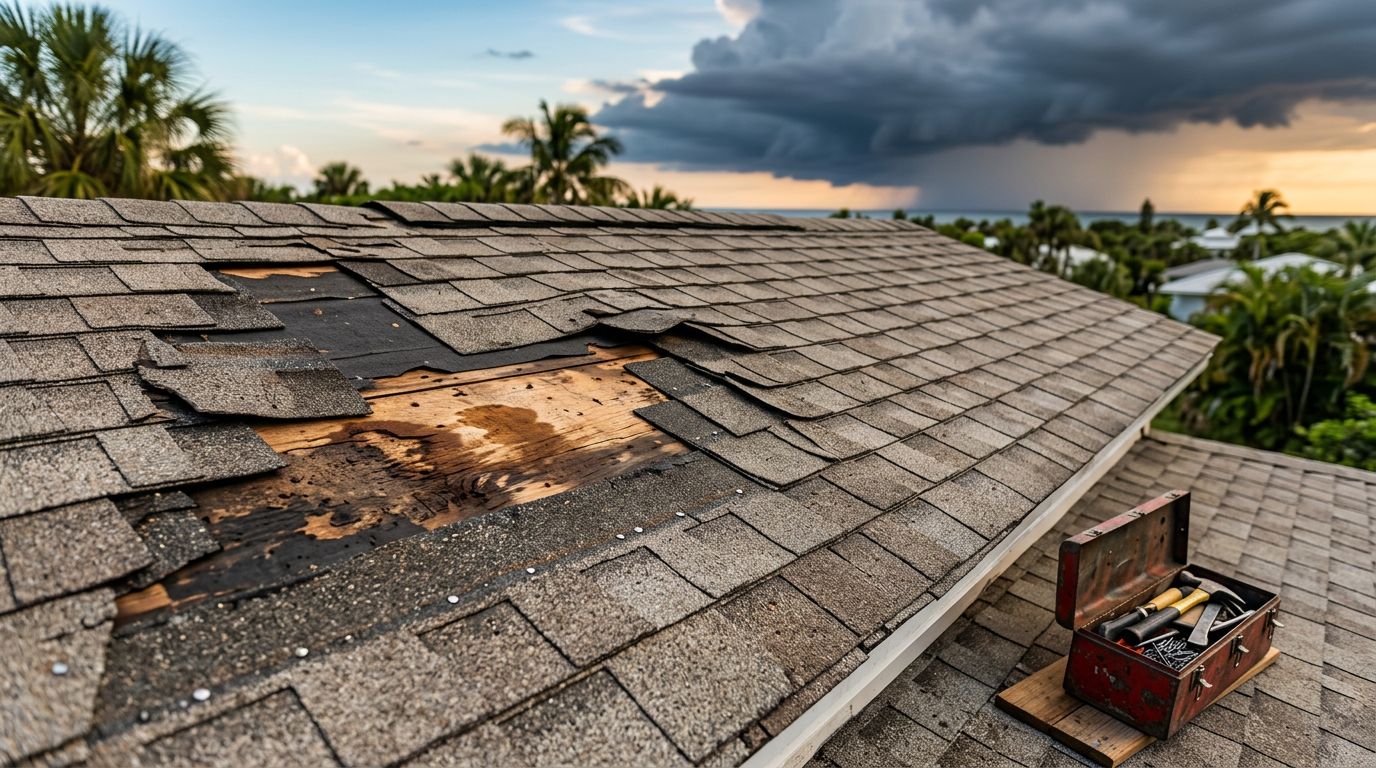
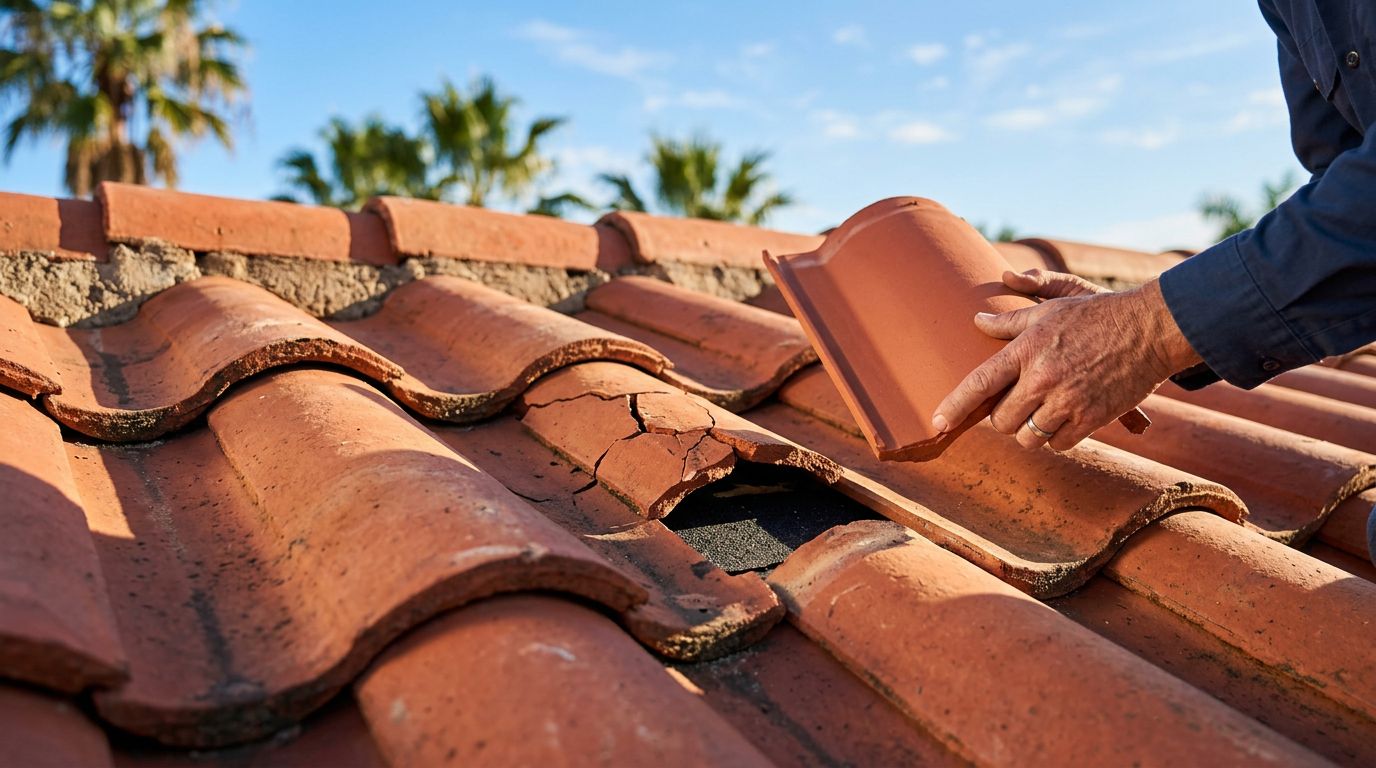
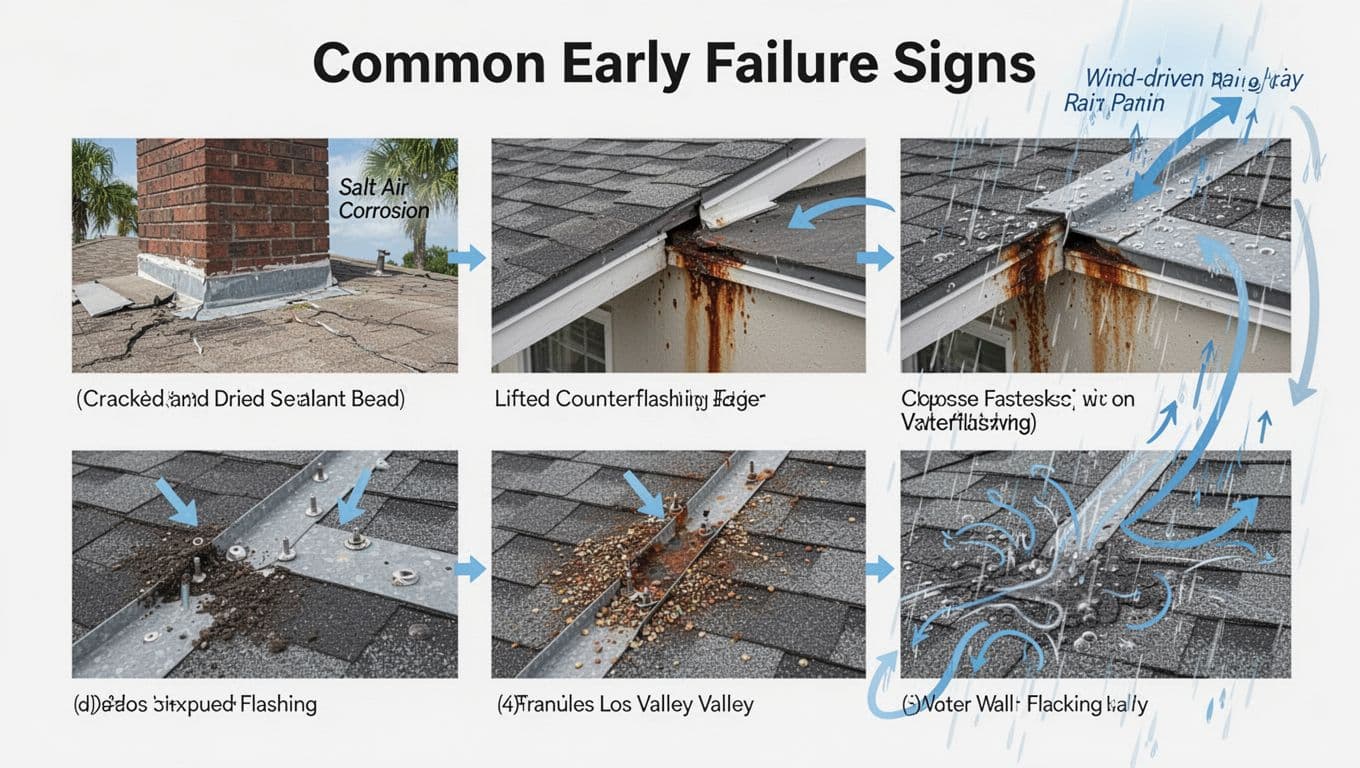
Examples of early flashing failures like cracked sealant and corrosion, created with AI.
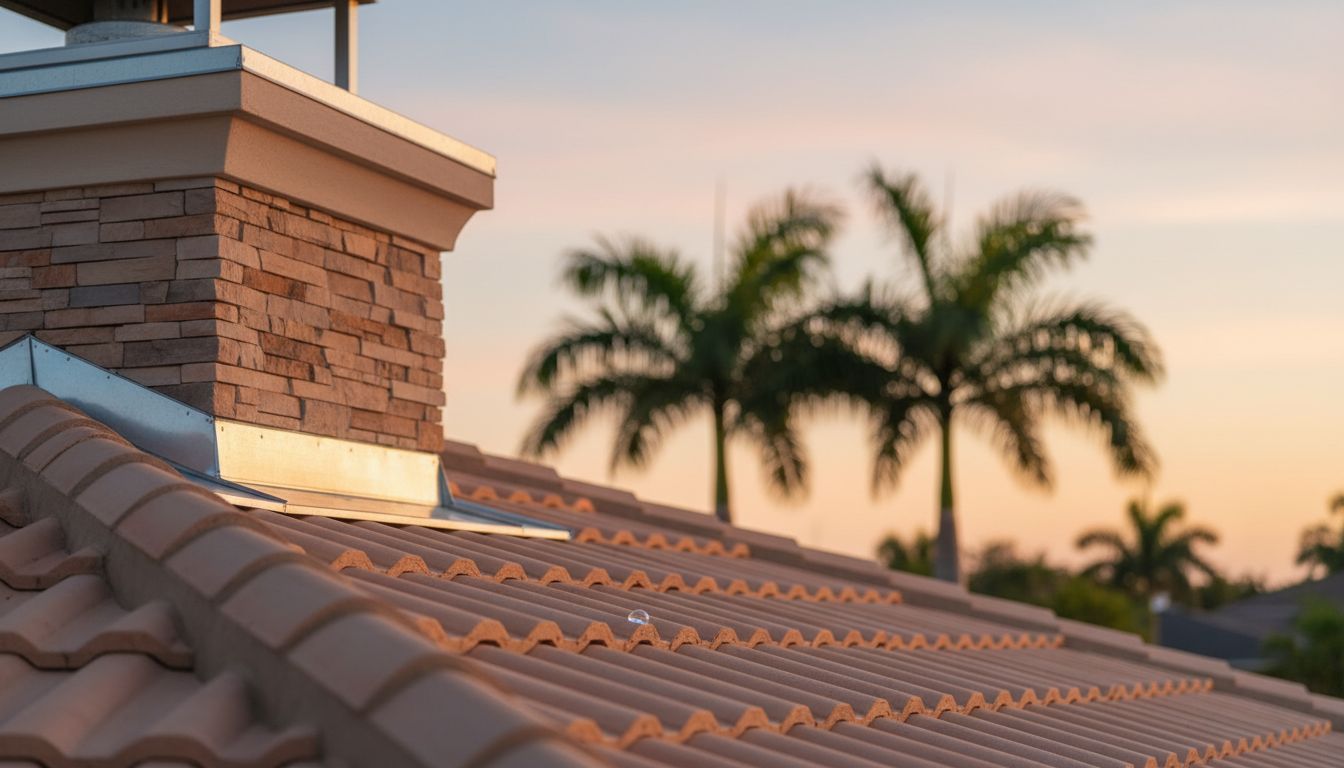
A chimney is a big interruption in the roof plane, so it needs a layered system. On shingle roofs, that often means step flashing woven into shingles, plus counterflashing that covers the top edges. On many chimneys, the counterflashing ties into mortar joints (a reglet cut), then gets sealed.
In Cape Coral, chimney flashing often fails at the top edge first. Mortar cracks, sealant dries, and wind-driven rain gets pushed into tiny gaps.
What to look for (chimney area):
- Rust streaks running down the chimney or onto shingles.
- Loose counterflashing you can see lifting away from brick or stucco.
- Cracked or missing mortar at the flashing line (even hairline cracks matter).
- Dried, split sealant beads at corners or at the reglet.
- Pinholes or pitting on metal, especially near fasteners.
- Interior staining high on a wall near the chimney, or on the ceiling nearby.
One more Cape Coral issue is metal compatibility . If dissimilar metals touch (for example, copper and aluminum), salt air and moisture can trigger galvanic corrosion. Even the wrong fasteners can create trouble. If you see different metals meeting, or heavy corrosion around screws, it's worth having a roofer confirm the materials match.
When chimney flashing looks suspect, the next step is a professional assessment and repair plan. This is the type of detail work covered under Cape Coral roof flashing repair.
Wall and sidewall flashing: where water sneaks behind stucco
Sidewall flashing protects the roof where it meets a vertical wall (common with second-story walls, dormers, and long stucco runs). On shingle roofs, the watertight approach usually relies on step flashing pieces layered with shingles. At the lower end, a kickout style detail should send water into the gutter, not behind the wall.
In Southwest Florida, wall flashing failures often start as a tiny lift . A shingle edge curls, a metal piece shifts, or sealant at a termination dries out. Then rain tracks down the wall line and finds a path behind stucco.
What to look for (wall/sidewall area):
- Staining on stucco right above the roof line (brown, gray, or green streaks).
- Paint bubbling or swollen baseboards inside near that wall.
- Lifted shingles or tiles along the wall transition.
- Exposed fasteners on metal edges, or fasteners that look backed out.
- Cracked sealant where flashing ends, or where the wall meets metal.
- Rust lines that start at a corner and travel downward.
Because Cape Coral permitting and inspections can focus on roof-to-wall water control, it also helps to understand current requirements when you re-roof. This overview is a solid reference point: Florida Roofing Code updates for 2026.
DIY tip: keep this area clear of debris and watch for new staining after heavy rain. Avoid trying to re-seal wall flashing yourself. If the metal is wrong or the layering is off, caulk can trap water and speed up rot.
Valley flashing: the high-flow channel that shows wear fast
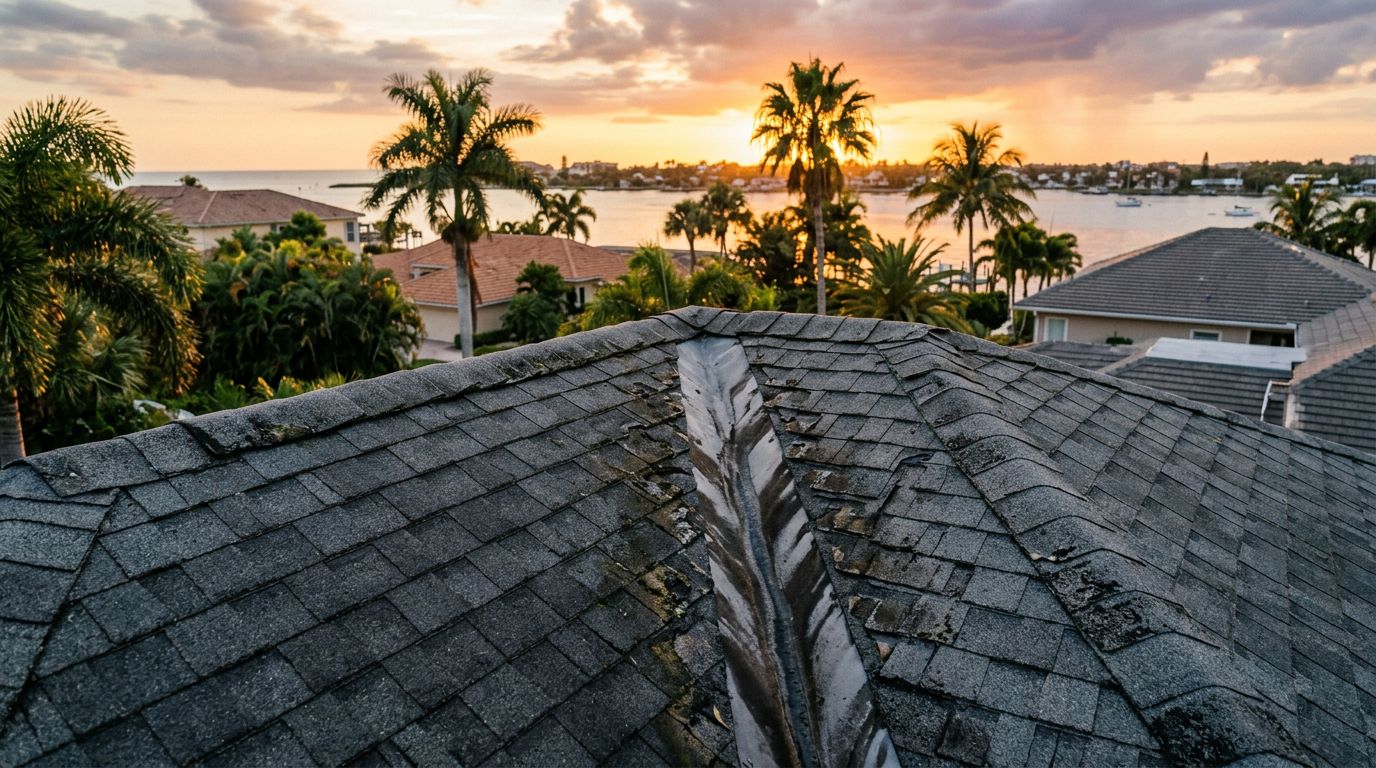
Valleys handle concentrated water, like a roof's drainage ditch. Some roofs use an open metal valley (metal visible). Others use a closed-cut valley where shingles cover the center line. Either way, valleys take heavy runoff, plus leaves, granules, and grit.
In Cape Coral, valleys often show problems early because debris sits in the channel and stays wet. That traps salt and moisture against the metal, or it forces water sideways under shingles during a hard, windy storm.
What usually fails first in valleys:
- Granule loss and surface wear right at the valley line.
- Corrosion at fasteners or seams on open metal valleys.
- Debris dams that slow water and cause backup.
- Small punctures from foot traffic, branches, or exposed nail tips.
What to look for (valley area):
- Dark streaks that follow the valley path.
- Bare spots where shingle granules are washed away.
- Debris buildup that keeps the valley looking "dirty" even after rain.
- Lifted shingle edges near the valley cut line.
- Rust spots or pinholes on exposed valley metal.
- Attic staining that runs in a straight line down a roof plane.
If you want extra context on how Florida flashing details tend to fail in real storms, this overview is helpful: bad wall, valley, and chimney flashing warning signs.
Maintenance that stays safe: keep nearby gutters clean, trim overhanging branches, and remove heavy leaf piles from valleys only if you can do it from the ground with professional help. Don't climb up to "scoop it out."
Conclusion: small flashing clues can prevent big repairs
Flashing problems don't start with a dramatic leak. More often, you'll see staining, rust streaks, debris buildup, or lifted edges first. In Cape Coral, salt air and wind-driven rain make those small clues worth taking seriously.
If you're seeing repeat staining or multiple trouble spots, use this guide to think through next steps: roof repair vs. replacement in Cape Coral. When in doubt, schedule a licensed local inspection so the fix is based on the real path water is taking, not guesses.