How Long Do Roofs Last in Southwest Florida? (shingle vs tile vs metal life expectancy in heat, salt, and storms)

If you own a home in Naples, Fort Myers, Cape Coral, Sarasota, or Marco Island, you already know the roof lives a harder life here. Sun feels stronger, rain hits sideways, and salty air can chew through metal parts faster than you expect.
So what's a realistic roof lifespan florida homeowners can plan around, especially when choosing between shingles, tile, and metal? The short answer is that Southwest Florida often trims years off national averages, and the weak point is not always the material you see from the street.
Below is a practical lifespan guide for 2026, plus what usually fails first, how to extend service life, and what to ask before you sign a contract.
Why Southwest Florida roofs wear out faster than you think
A roof in SWFL is like a car parked outside with the windows cracked all year. It still works, but everything ages quicker.
Several local stressors stack up at the same time:
UV and heat (plus thermal cycling). Our intense sun dries out asphalt, bakes sealants, and speeds granule loss. Then afternoon storms cool the surface fast. That expansion and shrink cycle loosens fasteners, opens tiny gaps, and works on seams over time.
Salt air and corrosion. If you're near the Gulf, a canal, or open water, salt can attack exposed screws, flashings, and clips. Even inland, salty humidity can shorten the life of low-grade metals. In other words, the roof covering might look fine while the "small parts" quietly fail.
Wind-driven rain and uplift. Hurricanes get the headlines, but regular summer squalls matter too. Wind pushes water up-slope and sideways, testing underlayment laps, valley details, and wall flashings. At the same time, uplift tugs at shingles, tile edges, ridge caps, and metal panels.
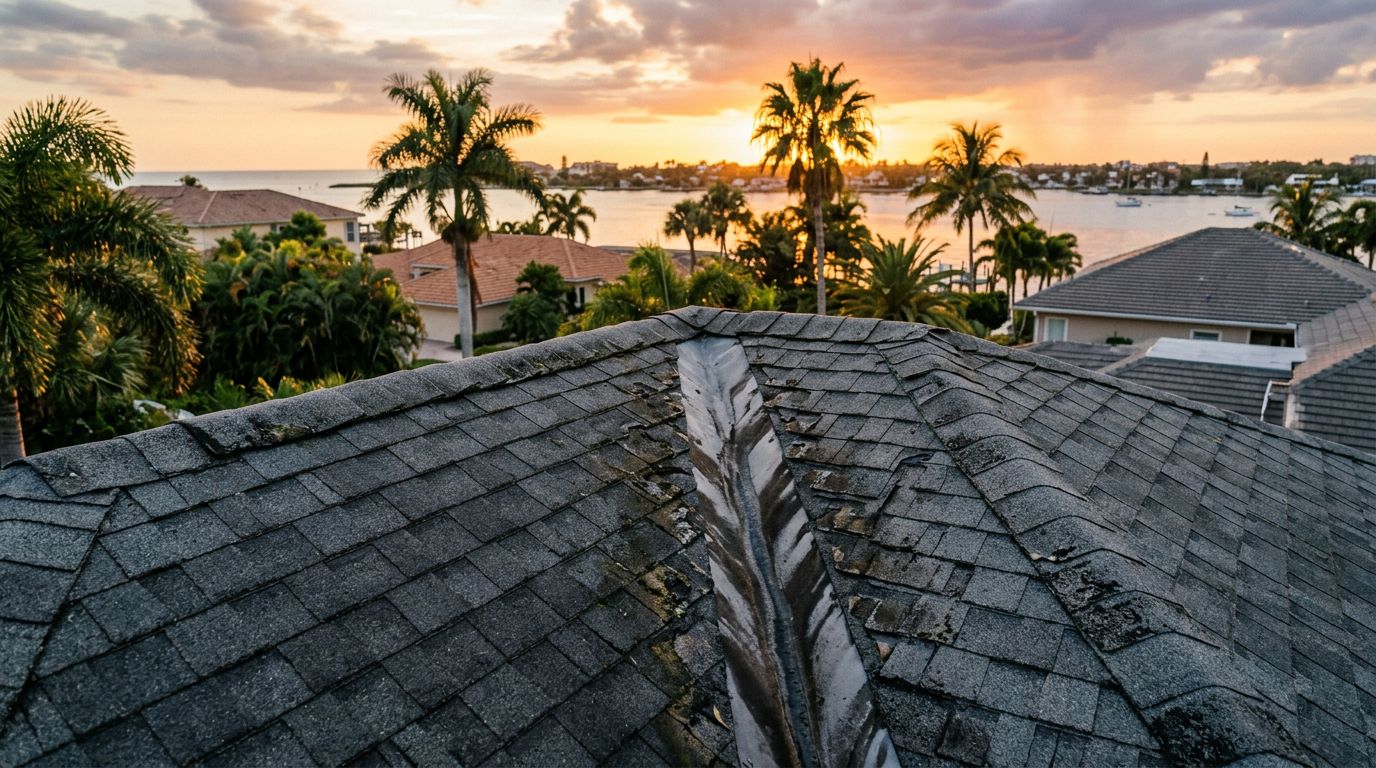
Algae and organic growth. Humidity plus shade equals dark streaks and moss-like growth, mostly on shingles. It's often cosmetic at first, but trapped moisture and grit can speed wear.
Because codes and enforcement shift after major storms, it's smart to stay current on permitting and attachment requirements. This breakdown of 2026 Florida Building Code updates for Cape Coral re-roofs is a helpful starting point before any replacement.
Realistic SWFL lifespan ranges (shingle vs tile vs metal)
Before the table, one key point: in Southwest Florida, installation quality and the "hidden layers" matter as much as the roofing material . A great product installed with the wrong fasteners, weak edge details, or bargain flashings can age fast.
Here's a realistic range for many SWFL homes, assuming a properly permitted install and normal maintenance:
| Roof system (SWFL) | Typical service life you can expect | What usually limits the life here |
|---|---|---|
| Asphalt shingles (architectural) | 12 to 25 years | UV aging, wind lift, granule loss, underlayment and flashing wear |
| Concrete or clay tile | 25 to 50+ years (tile can last longer) | Underlayment failure and broken/cracked tiles from foot traffic or storms |
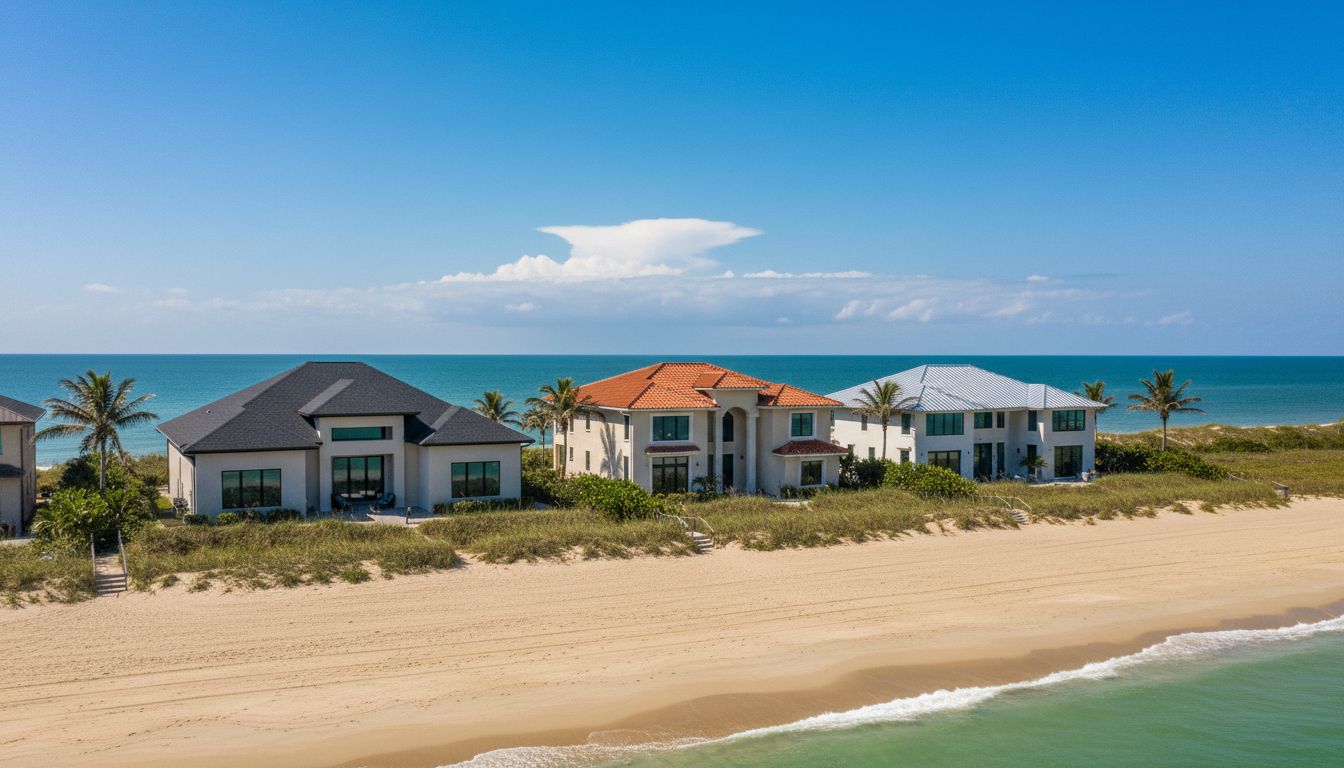
| Standing-seam metal (hidden fasteners) | 40 to 70+ years | Coastal corrosion risk at edges, penetrations, and low-quality accessories |
A few assumptions behind those ranges:
- Homes within about a mile of the coast often land on the lower end unless the system uses corrosion-resistant components.
- Attic heat and poor ventilation can shave years off shingles and cook underlayments sooner.
- Storm events can end a roof early, even if it "should" have years left.
For another SWFL-focused reference point, see SW Florida roof types and service life. Use it as context, not a promise, because every roof's layout and exposure differ.
The roof covering is only the top skin. In SWFL, the underlayment, flashings, and fastening schedule often decide how long the system stays watertight.
What fails first, and how to extend life for each roof type
Shingle roofs (best for budget, shortest SWFL lifespan)
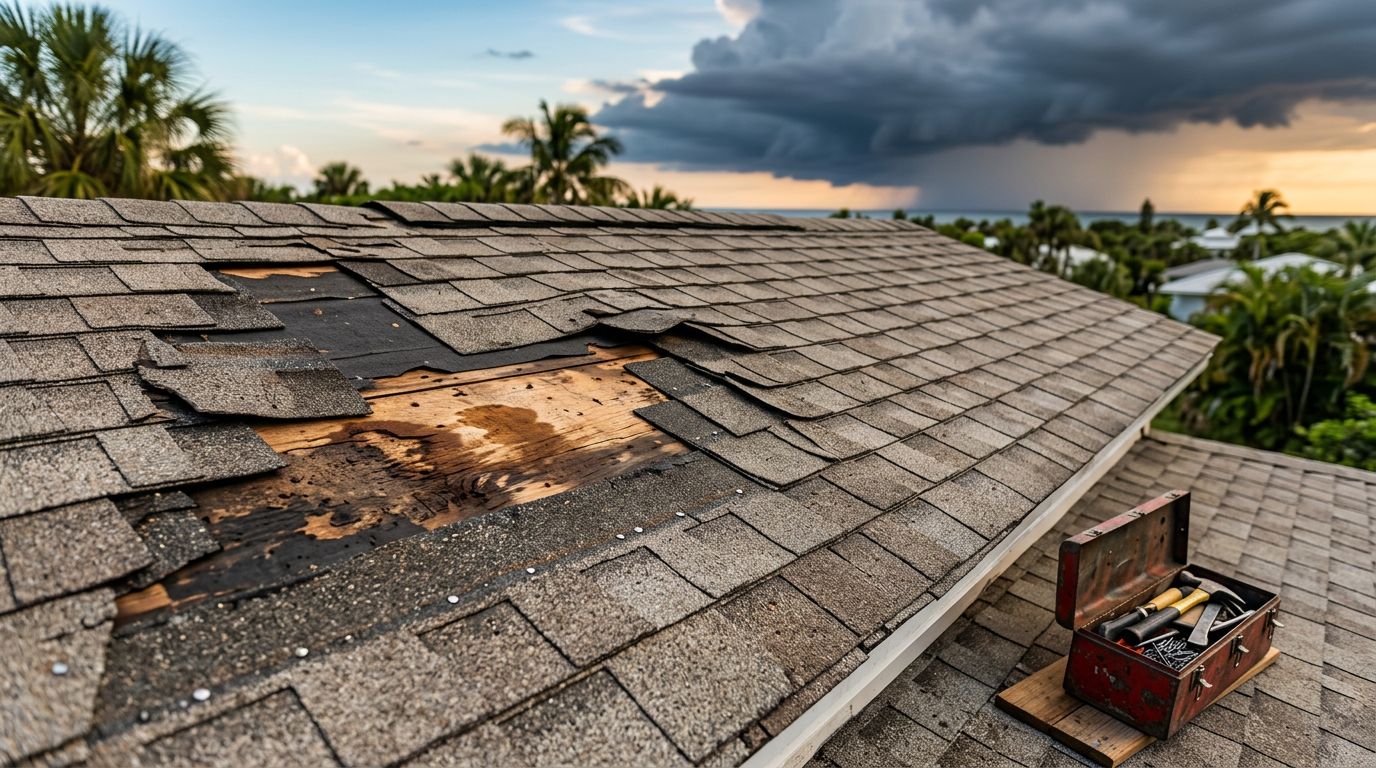
Shingles usually "age out" before they catastrophically fail. You'll see granules in gutters, curled tabs, soft spots near penetrations, and lifted edges after windy storms.
To stretch lifespan:
- Keep branches off the roof, because shade and debris hold moisture.
- Treat algae gently, avoid pressure washing, and use approved cleaners.
- After storms, replace missing or creased shingles quickly so water doesn't reach the underlayment.
- Ask for higher-grade accessories, because cheap pipe boots and flashings fail early.
If you're weighing shingle options, this guide on best shingle types for Cape Coral climate helps explain why thicker architectural shingles usually outperform basic 3-tab styles in our wind and heat.
Tile roofs (long-lasting surface, underlayment is the clock)
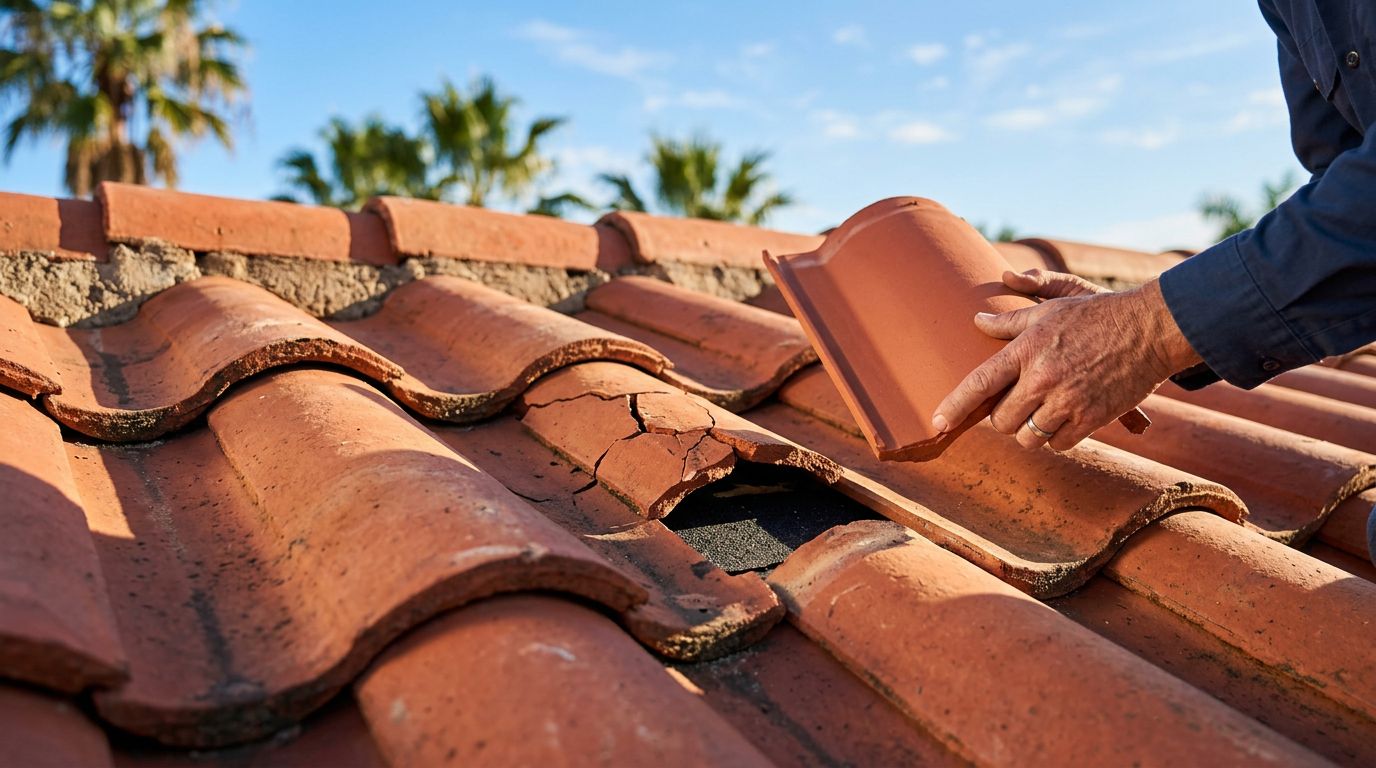
Tile is popular in Naples and Sarasota for good reason. The tiles themselves can last decades. In SWFL, the common end-of-life trigger is the underlayment aging, especially in valleys, around skylights, and at walls.
To stretch lifespan:
- Avoid walking on tile unless you know the safe paths, cracked tiles invite leaks.
- Replace broken tiles fast, because underlayment isn't meant for long-term sun exposure.
- Plan for periodic re-sealing at penetrations and updated flashings in salty areas.
- When the underlayment needs replacement, ask about re-using tile vs replacing tile, it depends on brittleness and breakage rate.
Metal roofs (best longevity, details make or break coastal performance)
Metal does well in sun and sheds water fast. In SWFL, the big difference is exposed-fastener panels versus standing seam. Exposed fasteners rely on washers that age in heat, then leaks start at screws.
To stretch lifespan:
- Prefer hidden-fastener assemblies where possible, especially near the coast.
- Specify corrosion-resistant metals and compatible fasteners, mixing metals can cause galvanic corrosion.
- Inspect sealants at penetrations, like vent pipes and satellite mounts, because those are common leak points.
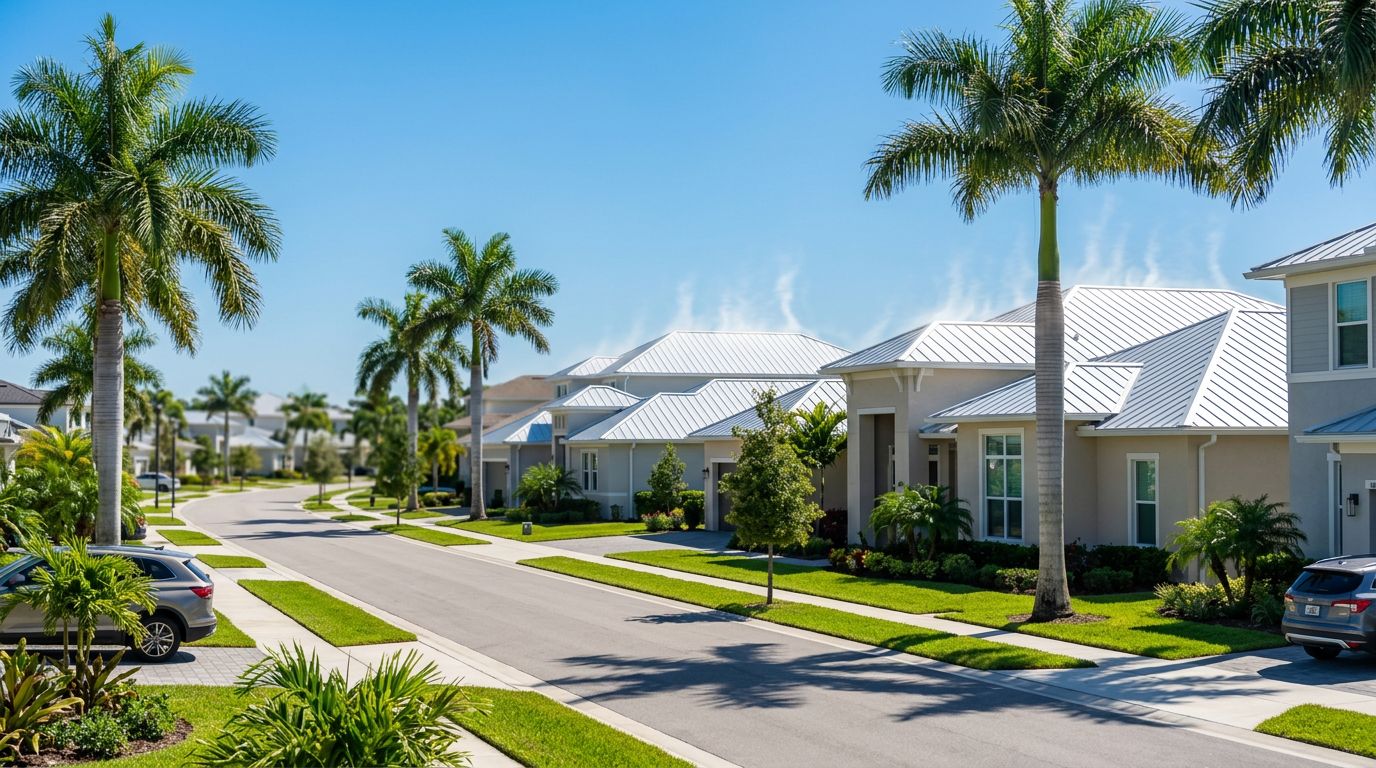
If you're comparing profiles, this overview of metal roof types for Cape Coral homes explains why standing seam is often the long-term pick for SWFL heat and salt exposure.
What to ask a roofer in 2026 (and when to schedule inspections)
A roof estimate shouldn't be a mystery document. Ask questions that reveal the system, not just the surface.
Here are the big ones that affect lifespan in SWFL:
- Underlayment : What type, what rating, and how is it sealed at laps, valleys, and penetrations?
- Fastening schedule : How many fasteners, where, and what corrosion rating? Will it match the permit assembly and wind zone requirements?
- Secondary water barrier : Will the roof have a sealed deck or enhanced dry-in that helps during wind-driven rain?
- Flashings and edges : What metal is used for drip edge, valleys, and wall flashings, and is it suited for salt exposure?
- Ventilation : Will attic ventilation be evaluated so heat doesn't bake the system from below?
- Documentation : Will you get product approvals, permit paperwork, photos, and warranty details at closeout?
As for inspections, don't wait for a ceiling stain. Schedule a professional check:
- Once a year (before hurricane season is ideal),
- After any major wind event , even if you don't see damage from the ground,
- Any time you spot lifted shingles, cracked tiles, rusted flashings, or recurring small leaks.
For storm prep beyond materials, this guide to hurricane-proofing roofs in Cape Coral covers practical upgrades that help roofs handle uplift and wind-driven rain.
Conclusion
In Southwest Florida, shingles often last 12 to 25 years , tile systems often run 25 to 50+ years (with underlayment as the usual limiter), and well-built standing-seam metal can reach 40 to 70+ years . Your exact result depends on install quality, maintenance, and how close you live to salt air.
If your roof is getting older, a simple inspection now can prevent a rushed decision later. Lifespan varies , and storms can end a roof early, so treat the numbers as planning ranges, not guarantees.