Drip Edge in Cape Coral, FL, What It Is, When It’s Required, and Why It Stops Edge Leaks

Drip Edge in Cape Coral, FL, What It Is, When It’s Required, and Why It Stops Edge Leaks

If you’ve ever seen paint peeling on the fascia, stains behind a gutter, or a “mystery” leak that only shows up in sideways rain, the problem often starts right at the roof edge. In Cape Coral, that edge takes a beating from wind-driven storms, heavy humidity, and salty air near the water.

A drip edge is one of those small roof parts that most homeowners never notice, until it’s missing or installed wrong. This guide breaks down what drip edge is, when it’s required for Cape Coral permits, and why it’s so effective at stopping edge leaks and fascia rot.

What a drip edge is (and what it isn’t)

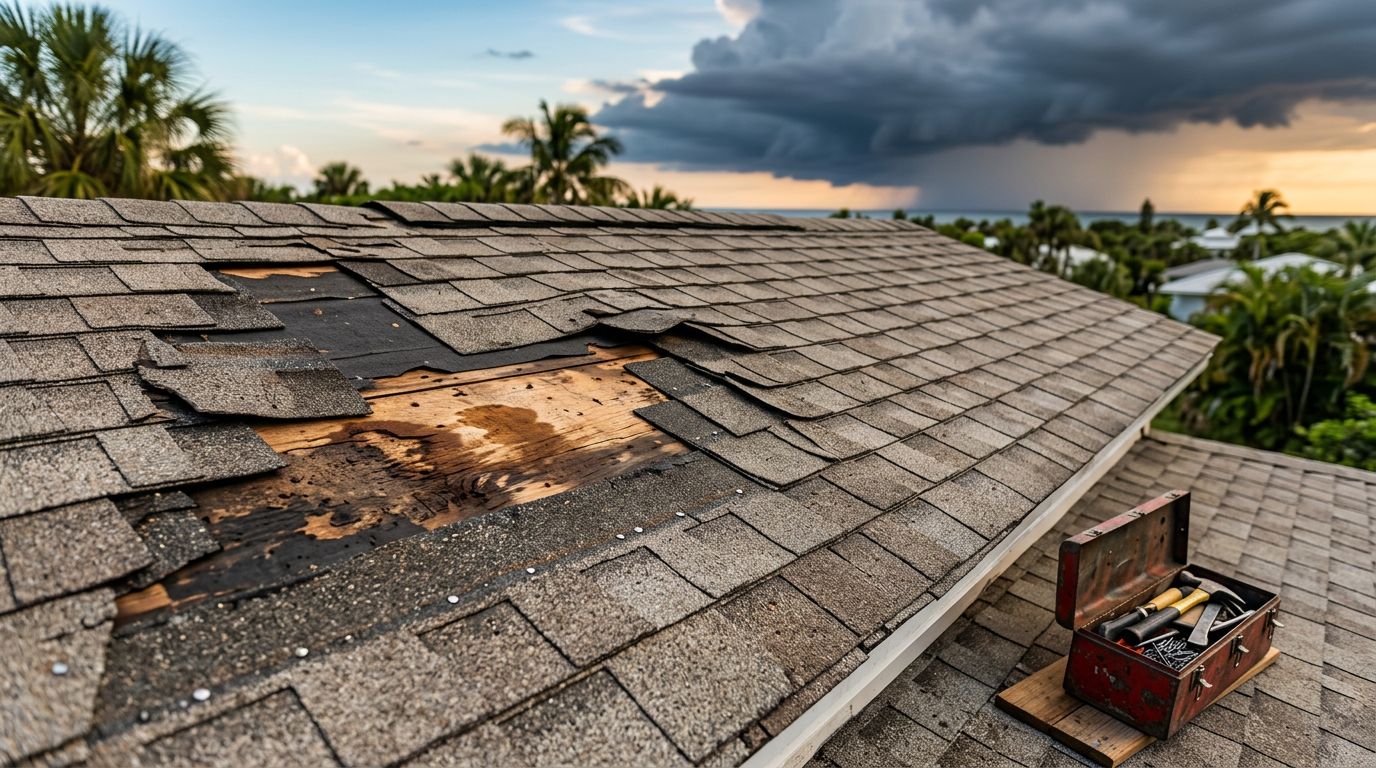
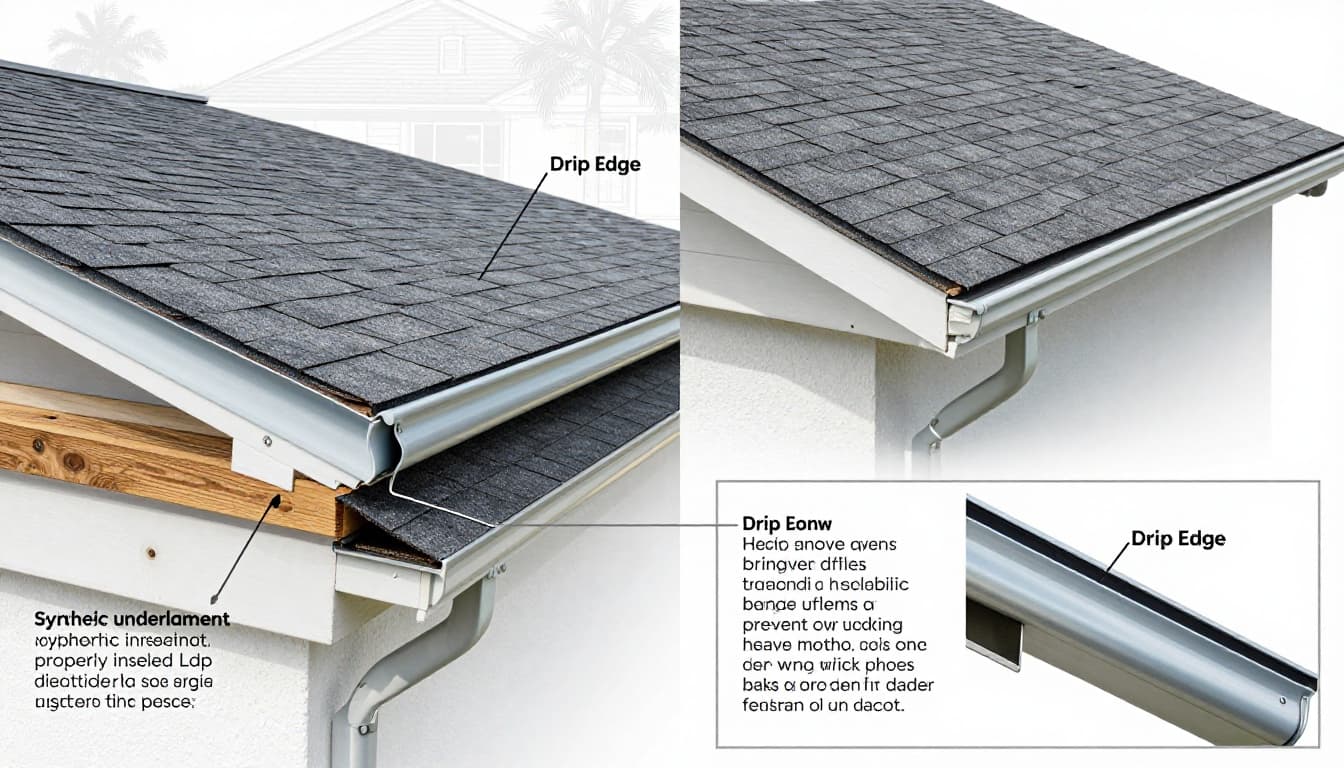
Diagram showing correct vs incorrect drip edge installation at the roof edge, created with AI.

Drip edge is metal flashing installed along the edges of your roof , usually at the eaves (bottom edge) and rakes (sloped sides). It’s shaped like an “L” (or a profile close to it) so water rolling off shingles can’t curl back under the roof edge.

Think of your roof edge like the cuff on a raincoat. Without a cuff, water runs back onto your sleeve. Without drip edge, water can run back onto the wood, behind the gutter, and into places it doesn’t belong.

A drip edge does a few jobs at once:

  • Directs water into the gutter instead of behind it.
  • Blocks capillary action (water “wicking” backward under shingles).
  • Protects the roof deck edge from swelling and rot.
  • Stiffens the shingle edge so wind has a harder time lifting it.

What it isn’t: drip edge is not a gutter, not a fascia cover, and not a fix for a rotten fascia board. If the wood is already soft, the metal can’t magically make it solid again. It’s also not the same as “step flashing” or “kickout flashing” (those are used where a roof meets a wall). Drip edge is specifically for the perimeter edges.

Material matters in Southwest Florida. Aluminum is common, and coated steel can also perform well. The key is corrosion resistance , since Cape Coral air and summer storms are rough on metal.

If you’re curious how this ties into your roof type, this page on shingle roofing services in Cape Coral explains how the edge details fit into a full asphalt shingle system.

When drip edge is required in Cape Coral (code, permits, and inspections)

Cape Coral follows the Florida Building Code (FBC), and as of February 2026, drip edge is not an “upgrade.” For asphalt shingle roofs, it’s a standard requirement on new roofs and reroofs. In practice, that means if you’re doing a permitted replacement, you should expect the inspector to look for it.

At the state level, drip edge requirements show up in the roofing sections of the code, including FBC Building Section 1507 (roof coverings) and the parallel shingle provisions in FBC Residential (R905, asphalt shingles) . Exact wording and edition details can shift during code update cycles, and local enforcement can vary, so it’s smart to confirm your project scope with the City of Cape Coral building department before work starts.

For a plain-language look at what’s changing in the next code cycle, the Florida Roofing and Sheet Metal Contractors Association has a running overview of changes in the 2026 Florida Building Code. You can also view Florida’s code text online through ICC’s library (then search within it for drip edge requirements), starting here: ICC Digital Codes for Florida.

If you’re planning a reroof this year, it also helps to read a local summary like 2026 Florida Roofing Code updates for Cape Coral re-roofs , since permit reviewers often focus on the edge and dry-in details.

What inspectors usually check at the roof edge

On a permitted job, inspectors may look at drip edge during dry-in and at final. These are common checkpoints homeowners can ask about (not a substitute for your roofer’s specs or the inspector’s direction):

  • Drip edge at eaves and rakes : Installed along bottom and side edges, not just one area.
  • Correct underlayment lap : Underlayment typically laps over the drip edge at eaves, and the drip edge laps over the underlayment at rakes (this helps shed water the right way).
  • Fastening : Mechanically fastened with corrosion-resistant nails, spaced per code and manufacturer instructions.
  • Tight fit to decking : No big gaps where wind-driven rain can push upward.
  • Proper overlaps at joints : Pieces overlapped to avoid seams becoming leak points.
  • Gutter relationship : Drip edge should direct runoff into the gutter, not behind it.

One more reality check: if your roofer is working around existing gutters, there are times gutters need to be loosened or re-hung to get the edge detail right. A clean edge install beats saving an hour and paying for fascia repairs later.

Why drip edge stops edge leaks (and helps prevent fascia rot and gutter overflow)

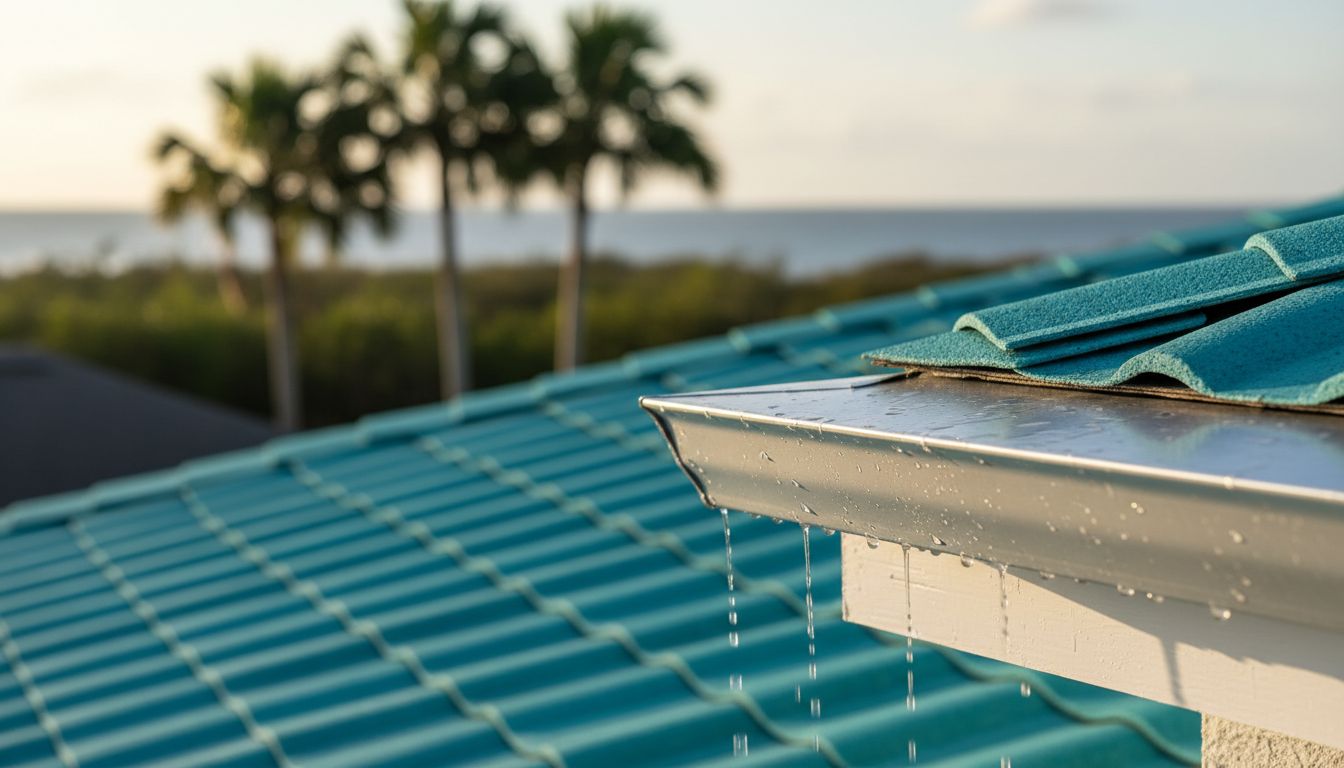
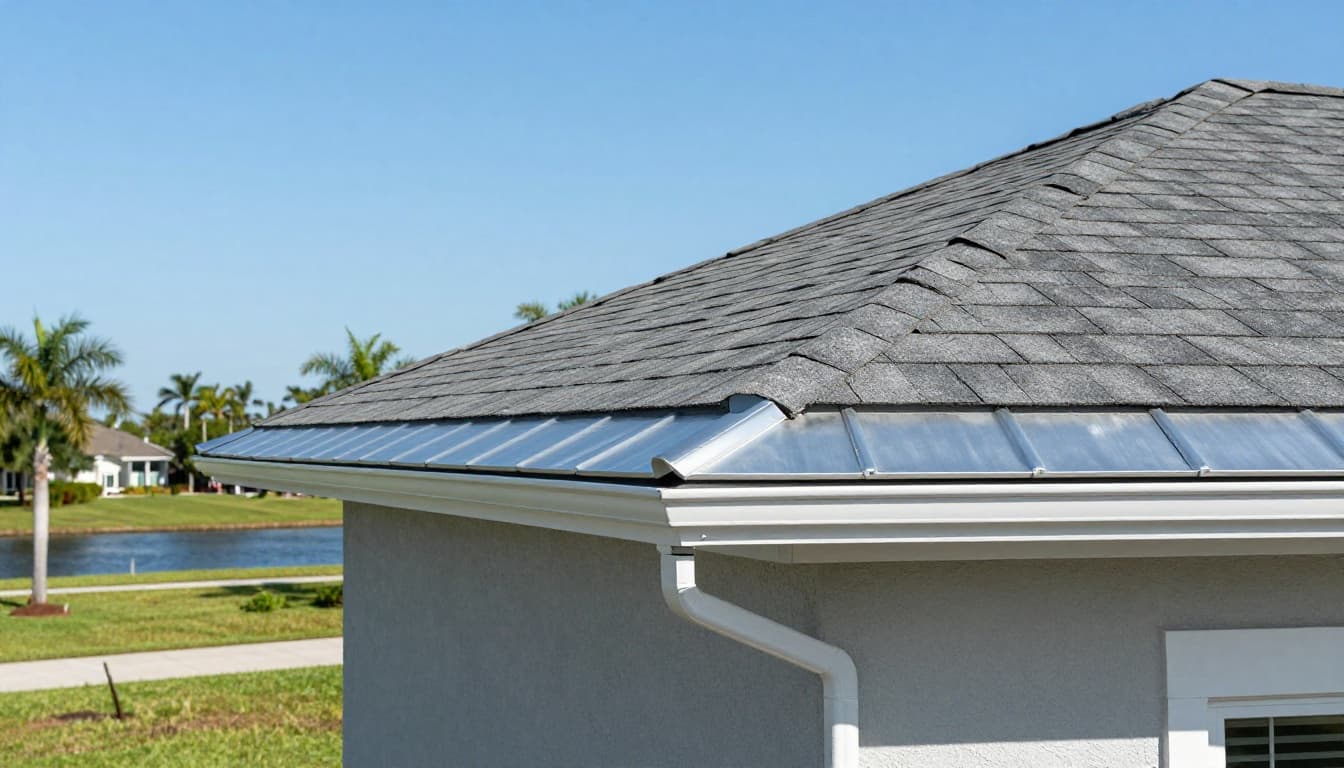
Example of a clean roof edge where drip edge guides water into the gutter, created with AI.

Most edge leaks don’t start as a dramatic hole. They start as a repeat habit: water runs where it shouldn’t, again and again, until wood swells, paint fails, fasteners loosen, and a “small” issue becomes rot.

Here’s what drip edge changes at the roof perimeter:

1) It breaks capillary action.
Water doesn’t always drip straight down. It can cling to the underside of shingles and roll back toward the fascia. Drip edge creates a hard metal lip that forces water to drop off and away.

2) It protects the roof deck edge.
The plywood edge is one of the most vulnerable parts of the roof system. If it stays damp, it can delaminate and soften. Once that happens, nails and fasteners don’t hold as well, and the edge can get wavy.

3) It reduces fascia board wetting.
In Cape Coral, fascia rot is common when water consistently lands behind the gutter. Drip edge helps water land inside the gutter where it belongs, instead of soaking fascia and soffit edges.

4) It helps gutters behave in heavy rain.
Drip edge won’t fix an undersized or clogged gutter, but it does help the water enter the gutter more cleanly. Without it, runoff can shoot behind the gutter, and that can look like “gutter overflow” even when the gutter isn’t full.

Practical tips to avoid fascia rot and gutter problems

If you want drip edge Cape Coral installs to actually pay off long-term, pair it with basic edge maintenance:

  • Keep gutters clear before storm season. One clogged downspout can dump water behind the fascia fast.
  • Watch for “behind-the-gutter” staining on the fascia. That’s often an edge flashing or gutter alignment issue.
  • Don’t ignore soft wood at the eaves. If the fascia is punky, replacing it during a reroof is usually cheaper than chasing leaks later.
  • Ask how the starter strip and first shingle course are installed at the edge. The shingle edge and drip edge work as a team.

Safety and contractor guidance

Roof edge work is hazardous. Slips happen, and metal edges are sharp. Skip the ladder experiments and hire a licensed and insured roofing contractor who pulls permits when required.

If you’re comparing bids, use a clear screening process like this guide to choosing the best roofer in Cape Coral. A good contractor should be willing to explain the edge detail in plain language, show photos during install, and answer how they handle gutters, fascia, and underlayment laps.

Conclusion

Drip edge looks simple, but it solves a big problem: water trying to sneak behind your roof edge. In Cape Coral, where storms push rain sideways, drip edge helps protect the deck edge, fascia, and gutters, and it’s commonly required for permitted reroofs under the Florida Building Code (with local enforcement details that can vary).

If you’re planning a roof replacement or you’re seeing edge stains, ask your roofer to walk you through the edge metal plan, and verify requirements with the City of Cape Coral before the job starts.

By Infinity Roofing February 11, 2026
If you’re replacing a roof in Cape Coral, the part you don’t see can be the part that changes everything. Roof decking replacement happens when the wood sheathing under your shingles, tile, or metal isn’t solid enough to build on. Sometimes homeowners find out the hard way, mi...
By Infinity Roofing February 10, 2026
If your Cape Coral home feels hard to cool, your attic might be the reason. In Southwest Florida, the attic can act like a parked car in the sun, heat builds fast, and it doesn’t just make your AC work harder. It can also age shingles, underlayment, and roof decking sooner tha...
By Infinity Roofing February 9, 2026
After a hurricane, your roof can look “fine” from the street and still be letting water in like a pinhole in a garden hose. The hard part is that roof damage isn’t always dramatic. Sometimes it’s one lifted shingle, a bent flashing edge, or a cracked tile that turns into a cei...
By Infinity Roofing February 8, 2026
Planning a re-roof in Cape Coral this year? The details matter, because your permit, your inspection, and even your material order can turn on one thing: the Florida roofing code update cycle for 2026. Cape Coral homes take the full hit of Southwest Florida weather. Think of y...