Roof-to-Wall Attachments in Cape Coral, FL (toe nails vs clips vs straps), what you have, how it affects wind ratings, and what upgrades cost

Roof-to-Wall Attachments in Cape Coral, FL (toe nails vs clips vs straps), what you have, how it affects wind ratings, and what upgrades cost

If you live in Cape Coral, you already know the wind doesn't "visit," it tests your house. One of the biggest hidden weak points is roof to wall attachments , the metal (or not metal) connection that keeps your roof structure tied to the walls.

This one detail can affect storm performance and your wind mitigation report. It can also move your insurance premium, sometimes a little, sometimes a lot, depending on your carrier and the rest of your home's features.

Below is a homeowner-friendly guide to toe nails, clips, and straps (single and double wrap), how to tell what you have, and what upgrades often cost in 2026.

Why roof-to-wall attachments matter so much in Cape Coral storms

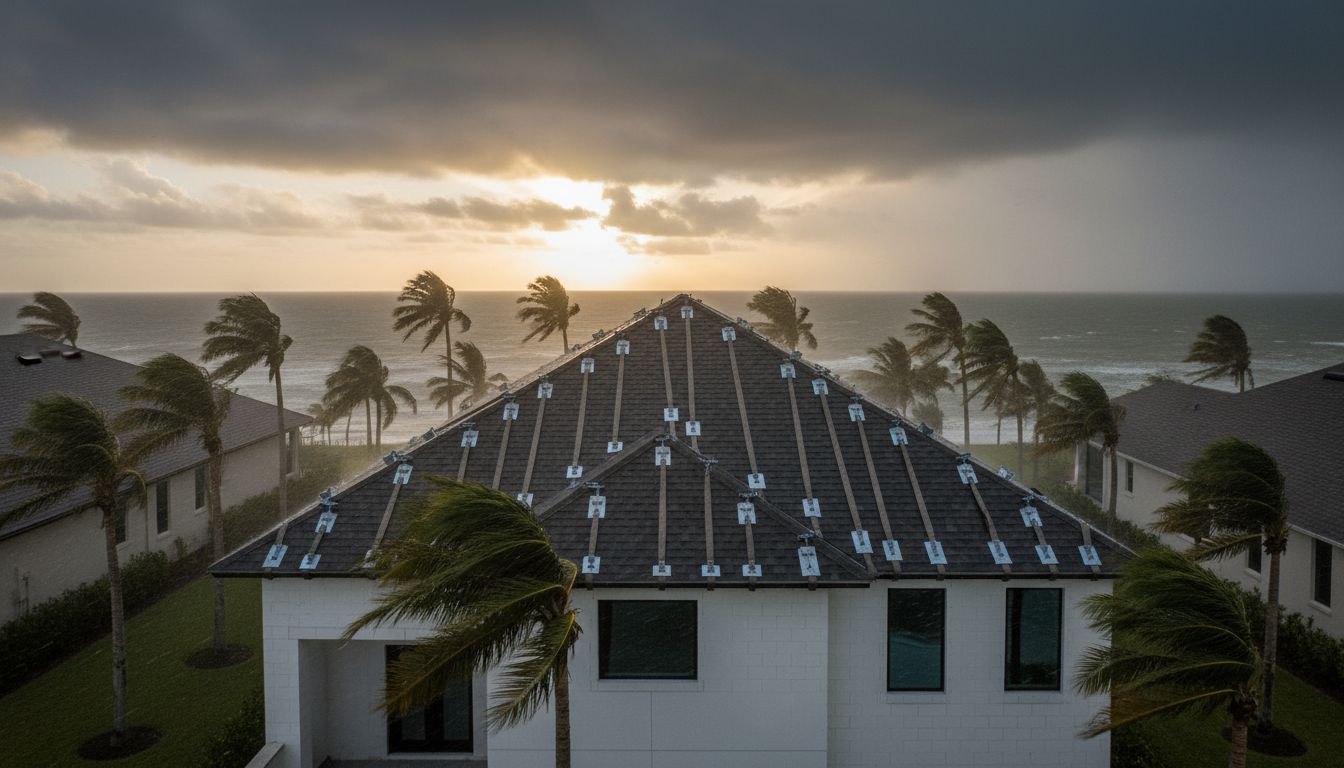
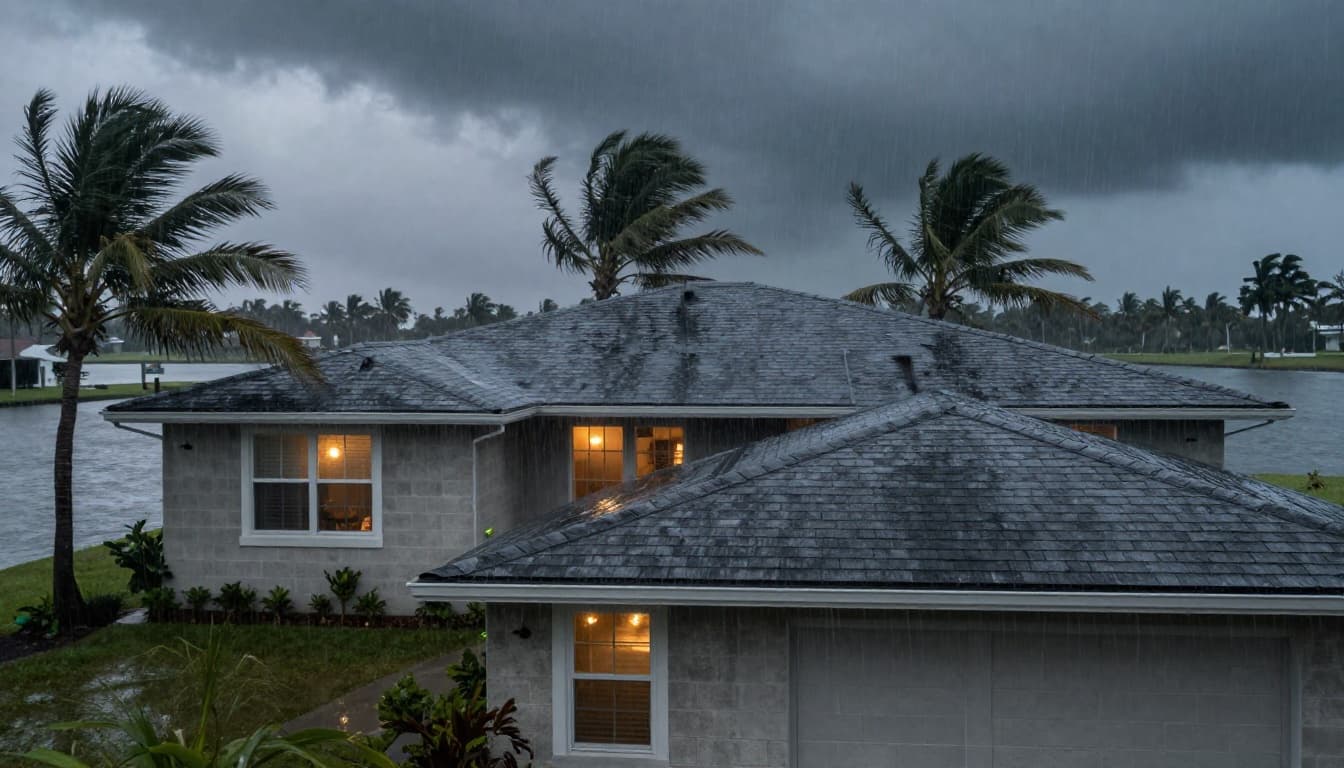
Photorealistic image of a typical Cape Coral, Florida single-story waterfront home enduring strong hurricane winds and heavy rain, with its hip shingle roof securely attached via metal straps, palm trees bending dramatically, canal in background, and warm interior lights glowing through windows under a stormy gray dusk sky. A Cape Coral home riding out hurricane conditions with a roof system that stays tied into the walls, created with AI.
Think of your roof like a lid on a cooler. If the lid isn't latched, wind can get underneath and start lifting. Once uplift begins, damage spreads fast. That's why roof-to-wall connections matter, even though you can't see them from the yard.

Cape Coral is in Lee County, which is not in Florida's High-Velocity Hurricane Zone (HVHZ). Still, local design wind requirements are strong, and storms don't care whether a map label says HVHZ or not. Wind-driven rain and uplift pressures hit roof edges and corners hardest, especially on older homes with simpler connections.

Insurance companies care because attachments are part of the "keep the roof on" story. However, attachments are only one line on a wind mitigation form. Your insurer may weigh other items heavily too, such as roof deck attachment, a sealed roof deck or secondary water resistance (SWR), roof shape, and opening protection.

If you're planning a re-roof soon, it's smart to align the project with current expectations and documentation. This overview of 2026 Florida Roofing Code updates for Cape Coral re-roofs explains why inspectors and permit reviewers often ask for more detail than homeowners expect.

Toe nails vs clips vs straps (single wrap and double wrap), and how they're graded

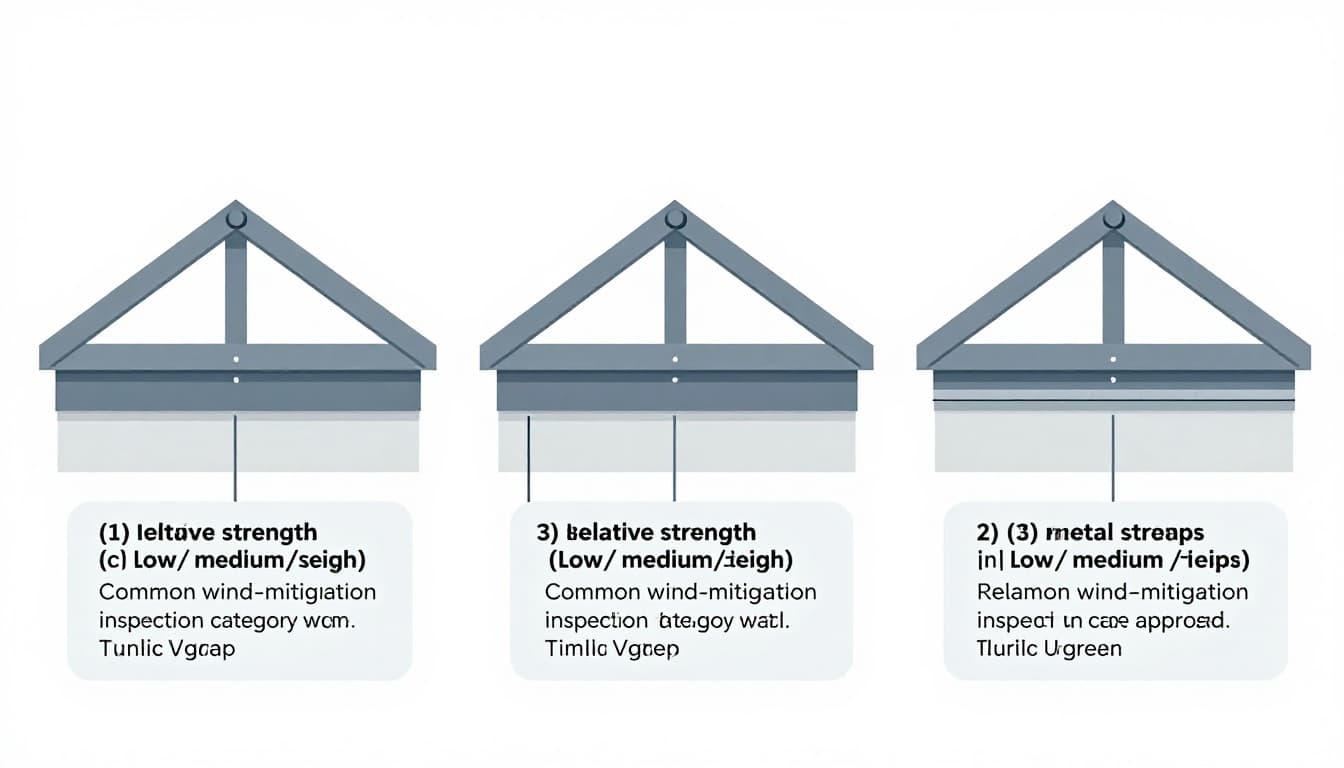
Educational diagram illustrating three primary roof-to-wall attachment methods in Florida homes: toe nails, metal clips, and metal straps (single/double wrap), with cross-sections, nail patterns, strength ratings, wind-mitigation inspection categories, and upgrade details. Side-by-side examples of common roof-to-wall connector types and how they're described in wind mitigation reporting, created with AI.
Florida wind mitigation reporting typically groups roof-to-wall attachments from weakest to strongest as:

  • Toe nails (often listed as RTR1) : Nails driven at an angle from the truss into the top plate. There's no metal connector. This is common in older housing stock.
  • Clips (often RTR2) : A small metal connector ties the truss to the top plate on one side. Nail count and placement matter.
  • Straps, single wrap (often RTR3) : A metal strap connects and wraps over (or around) the truss, creating a more secure tie than a clip.
  • Straps, double wrap (often RTR4) : Metal wraps on both sides of the truss (or an equivalent configuration), typically the strongest category when installed correctly.

Here's the practical takeaway: the category is not just the metal shape , it's also the fasteners. Inspectors need to see the connector clearly and confirm the nail pattern matches the category.

To make the differences easier to scan, this table summarizes what most homeowners care about:

Attachment type (common name) Wind mitigation category (typical) What it usually means in real life Common upgrade path
Toe nails RTR1 Lowest resistance to uplift Retrofit to straps (often via attic or soffit access)
Clips RTR2 Better than toe nails, still limited Add straps where feasible, improve missing fasteners where allowed
Single wrap straps RTR3 Strong connection when properly nailed Upgrade weak areas, sometimes move to double wrap
Double wrap straps RTR4 Strongest reported category Usually done during major retrofit or rebuild work

For a plain-language overview of retrofit approaches and why they work, the NAHB has a helpful PDF on retrofit improvements for roof-to-wall connections.

If you can't clearly see the connector and nails in the attic, your wind mitigation credit can drop, even if the house "probably has straps."

How to tell what you have in your attic (and what's common in Cape Coral homes)

Most homeowners find out what they have one of three ways: an insurance wind mitigation inspection, an attic look during a re-roof, or a post-storm repair that exposes framing.

If you want a quick DIY check, pick a safe day and bring a bright flashlight. Look where the roof truss meets the top of the wall (the top plate). You're trying to spot metal hardware and how it grabs the wood.

A few Cape Coral-specific realities help set expectations:

  • Pre-2002 homes often have toe nails . Some 1990s houses have clips, but straps are less common unless someone upgraded.
  • Truss spacing and access vary . Tight truss bays, low-slope roofs, and tight eaves can make some retrofits slower and more expensive.
  • Re-roof timing matters . Many shingle roofs cycle every 15 to 20 years in Southwest Florida, sooner if storms or heat accelerate wear. That timing often becomes the best window to pair upgrades.

If you're already thinking about replacement, this step-by-step roof replacement process in Cape Coral is a useful preview of when the roof deck and structural details are most visible.

Also, don't ignore the paperwork side. Structural connection work may require permits and inspection sign-offs. This guide on roof replacement permit requirements in Cape Coral helps you understand what typically triggers a permit and why skipping it can backfire later.

How attachments affect wind ratings, and what upgrades cost in 2026

On a wind mitigation report, stronger roof-to-wall attachments usually help. Still, the final insurance impact varies by carrier and by your other mitigation features (roof deck attachment, SWR, roof geometry, opening protection, and more). Some homeowners see modest changes, while others see meaningful reductions, especially when several categories improve together.

Cost ranges: attic retrofit vs during a re-roof, partial vs whole-home

Costs swing based on access, story height, soffit type, connector count, and whether drywall or soffits must be opened and repaired. The ranges below assume a typical single-story Cape Coral home around 1,800 to 2,200 square feet, with average attic access, and work completed by a licensed contractor.

Upgrade scenario (2026) Typical scope Common range
(a) Attic retrofit without re-roof, toe nails or clips to single wraps Access connectors from inside attic, add straps where feasible $2,500 to $4,000
(a) Attic retrofit without re-roof, upgrade to double wraps More labor, tighter access, more hardware $4,000 to $6,500
(b) Upgrades during a re-roof, to single wraps Work coordinated while roof work is active, easier access in many cases $1,800 to $3,000
(b) Upgrades during a re-roof, to double wraps Still more labor, but usually less disruption than attic-only $3,000 to $5,000
(c) Partial retrofit (selected sections only) Target a portion of the roofline where access is possible $1,500 to $4,000
(c) Whole-home retrofit (all accessible connections) Full perimeter and all truss-to-wall points $3,000 to $8,000

Plan for additional soft costs too. Permits, engineering review (if needed), and a post-upgrade wind mitigation inspection often add $500 to $1,000 combined, depending on the situation.

Two ways to keep budgets realistic:

  • Expect surprises in older attics : HVAC platforms, spray foam, low clearance, and packed insulation can slow work.
  • Treat partial retrofits carefully : If only some connections get upgraded, you may not receive the category you hoped for, because the wind mitigation form is based on what's present across the structure.

If you're aiming for storm performance first (not just insurance), this hurricane-proofing guide for Cape Coral roofs ties roof-to-wall attachments to the bigger system, including underlayment and edge details.

Finally, keep an eye on assistance programs. The state-backed My Safe Florida Home program explains how funding can apply to roof improvements, including attachments, in roof-to-wall connection upgrades.

Conclusion

In Cape Coral, roof to wall attachments are one of those "small parts" that carry a big job. Toe nails, clips, and straps can change how your roof behaves in wind, and how your home scores on a wind mitigation report.

If you're considering an upgrade, start by confirming what you have, then talk with a licensed roofing contractor or GC about access and scope. Pull permits when required, and finish with a post-upgrade wind mitigation inspection that includes clear photos. That paperwork is often what turns good work into real insurance credit.

By Infinity Roofing February 16, 2026
Picking a metal roof Cape Coral homeowners can trust isn't only about looks. It's about how the whole system handles wind, rain, heat, and salt in the air. Two styles come up again and again: exposed-fastener panels (you can see the screws) and standing seam (fasteners are hid...
By Infinity Roofing February 15, 2026
A roof can look fine from the street, yet still leak at the seams. That's because roof flashing Cape Coral homes rely on is a thin, shaped metal system that seals transitions, where roof planes meet walls, chimneys, and valleys. In Cape Coral and across Lee County, wind-driven...
By Infinity Roofing February 14, 2026
If you own a home in Naples, Fort Myers, Cape Coral, Sarasota, or Marco Island, you already know the roof lives a harder life here. Sun feels stronger, rain hits sideways, and salty air can chew through metal parts faster than you expect. So what's a realistic roof lifespan fl...
By Infinity Roofing February 13, 2026
If your Florida insurance renewal is coming up and your roof is not brand-new, there’s a good chance you’ll hear about a roof certification letter . It can feel like your roof is being asked to “show its ID” before your insurer will keep coverage in place. In 2026, carriers ar...