Pipe Boot Flashing Failures In Cape Coral And Quick Warning Signs

A small ring of rubber around a vent pipe shouldn't be a big deal, right? In Cape Coral, it often is. Pipe boot flashing sits at one of the most common leak points on a roof: a round penetration where plumbing vents exit the attic.
Here's the bottom line: when a pipe boot starts cracking, shrinking, or pulling loose, rain doesn't need much room. Add Southwest Florida heat, strong UV, salt air, and wind-driven rain, and that "tiny" failure can turn into ceiling stains, wet insulation, and moldy smells.
The good news is you can spot many warning signs without climbing on the roof. You just need to know what to look for and when to call a licensed, insured roofer.
What pipe boot flashing does (and why Cape Coral beats it up)
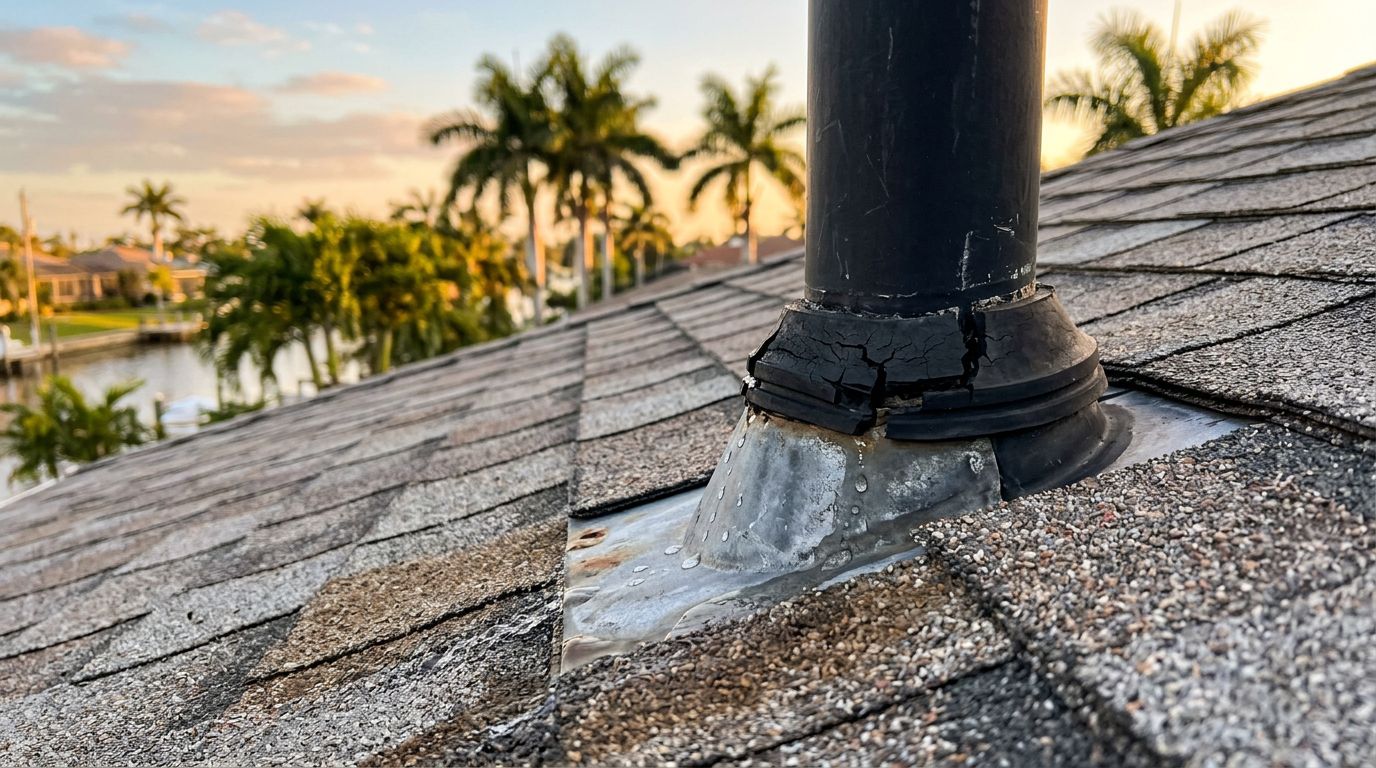
A pipe boot is a flashing assembly that seals the gap where a vent pipe passes through the roof. On shingle roofs, the metal base typically slides under shingles on the uphill side and laps over shingles downhill. The boot itself (often rubber) grips the pipe like a gasket. Tile and metal systems use different details, but the goal is the same: move water away, even during heavy rain.
Cape Coral conditions speed up failure in a few predictable ways:
- UV and heat dry out rubber fast. Think of how a dashboard cracks after years in the sun. Boots do the same.
- Salt air (especially near canals and open water) can corrode metal flashing and fasteners.
- Thermal movement makes pipes expand and contract. The boot flexes with it until it can't.
- Wind-driven rain pushes water uphill and sideways. A small gap can leak even when rain "shouldn't" reach it.
- Hurricane season adds uplift and vibration. Old sealant and brittle rubber don't handle that stress well.
Material and install quality matter too. A boot that's the wrong size, set too high, or not properly integrated with the roof covering can fail early. Another common issue is "tar fixes." Someone smears roof cement around the pipe, it cracks a year later, and water finds the same path again.
If your roof has had recent repairs or you're planning one, it helps to ask how penetrations will be sealed and dried-in. Underlayment choices play a role in backup protection during storms, especially around penetrations, which is why many owners review Florida roof underlayment options before signing a contract.
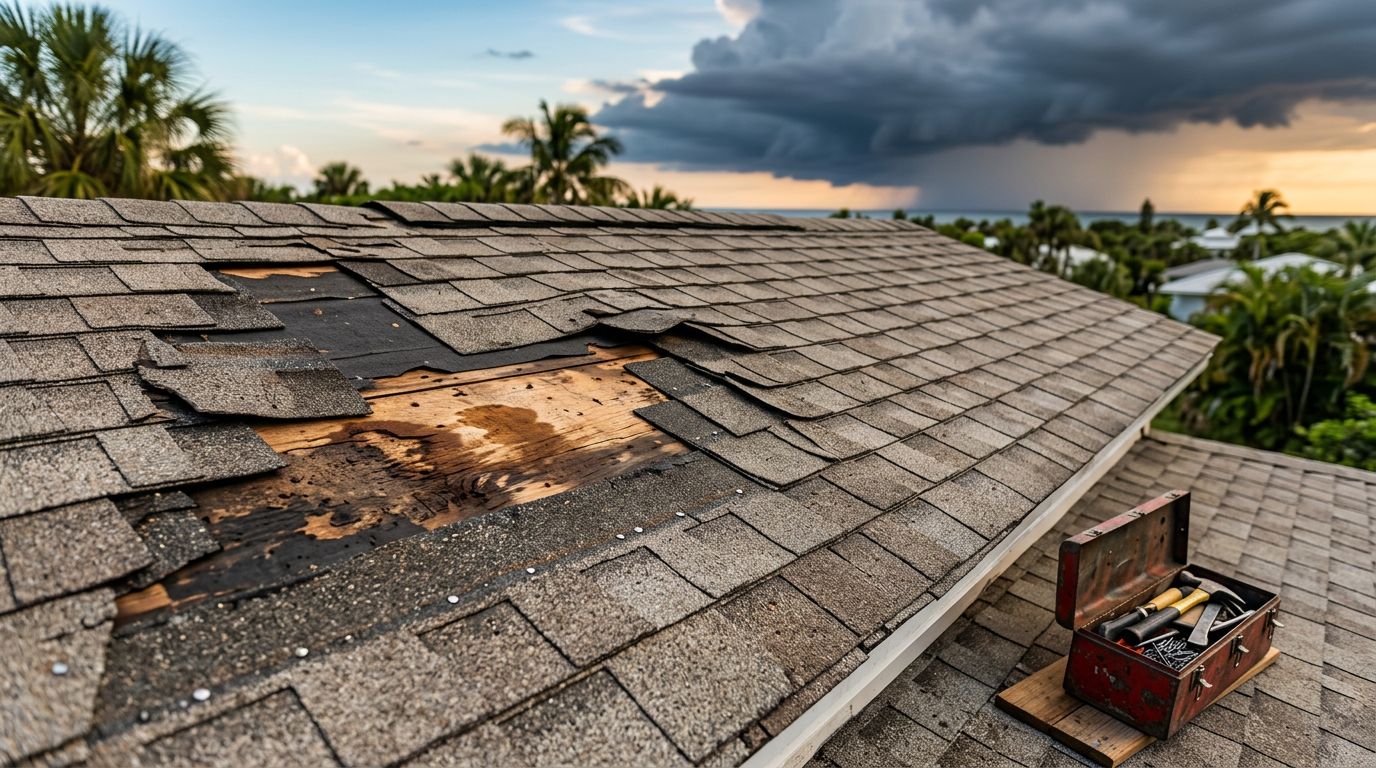
A lot of roof leaks start at penetrations, because they mix movement (pipes) with water flow (roof planes). Tiny gaps become big problems during wind-driven rain.
Quick warning signs you can check without getting on the roof
Most people notice a leak when a stain shows up indoors. By then, water may have traveled along decking or trusses. Instead, watch for earlier clues from the living space, attic access, and even the yard.
Inside the home and attic access
Look for these common signs around bathrooms, kitchens, and laundry areas (vent pipes often run near them):
- Yellow or brown ceiling rings that slowly grow after storms
- Bubbling paint or soft drywall near a wall line or ceiling corner
- Musty odor that's stronger after rain or high humidity days
- Drips in the attic on the pipe, rafters, or underside of roof decking
- Darkened plywood or "ghosting" around a single roof penetration
- Wet insulation in a small, localized patch (especially near a vent stack)
If you can safely access your attic, use a bright flashlight and look around the pipe on a rainy day. Don't touch electrical wiring, and don't step off the truss chords. If the attic is tight or unsafe, stop and call a pro.
From the yard, driveway, or lanai
You can often spot boot issues with binoculars or a phone zoom:
- Cracked rubber collar around the pipe (it may look split or frayed)
- Boot pulled down the pipe, leaving a visible gap at the roof line
- Loose or lifted shingles near the pipe area
- Heavy black sealant blobs around the pipe (often a repeat-leak history)
- Rust staining below the penetration on older metal bases
- Debris buildup that holds water near the boot (leaves, twigs, granules)
One extra hint for property managers: compare units. If several homes in the same community were built around the same time, boot aging can show up in clusters.
When you suspect a flashing problem, a targeted repair is usually cheaper than waiting for interior damage. For local pricing context, see roof repair costs in Cape Coral and use it as a budgeting starting point, not a final quote.
Stopgaps vs. durable repairs (and what to tell a roofer)
A failing pipe boot can sometimes be stabilized short term, but "short term" is the key phrase. In Cape Coral, sun and rain punish surface sealants quickly.
Temporary stopgaps (when they make sense)
Sealant can help when you need to buy time before a scheduled repair, or right after a storm when you're preventing active water entry. A roofer might use a compatible sealant in a limited way, such as sealing a small edge lift or a minor crack.
Still, sealant alone usually fails because the pipe and roof move. It also tends to trap water and debris if it's applied like a mound.
If you see a roof penetration "glued" in place with smeared cement, treat it as a warning sign, not a finished repair.
Durable fixes that actually last
A long-term repair means replacing or properly rebuilding the pipe boot flashing to match the roof type:
- Shingle roofs often need a correctly sized boot with a flange integrated under and over the right shingle courses.
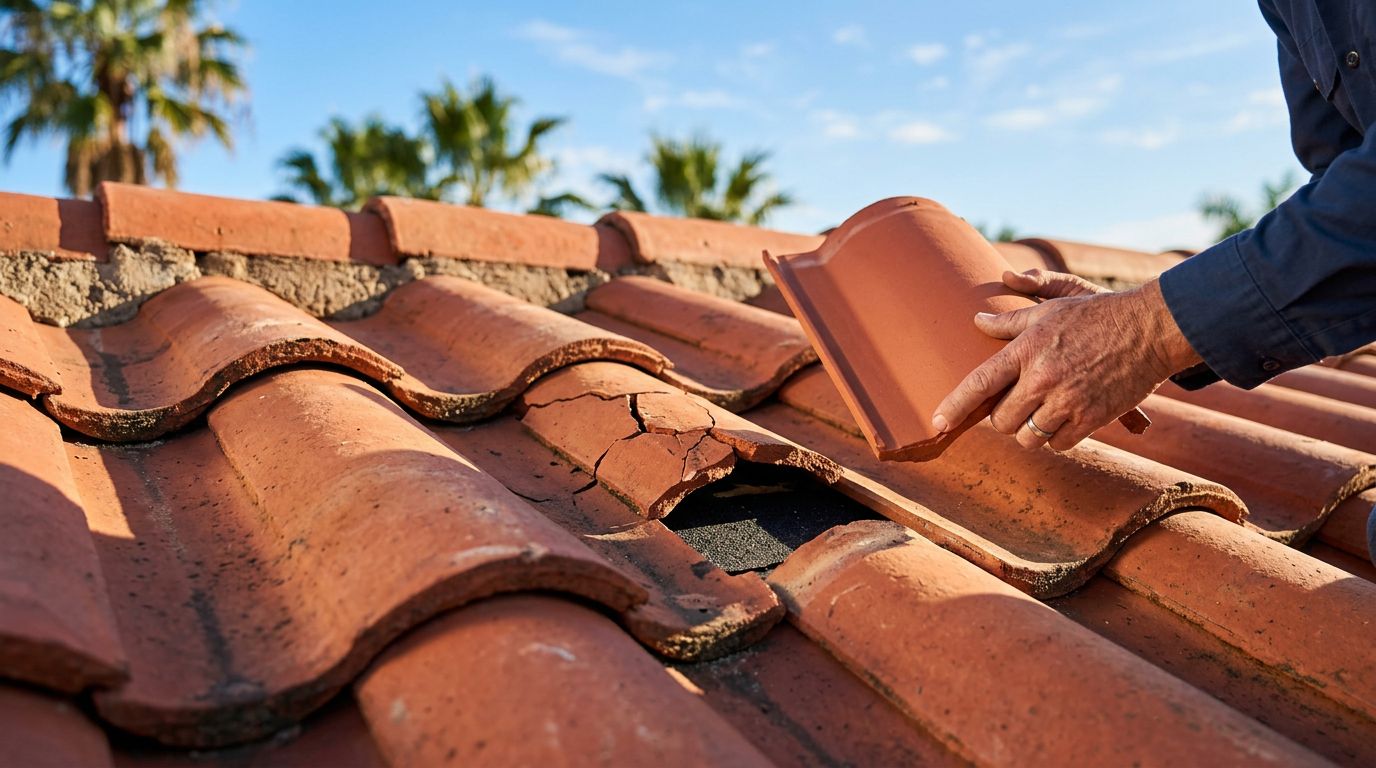
- Tile roofs may require a tile-compatible flashing detail and careful replacement of surrounding tiles to prevent breakage and leaks.
- Metal roofs usually need the correct high-temp boot (often silicone), plus a fastening pattern and seal method that matches the panel profile.
The right fix also depends on roof age. If the roof is near end-of-life, it may be smarter to address multiple penetrations together during a planned project, using details that align with current requirements. Many owners also review 2026 Florida roofing code updates when planning re-roofs, since inspections often focus on attachment, underlayment, and flashing details.
What to tell a roofer (so you get a clear plan)
When you call, share specifics that help diagnose without guessing:
- Where you see staining (room name and nearest wall)
- When it happens (only wind-driven rain, only heavy rain, every storm)
- Roof type and approximate age (shingle, tile, metal)
- Any past repairs near that area (especially "sealed around the pipe")
- Photos from the ground and attic if you can take them safely
If you need help fast, start with a contractor that offers dedicated Cape Coral roof repair services and asks questions about safety, access, and interior protection.
Simple decision tree: monitor vs. schedule repair vs. emergency
Use this quick guide to decide your next move:
| What you notice | Likely risk level | Best next step |
|---|---|---|
| No stains, but rubber looks cracked from the ground | Medium | Schedule a repair before the next storm cycle |
| Light ceiling stain that doesn't grow | Medium to high | Schedule repair soon, ask for attic check |
| Active drip, wet insulation, or fast-growing stain | High | Treat as an emergency, call for same-day help |
| Musty smell after rain, no visible stain | Medium | Request an inspection, moisture can hide |
| Repeated "caulk fixes" in the same spot | High | Ask for a proper boot/flashing replacement |
Roof work is dangerous, and Cape Coral weather changes fast. Stay off the roof, especially after rain, and use licensed, insured roofing professionals for any repair involving penetrations or flashing.
Conclusion
Pipe boot failures are common in Cape Coral because sun, salt air, and wind-driven rain exploit small weak points. Watch for early indoor clues, scan penetrations from the ground, and don't rely on sealant as a long-term answer. With pipe boot flashing repairs, the best outcome usually comes from a correct replacement that matches your roof system, done before the next big storm tests it.