Florida Roof Sheathing Nailing Patterns That Pass Inspection In 2026
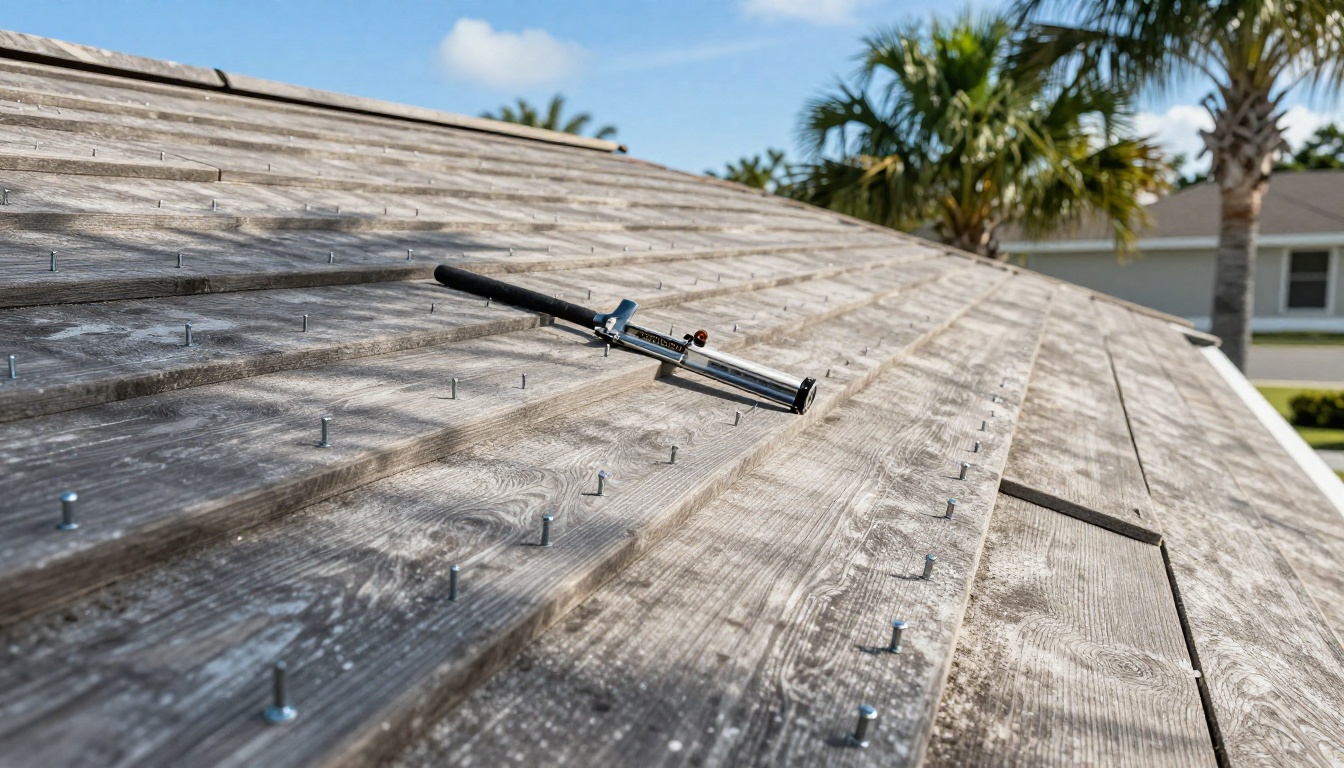
If your roofer pulls the shingles and the inspector asks to see the deck, the whole job can slow down fast. That surprise is common in Florida, because the roof covering is only the top layer. The real backbone is the wood deck and how it's fastened.
In 2026, Florida roof sheathing nailing still trips up a lot of reroof projects, not because it's mysterious, but because small details get missed. Nail spacing, nail type, panel thickness, and corrosion resistance all matter, especially near the coast.
Below is a practical guide to the nailing patterns that typically pass inspection, plus what changes in HVHZ areas and how to avoid the most common fail points.
What Florida inspectors actually check in 2026 (and why it matters)
Think of roof sheathing like the lid on a cooler. If it's barely attached, wind gets under it and the whole system can peel back. That's why inspectors look past the shingles and focus on attachment.
On most residential reroofs, inspectors are enforcing requirements tied to the Florida Building Code in effect for your permit date. In plain terms, that usually means guidance found in FBC Residential Chapter 8 (roof and ceiling construction) and FBC Building Chapter 23 (wood), along with special provisions for high-wind regions. If you're in a High-Velocity Hurricane Zone (HVHZ), the bar is higher because of the extra uplift forces and product approval rules (see FBC Building Section 2322 for HVHZ sheathing provisions).
Here's what gets checked most often during deck and dry-in inspections:
Panel thickness and rating matter. Many jurisdictions won't accept thin or damaged panels, even if they "feel fine." Inspectors may look for panel grade stamps (Exposure rating, thickness, span rating).
Nail pattern and consistency matter more than most homeowners expect. A few areas spaced too wide, or a whole slope nailed like a "guess," can trigger corrections.
Nail placement is a big deal. Nails that are too close to the panel edge can split wood. Nails too far from edges miss the best holding zone.
Overdriven nails and "shiners" (missed trusses/rafters) can fail inspection. Even if the spacing looks right, fasteners that don't bite framing do not count.
If you're trying to line up your project with what local officials are watching this year, this guide to 2026 Florida Building Code updates for Cape Coral re-roof inspections helps set expectations for Southwest Florida permitting and inspection scrutiny.
Quick-reference roof sheathing nailing schedules (field and edge)
Use this table as a fast starting point for common inspection-ready schedules. Your permit set, engineering, manufacturer instructions, and local amendments can tighten these numbers, especially at edges and corners.
| Where the home is located | Common panel minimums (verify by plans) | Edge spacing (panel edges) | Field spacing (inside panel) | Typical fastener used | Where it usually applies |
|---|---|---|---|---|---|
| Non-HVHZ areas (most of Florida) | 15/32-inch plywood or OSB, Exposure 1 or better | 6 inches o.c. | 12 inches o.c. | 8d nails, corrosion-resistant | Typical schedule for many reroofs when deck and framing are in good shape |
| Non-HVHZ, enhanced attachment (often requested for wind resistance) | 15/32-inch or thicker, verify span rating | 6 inches o.c. | 6 inches o.c. | 8d ring-shank, corrosion-resistant | Used when higher uplift performance is desired, sometimes required by design pressures or local practice |
| HVHZ (Miami-Dade and Broward) | Often thicker panels are used, verify plans | Commonly 4 to 6 inches o.c. | Commonly 6 inches o.c. | 8d ring-shank, NOA-accepted system | Must follow HVHZ provisions and product approvals (Miami-Dade NOA or Florida Product Approval) |
| Any zone, deck repairs or questionable existing nailing | Match existing structure, upgrade as required | As required by code or engineer | As required by code or engineer | Fastener choice based on exposure | When inspectors can't "count" old nails, crews often re-nail for a clean, consistent pattern |
The takeaway: 6 and 12 is the baseline many inspectors expect outside HVHZ, while HVHZ work often demands tighter spacing and stricter approvals. Also, roof corners and edges see higher wind forces, so don't be surprised if your plans call for tighter fastening in those zones.
If you're unfamiliar with when the deck gets inspected during a reroof, this step-by-step Cape Coral roof replacement process with deck inspections shows where nailing patterns typically get verified before the roof covering goes back on.
HVHZ versus non-HVHZ: the differences that get jobs red-tagged
Outside HVHZ, many reroofs follow familiar wood structural panel schedules, and inspectors mainly want to see the right thickness, correct spacing, and acceptable fasteners. Inside HVHZ, the rules are stricter and the paperwork matters more.
HVHZ jobs commonly fail when a contractor installs a "standard Florida" pattern without checking the HVHZ requirements and approvals first. In Miami-Dade and Broward, the system often needs to align with Miami-Dade Notice of Acceptance (NOA) requirements, or other accepted product approvals, and the attachment pattern can be tighter.
Keep these HVHZ realities in mind:
Permitting staff may ask for product approval documents for roof systems and components. That can include items people don't think about, like specific fasteners.
Inspectors are more likely to scrutinize ring-shank use, spacing, and panel upgrades, because uplift loads are higher.
If a plan calls for a specific schedule, the inspector won't accept "we always do it this way" as a substitute.
A roof can look perfect from the curb and still fail inspection if the deck attachment doesn't match the approved assembly.
Fastener compatibility and corrosion rules (especially near the coast)
Southwest Florida roofs live in heat, humidity, and salt-laced air. Even homes near canals can see corrosion accelerate. As a result, "good enough" nails can become a long-term problem, even if they pass the day-one tug test.
For most sheathing attachment, crews commonly use 8d nails sized for roof decking, often around 0.131-inch shank diameter and 2.5-inch length, but always verify what the plans and code require. Ring-shank nails are popular in higher-wind applications because they resist pullout better than smooth-shank nails.
Corrosion resistance is where coastal jobs win or lose over time:
Hot-dipped galvanized fasteners are often used for better corrosion resistance than basic bright nails.
Stainless steel fasteners may be the right call in severe coastal exposure, especially where salt spray is routine.
Fastener compatibility matters if the framing or blocking uses preservative-treated lumber, because some treatments accelerate corrosion in the wrong metal.
If you're hiring a contractor, ask one simple question: "What fasteners are you using for my deck, and why?" A clear answer usually signals good process control.
When re-nailing is required during a reroof, and how to document it
Re-nailing isn't always required, but it becomes necessary when the existing attachment can't be verified or doesn't meet today's standard for the permitted work. If the old roof comes off and the deck shows wide nail spacing, staples, corrosion, missed framing, or inconsistent patterns, many crews choose to re-nail so the inspection is straightforward.
Re-nailing also comes up when you replace damaged sheathing panels. New wood must be fastened correctly, even if the rest of the deck is older.
In addition, scope matters. If you're near the line between a repair and a full replacement, Florida's reroof triggers can change what must be brought up to current code. This breakdown of Cape Coral roof repair versus replacement decisions explains how homeowners get pushed from "patch it" to "permit it."
To avoid inspection disputes, document deck fastening like it's part of the finish work:
- Take wide photos of each roof plane after tear-off, then again after re-nailing.
- Take close-ups with a tape measure showing edge and field spacing.
- Photograph panel stamps (thickness and Exposure rating) on any replaced sheets.
- Keep fastener invoices and box labels that show coating type and size.
- Ask your contractor to note the final nailing schedule on the job file, so it matches what the inspector sees.
Sheathing nailing inspection fail punch-list (and quick fixes)
Most failures come from a handful of repeat problems. Fixing them usually isn't hard, but it does take time and discipline.
- Spacing too wide at edges : Add nails to meet the required edge schedule, don't "average it out" across the roof.
- Field nails missing or skipped : Snap lines or mark framing, then infill to a consistent pattern.
- Shiners (missed trusses/rafters) : Remove and replace properly into framing, because missed nails don't count.
- Overdriven nails : If the nail head crushes the panel face, replace with new fasteners nearby or follow the engineer's correction method.
- Nails too close to panel edges : Add corrected fasteners at proper set-back, and replace split panels if needed.
- Wrong nail type or coating : Swap to corrosion-resistant fasteners appropriate for exposure and code.
- Mixed fastening patterns : Standardize the schedule per the approved plan, inspectors hate "random."
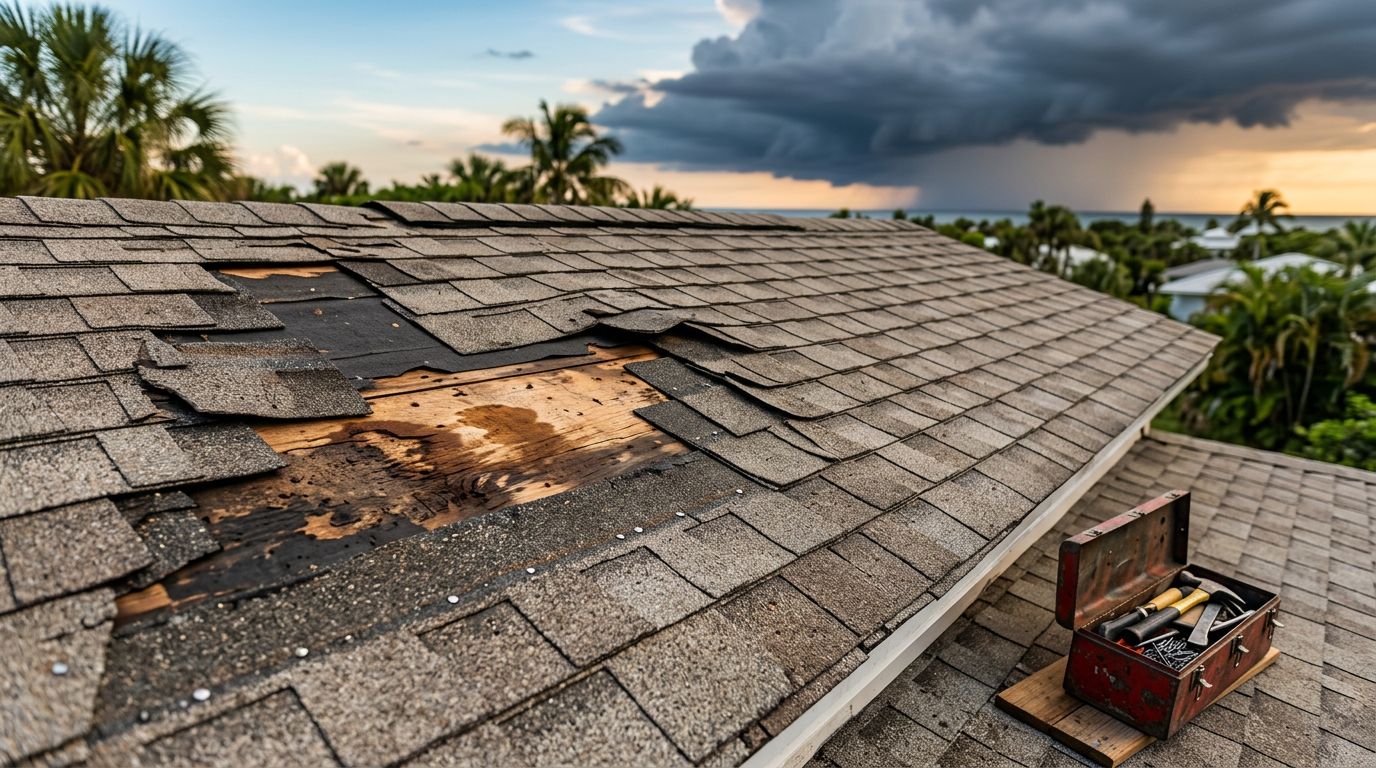
- Soft or swollen decking left in place : Replace compromised panels, nails won't hold in bad wood.
The fastest way to pass is a deck that looks uniform, with straight lines and repeatable spacing.
Conclusion
A clean 2026 inspection starts with simple, visible proof: the right sheathing, the right fasteners, and a consistent nailing pattern that matches your permit and location. Outside HVHZ, many homes pass with a 6-inch edge and 12-inch field schedule, while HVHZ often requires tighter spacing and stricter approvals. If you're planning a reroof, ask your contractor how they'll verify and document Florida roof sheathing nailing before the roof covering hides it.