How To Read A Florida Roofing Estimate Line By Line: A Homeowner Guide
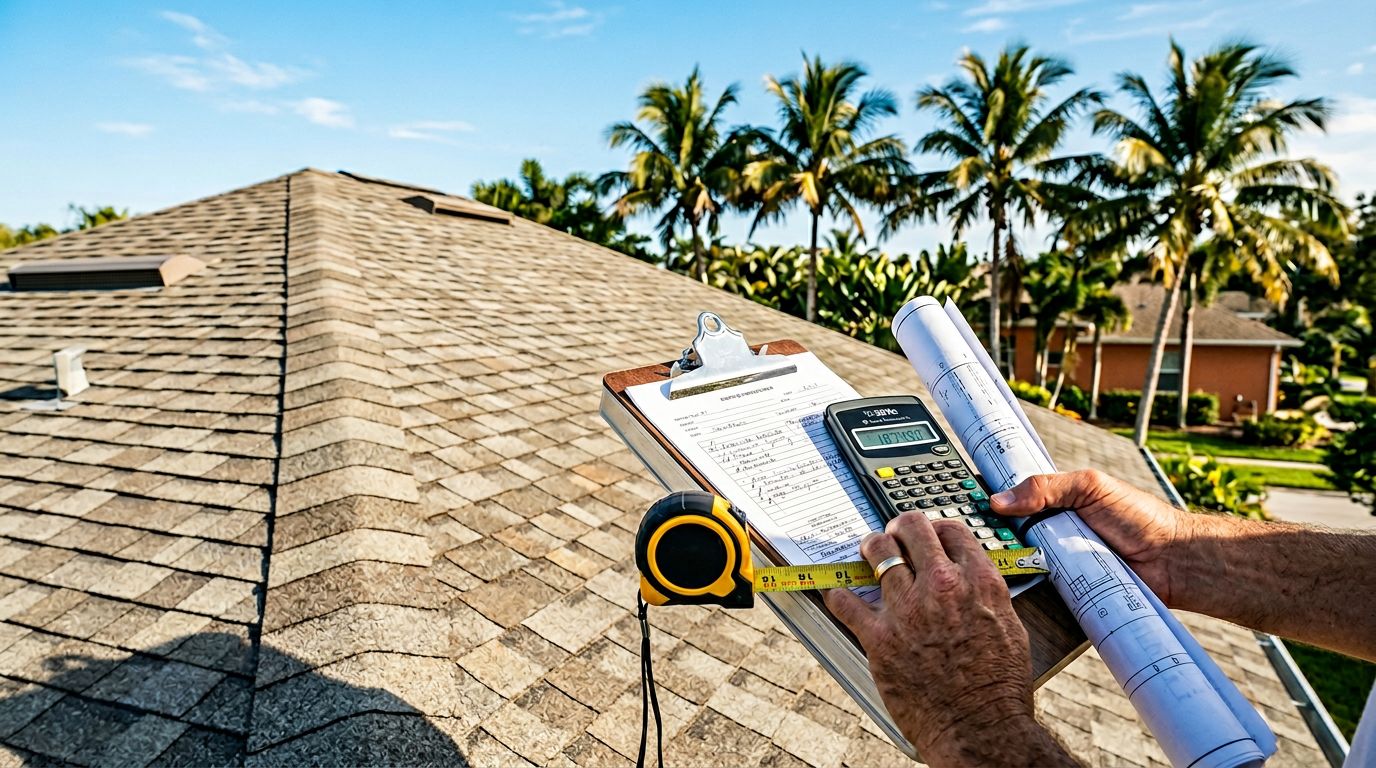
A roof estimate can look like a grocery receipt written in another language. Numbers, abbreviations, and "allowances" pile up fast. Meanwhile, two quotes for the same house can land thousands apart.
This guide breaks down a florida roofing estimate the way a homeowner can actually use it. You'll learn what each common line item covers, how roofers measure it (squares, linear feet, sheets), what drives pricing in Florida, and what to ask so you're comparing apples to apples.
Start with the job summary and measurements (the part that sets the price)
Before you read any line items, find the "scope" section. This tells you whether the contractor plans a repair, a partial replacement, or a full tear-off and re-roof. If the scope is vague, the rest of the estimate won't be reliable.
Most estimates start with the roof size. Roofers usually price by the square (often written "SQ"), where 1 square = 100 square feet of roof surface. That's not your home's living area. A 2,000 square foot home can have a 2,400 to 3,000 square foot roof, depending on pitch, overhangs, and layout.
Also scan for these measurement clues:
- Stories and height : Two-story sections often add labor and setup time.
- Pitch (steepness) : Steeper roofs require slower work and more safety gear.
- Complexity : Valleys, hips, dormers, skylights, and chimneys add detail work.
- Access : Tight driveways, screened lanais, or delicate landscaping can raise protection and cleanup costs.
If you're not sure whether you need repair work or replacement work, it helps to read a decision guide like re-roof vs roof repair in Cape Coral before comparing bids. The "right" estimate starts with the right scope.
A low price often comes from a smaller scope, not a better deal. Make sure every bid is describing the same job.
Finally, look for the words included and excluded . A clean estimate spells out what's inside the price (permit, disposal, flashing) and what becomes a change order (decking replacement above an allowance, rotten fascia, surprise structural issues).
A realistic sample Florida roofing estimate (and what each line means)
Here's a simplified sample for an architectural shingle replacement on a typical Southwest Florida home (about 2,200 square feet of roof surface, roughly 22 SQ). Your numbers will vary, but the structure should look familiar.
A sample layout like this makes it easier to compare two contractors line by line.
| Line item | How it's measured | Example qty | Plausible 2026 range (SWFL) |
|---|---|---|---|
| Tear-off and disposal (1 layer) | SQ | 22 SQ | $55 to $110 per SQ |
| Dumpster/landfill fees | Lump sum | 1 | $400 to $1,200 |
| Decking replacement allowance | Sheets (4x8) | 2 sheets | $75 to $140 per sheet |
| Underlayment (synthetic or peel-and-stick zones) | SQ | 22 SQ | $45 to $140 per SQ |
| Drip edge (new) | Linear feet (LF) | 220 LF | $2.50 to $6.00 per LF |
| Step flashing, wall flashing, counter flashing (as needed) | LF or lump sum | 1 | $300 to $1,500 |
| Pipe boots and roof penetrations | Each | 5 | $35 to $95 each |
| Shingles (architectural) and installation | SQ | 22 SQ | $220 to $420 per SQ |
| Ridge cap and hip/ridge work | LF | 60 LF | $6 to $14 per LF |
| Ventilation adjustments (box vents or ridge vent) | Each or LF | 2 vents | $75 to $250 each |
| Permit and inspection handling | Lump sum | 1 | $250 to $1,000 |
| Final cleanup and magnetic nail sweep | Lump sum | 1 | $100 to $350 |
Now, what each line usually means when you read it on your own florida roofing estimate:
Tear-off and disposal covers labor to remove old shingles and underlayment. It's commonly priced per square. Cost goes up with two layers, heavy tile, or hard-to-access roofs.
Dumpster/landfill fees are real costs, not fluff. Florida disposal fees can jump after storms when dumps are packed and hauling gets harder.
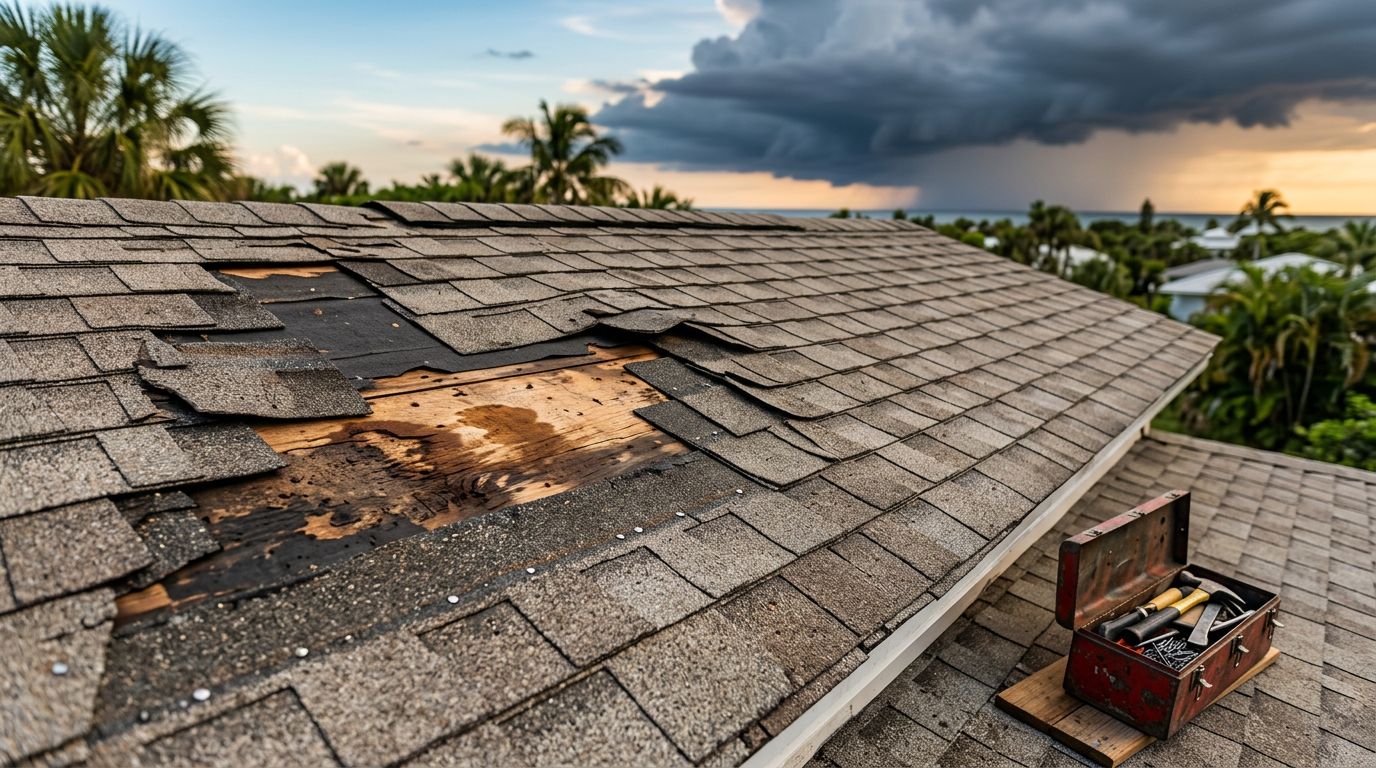
Decking replacement allowance is the first "gotcha" line. Many estimates include a small allowance, then charge per sheet after tear-off. Decking is measured in sheets , usually 4 foot by 8 foot plywood or OSB. Ask what happens if they find more damage, and get the per-sheet price in writing.
Underlayment is the water-shedding layer under the shingles. Some homes need enhanced protection in key areas (valleys, eaves, low slopes). In Florida, underlayment choices can tie directly to wind-driven rain performance, so don't treat it like an afterthought.
Drip edge is metal edging at roof perimeters. It's measured in linear feet . It helps control water at the edges and protects the deck edge. If drip edge isn't listed, ask why.
Flashing is metal used where the roof meets walls, chimneys, and other transitions. This line gets priced per linear foot or as a lump sum because every roof is different. Good flashing work prevents leaks more than any shingle brand will.
Pipe boots and penetrations are the rubber or metal seals around vent pipes. They're usually priced "each." They're also one of the most common leak points, so replacement is usually money well spent.
Shingles and installation is the big material and labor line, priced per square. If you want to compare options, it helps to reference a local cost breakdown like shingle roof cost Cape Coral 2026 so you know what ranges are normal.
Ridge cap and hip/ridge work often gets priced by linear feet. More hips and ridges usually means more cuts, more labor, and a higher waste factor.
Ventilation can be priced per vent (box vents) or per linear foot (ridge vent). A solid estimate explains what's there now and what they plan to install. Bad ventilation can shorten roof life in Florida heat.
Permit and inspection handling should clearly state that the contractor pulls the permit and coordinates inspections. If you want a Cape Coral specific explanation, see Cape Coral roofing permit requirements.
Cleanup and nail sweep is simple but important. You want written confirmation of property protection and final pickup.
Florida cost drivers and the questions that protect you from surprises
Even with the same roof size, totals can shift a lot in Florida. The biggest drivers usually come from code requirements and job conditions, not just the shingle color.
Wind and code details matter because Florida roofs are built for uplift resistance. That can affect nailing patterns, underlayment choices, edge details, and approved products.
Availability after storms is another wild card. When a big storm hits, material and labor pricing can tighten quickly. Delivery timelines can change too.
Disposal and tear-off complexity rises with multiple layers, heavy debris, or tricky access. A roof over a screened pool cage can require extra protection and careful staging.
Decking damage is the classic surprise. Humidity, past leaks, and hidden rot show up only after tear-off. Your best protection is a clear allowance and a clear per-sheet rate.
Access, height, and steepness affect how long the crew needs. Labor is often the largest part of a reroof.
When you review any florida roofing estimate, ask these transparency questions before you sign:
- What's the exact roof size you're using (in SQ), and how did you measure it?
- What underlayment system are you installing, and where does it change by zone?
- What's included in flashing work, and what's considered extra?
- What's the decking allowance, and what's the per-sheet price after that?
- Who pulls the permit, and who is listed as the permit holder?
- What schedule protects my home if rain hits mid-project?
To keep your file clean, request these documents up front:
- Proof of Florida license and qualifier name, plus proof of liability and workers' comp (or exemption)
- A permit plan showing who pulls permits and how inspections are scheduled
- Product approvals (Florida Product Approval and, when applicable, Miami-Dade NOA) for the roofing system components
- Written warranty terms, separated into manufacturer warranty and workmanship warranty
- A written change order process (so surprises don't become arguments)
If you're also exploring mitigation funding rules, you may want to read My Safe Florida Home roof grant guidance so your paperwork matches program expectations.
Conclusion
Reading a florida roofing estimate line by line turns confusion into control. Focus on scope first, then quantities and units, then the "allowance" lines that can change the final price. Ask for clear documents, clear measurements, and clear change order rules. When the estimate reads like a plan instead of a mystery, you're far more likely to get a roof that holds up through Florida weather.