
How To Read A Florida Roofing Estimate Line By Line

A Florida roofing estimate can look like a grocery receipt written in a different language. Squares, line feet, "SWR," "drip edge," and a total that may swing thousands between contractors.
The goal isn't to become a roofer overnight. It's to understand what you're paying for, what protects your home in wind-driven rain, and what details must match Florida rules and local permit requirements.
One quick note: this is general education, not legal or insurance advice. Since rules vary by city and county, confirm details with your local building department before signing.
Start at the top: scope, measurements, and the units (SQ, LF, EA)
The first lines of an estimate tell you what job you're actually buying. If the scope is vague, the rest won't matter much.
Scope of work should clearly say whether this is a repair, a full replacement (tear-off), or a recover (new roof over old). In many Florida situations, especially after leaks or multiple layers, a tear-off is common because hidden damage and trapped moisture can ruin the "new" roof from below.
Next, look for roof measurements . Roofing is priced by roof surface area, not your home's living square footage. Estimates may show a diagram, a total roof area, and a waste factor (extra material for cuts, hips, valleys, and starter courses).
You'll also see common units that affect price:
- SQ (square) : 1 square equals 100 square feet of roof area . If an estimate shows 26 SQ, that's 2,600 square feet of roof surface.
- LF (linear feet) : used for ridge, drip edge, valleys, and flashing runs.
- EA (each) : used for pipe boots, vents, skylights, and other single items.
- SF (square feet) : sometimes used for underlayment, peel-and-stick, or flat roofing areas.
A common gotcha: the quantity might include waste, but your insurance paperwork or prior report might not. Ask, "Does this SQ count include waste, and if so, how much?"
Finally, scan for job assumptions : number of stories, steep charges, access limits (pool cage, landscaping), and protection plans. In Florida, daily thunderstorms are real, so the estimate should mention temporary dry-in or weather protection if the project spans more than one day.
Decode the roofing system line items that matter in Florida weather and code
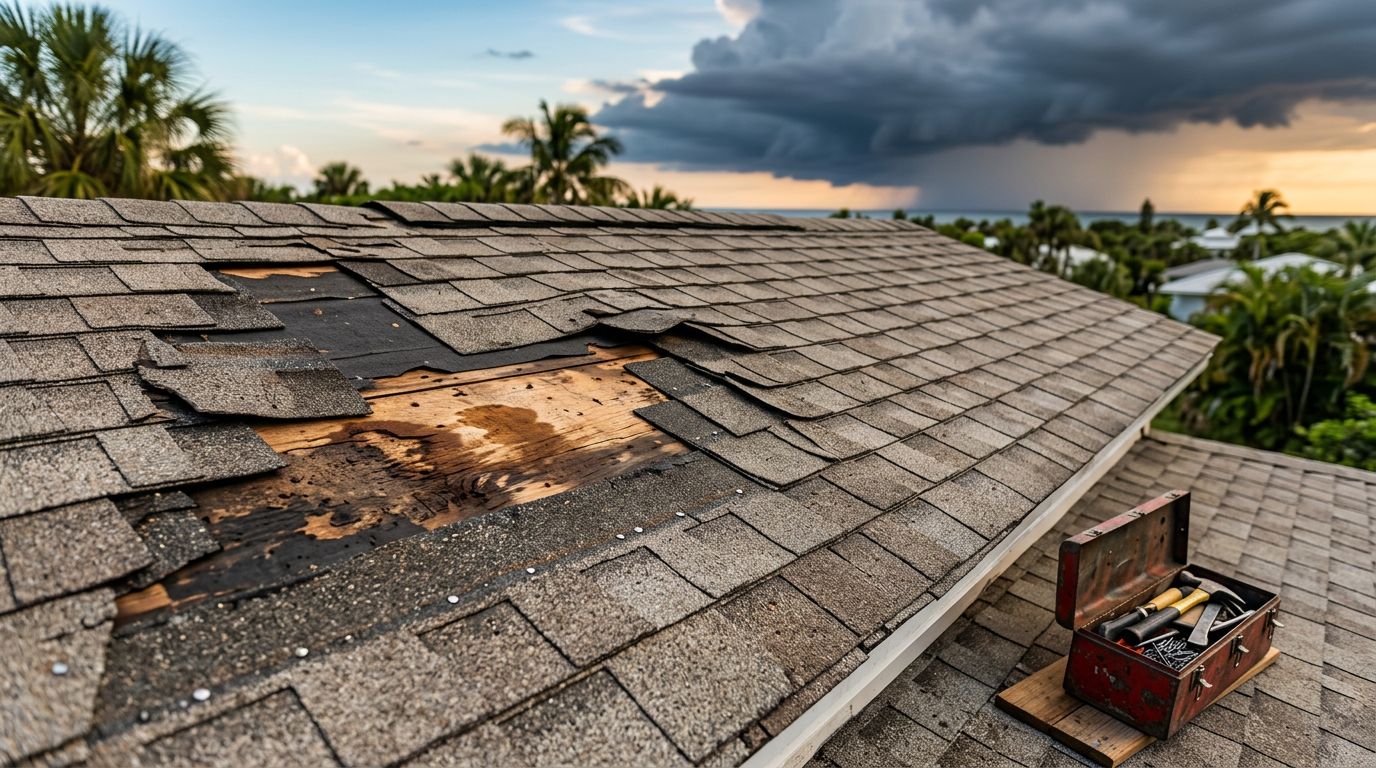
Florida roofs fail in predictable places, edges, penetrations, and underlayment laps. Your estimate should spell out the system, not just "install shingles."
Here are the line items worth reading slowly, with what they mean, why they matter here, and what to verify:
Tear-off and disposal (SQ or "job")
This covers removing old roofing, hauling debris, and dump fees. In storm season, disposal can be a major cost. Verify how many layers are included, and whether rotten underlayment removal is included.
Decking repairs or sheathing replacement (sheet, SF, or allowance)
Most estimates include a per-sheet price (often 4x8 plywood) or an allowance. In Florida humidity, decking rot around leaks is common. Verify the price per sheet
and how change orders are handled if more damage appears.
Underlayment (SQ or SF)
Underlayment is your backup raincoat. In wind-driven rain, it can prevent interior damage when shingles lift or tiles shift. Estimates may specify synthetic underlayment, peel-and-stick, or a secondary water barrier. Verify the product type
, where it will be installed (entire roof or specific zones), and how it's attached.
Drip edge and edge metal (LF)
Edges take a beating in hurricanes. Good edge detailing helps stop wind from getting under the roof system. Verify the LF quantity
and whether it includes both eaves and rakes.
Flashing (LF or EA)
Flashing is the transition metal at walls, chimneys (if you have one), valleys, and other change points. In Florida rain, flashing details often decide whether a roof leaks. Verify what's being replaced versus "re-used."
Pipe boots, vents, and penetrations (EA)
Every hole is a risk. Boots crack in sun and can leak after storms. Verify how many penetrations are included, and whether the contractor replaces old boots or just seals them.
Roof covering (SQ) with exact product
"30-year architectural shingles" isn't enough detail. A strong estimate names the manufacturer and product line, plus any wind rating claims tied to the required nail pattern. If you're comparing shingle options, this page on shingle roofing in Cape Coral
can help you understand what changes between product tiers.
Florida-specific compliance notes (text line item)
In high-velocity hurricane zones (Miami-Dade and Broward), approvals and attachment rules are stricter. Even outside HVHZ, many areas still require products that meet Florida approvals and inspections. Verify the estimate mentions permits, inspections, and installed-to-manufacturer specs.
Compare totals the smart way: permits, labor, warranties, and a sample line-by-line walk-through
A price is only comparable when the paperwork and process match. Before you focus on the bottom line, confirm these items are clearly addressed:
Permits and inspections : Many reroofs require permits in Florida. Fees vary by city and county. The estimate should say who pulls the permit and schedules inspections. When in doubt, call your local building department and ask what your job needs.
License and insurance : Verify the contractor's license status using the state portal, not a screenshot. Start with the DBPR license search or follow the state's steps to verify a license. Also ask for proof of insurance sent directly from the agent.
Payment schedule : Avoid vague terms like "50% to start, balance on completion" without milestones. A clear schedule ties payments to measurable progress (materials delivered, dry-in complete, final inspection passed).
Warranty terms : You're usually dealing with two warranties, manufacturer (materials) and contractor workmanship (labor). Verify what voids coverage, such as unapproved repairs or poor attic ventilation.
Fraud and pressure tactics : Be cautious with high-pressure "today only" pricing or sign-now pitches. Florida's consumer resources also warn about certain solicitation tactics. For background, see the DFS page on contractor solicitation and fraud and the broader insurance consumer resources.
Here's a simple sample snippet so you can see how line items add up:
| Line item | Unit | Qty | Example unit price | Example line total |
|---|---|---|---|---|
| Tear-off and disposal (1 layer) | SQ | 24 | $95 | $2,280 |
| Synthetic underlayment | SQ | 24 | $55 | $1,320 |
| Peel-and-stick at valleys and penetrations | SF | 400 | $1.25 | $500 |
| Drip edge metal | LF | 220 | $4.50 | $990 |
| Pipe boots (replace) | EA | 6 | $45 | $270 |
| Architectural shingles (named product) | SQ | 24 | $265 | $6,360 |
| Ridge cap | LF | 60 | $12 | $720 |
| Permit and inspection handling | Job | 1 | $450 | $450 |
When you read this, notice three things. First, units tell the story . If one estimate prices drip edge as a "job" and another uses LF, you're not comparing the same scope. Second, the peel-and-stick line shows where Florida rain risk concentrates, valleys and penetrations. Third, "permit handling" should never be a mystery line. It should say who pulls it and what's included.
If your estimate is for a smaller issue, not a full reroof, the same approach applies. You still want clear quantities, photos, and a tight scope. This guide to roof repair in Cape Coral shows the kind of detail that helps homeowners avoid surprise add-ons.
Also, if you're trying to sanity-check totals, comparing your scope to real 2026 ranges helps. This breakdown of new shingle roof pricing in Cape Coral is useful when you're deciding if a bid is realistic or missing steps.
If a contractor won't itemize, it's hard to prove what you bought. Ask for a line-by-line scope before you sign.
Conclusion
Reading a Florida roofing estimate line by line is really about spotting missing pieces, not hunting for the lowest number. Focus on the scope, units, water-control details, permit handling, and clear warranty terms. Then verify license and insurance through official sources, and confirm local requirements with your building department. A well-written estimate feels boring, because it leaves less room for surprises.