Florida Roofing Permit Process in Cape Coral Step by Step
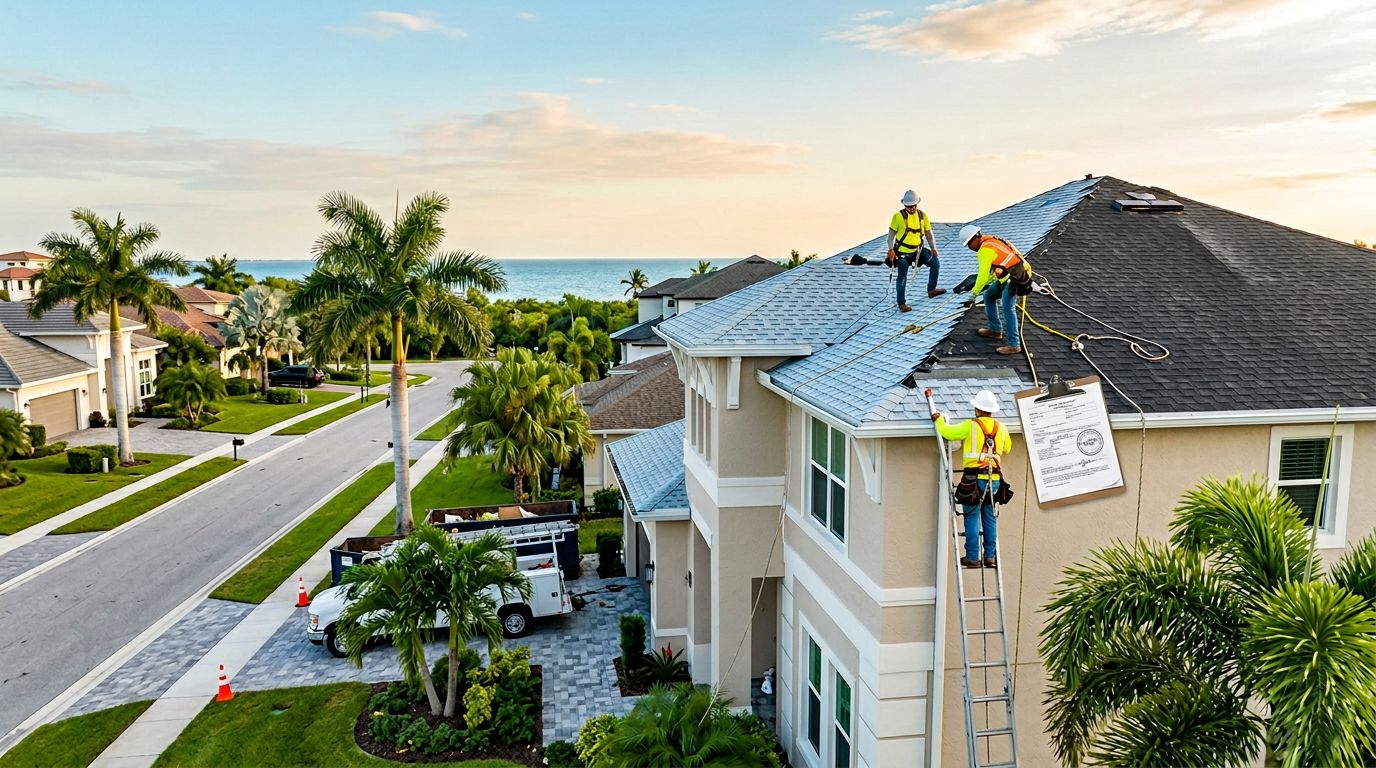
A new roof in Cape Coral isn't just a home upgrade, it's storm protection. That's why the city takes permitting seriously. If you skip the paperwork, you can end up with failed inspections, stop-work orders, insurance headaches, or problems at resale.
This guide breaks down the Cape Coral roofing permit process in plain English. You'll see what typically needs a permit, what documents hold projects up, and how to keep inspections moving so your roof gets closed out the right way.
Know when you need a Cape Coral roofing permit (and who should pull it)
In Cape Coral, most roof replacements need a permit. Many "big" repairs do too, especially if they affect the roof system, structure, or code-required wind performance. Think of the permit like a boarding pass. You might feel ready to travel, but you still need the right proof to get on the plane.
Here's what usually triggers a permit:
- Full roof replacement (re-roof)
- Changing roof type or assembly (for example, shingles to tile or metal)
- Repairs tied to structural sections, decking, trusses, or major dry-in work
- Work that changes how the roof resists wind uplift (common in hurricane zones)
Small repairs may not require a permit if they're truly minor and non-structural. Still, "minor" can be a gray area after storms, especially when water intrusion spreads. When in doubt, confirm before you start.
Who pulls the permit matters too:
- Licensed contractor (most common) : The roofing contractor pulls the permit and owns the process, including inspections and corrections.
- Owner-builder (special case) : Homeowners can sometimes apply, but you take responsibility for code compliance and inspections. That risk surprises people.
If you want a deeper explanation of what usually requires approval locally, this page covers Cape Coral roof replacement permit requirements in homeowner-friendly terms.
Cape Coral roofing permit process step by step (as of March 2026)
Cape Coral permitting runs through the city's Development Services system. Most roofing permits move faster when the "roof packet" is complete on day one.
Step 1: Confirm the scope and permit type
Before paperwork, get clear on what you're doing.
- Define the scope in writing : tear-off, underlayment, flashing, vents, deck repairs, and final roof type.
- Decide who is the permit holder : contractor (recommended) or owner-builder.
- Check HOA rules if you have them, because they can affect materials and color approvals.
Step 2: Verify licensing and local registration
Florida requires roofing work to be done by properly licensed contractors (unless you qualify as an owner-builder).
- Verify the roofer's Florida license through the state's DBPR license search tool.
- Confirm insurance (general liability and workers' comp, when applicable).
- Ask if they're registered to permit in Cape Coral , because missing registration can stall issuance.
A common delay: the company name on the contract does not match the license holder or the permit applicant. Get that matched before the application goes in.
Step 3: Gather the "roof packet" documents early
This is where most delays start, especially with hurricane-related paperwork.
Typical items include:
- Permit application with accurate job address and parcel ID
- Owner info that matches property records
- Roof data sheet or city-required roofing forms (often updated over time)
- Property survey or site plan (commonly requested for verification)
- Product documents for the exact materials you'll install (more on this below)
Step 4: Line up Florida Product Approvals (they must match the build)
Florida relies heavily on approved roof systems. Cape Coral reviewers often want product approval details ready up front, especially for wind resistance items.
Bring approvals for the components you're actually using, such as:
- Shingles, tiles, or metal panels
- Underlayment and peel-and-stick products
- Fasteners (when part of the listed assembly)
- Roof accessories if required by the assembly
If the permit set says one underlayment, but the crew orders another, you can trigger corrections and inspection failures. That's avoidable.
Step 5: Handle the Notice of Commencement (NOC) timing
In Florida, a Notice of Commencement is commonly required when the job value hits the legal threshold (often discussed as $2,500 or more). You record it with the Lee County Clerk of Court.
Two timing tips help:
- Record the NOC before the first inspection is needed.
- Make sure names match across the contract, permit, and NOC.
Step 6: Submit the permit application (online or in person)
As of March 2026, Cape Coral commonly accepts applications through its online portal, and also supports in-person help at city offices. If you submit online, keep PDFs clean and clearly named. Reviewers move faster when they can find what they need in seconds.
Step 7: Respond fast to corrections
Roof permits often get approved quickly, but corrections happen when a packet is incomplete.
When you get a correction notice:
- Answer every comment in order
- Upload revised pages, not phone photos
- Keep product approvals consistent with the listed roof system
Step 8: Post the permit and schedule inspections as the job moves
Once issued, keep the permit card and approved plans accessible for the crew and inspector. Then schedule inspections early so drying-in the roof doesn't turn into a work stoppage.
Inspections, storm-time rules, and closing out the permit
Permits don't end when the last shingle goes on. They end when the city approves the final inspection and closes the permit. In Cape Coral, inspectors focus on wind performance details because roofs fail first in hurricanes.
Here's a simple way to think about inspections: the city wants proof your roof works as a system, not just a surface.
This table shows common inspection checkpoints for roofing projects:
| Inspection checkpoint | What the inspector is looking for |
|---|---|
| Dry-in or in-progress (when required) | Underlayment install, flashing prep, leak protection before covering |
| Roofing (mid-job) | Attachment details, vents, edge areas, materials matching approvals |
| Final | Finished roof system, flashing, penetrations, overall code compliance |
Cape Coral sits in a high-wind region, so permit reviewers and inspectors tend to care about uplift resistance, edge details, and secondary water protection. If you want to understand what may change during the current code cycle, this guide on 2026 FBC updates affecting Cape Coral roofing permits helps you know what questions to ask before materials arrive.
Temporary tarps and emergency repairs after a storm
After a major storm, you may need a tarp fast. In many Florida cities, temporary emergency covering is allowed to stop water intrusion, while you plan permitted repairs. Still, don't assume "emergency" means "anything goes."
A safe rule of thumb:
- Tarping and short-term water protection is often treated differently than permanent repair.
- Permanent roof repair or replacement still requires a permit in most cases.
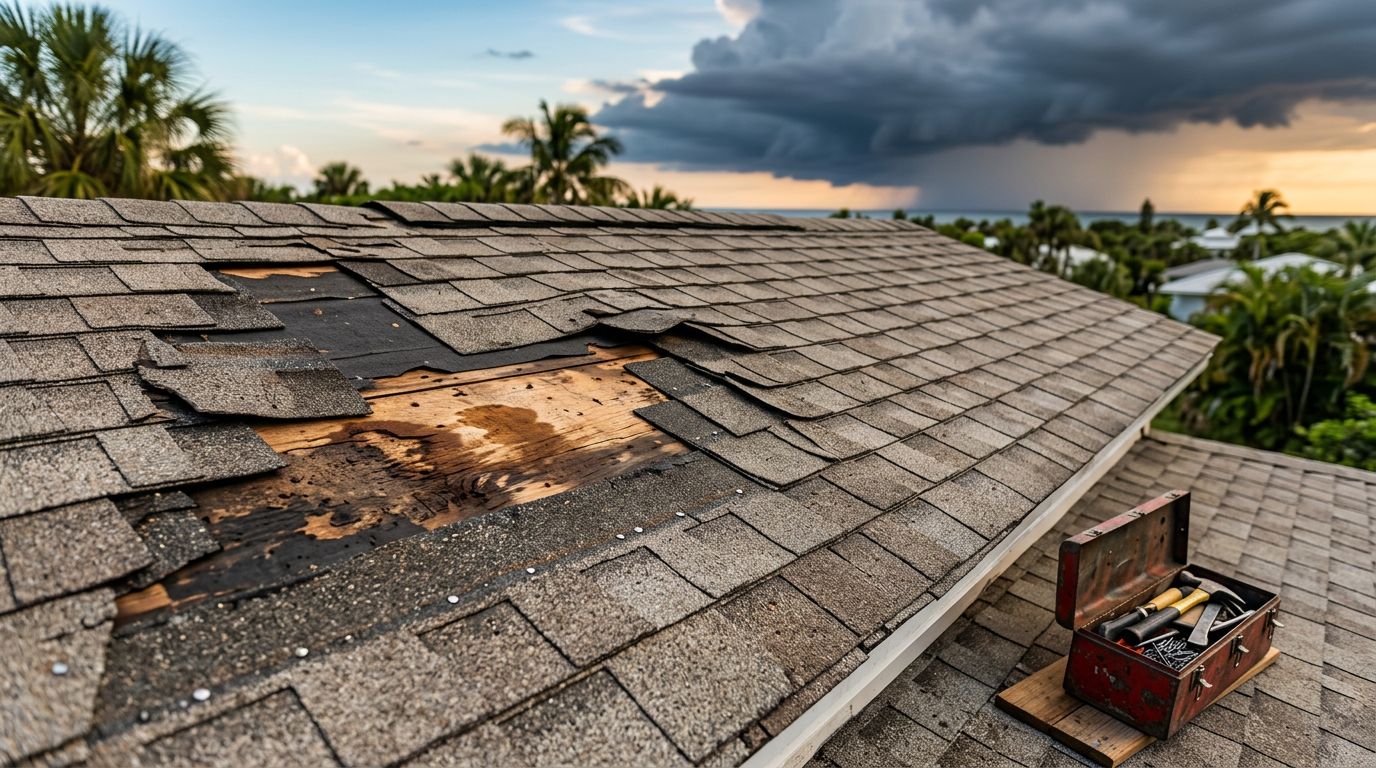
Take photos before and after tarping. Save invoices and dates, because insurers often ask for that timeline later. Also, avoid structural changes under the label of "temporary." If decking is damaged or large areas are removed, talk to a licensed roofer and the city about the right next step. For help with urgent leaks and storm damage, see Cape Coral roof repair permit requirements.
Delay-proof checklist for homeowners and small contractors
Most permit slowdowns come from preventable details. Use this quick checklist before you submit:
- Parcel ID and address match the county property record
- Permit holder matches the licensed contractor (or approved owner-builder)
- NOC is recorded on time (when required), with matching names
- Product approvals match what's listed and what's ordered
- Roof assembly details are consistent , especially underlayment and fastener notes
- Documents are legible PDFs , not blurry photos
- Contractor is registered to pull permits in Cape Coral
- Inspection scheduling is planned , so dry-in does not sit waiting
Conclusion
Permitting can feel like extra work, but it's also your paper trail that the roof meets code for Cape Coral wind and rain. Start with a clear scope, match your product approvals to the real material order, and keep the NOC timing tight. When the last inspection passes and the permit closes, you've protected your home and your resale value. A Cape Coral roofing permit done right is peace of mind you can file away for the next storm season.