Signs Your Soffit and Fascia Need Repair in Cape Coral

Signs Your Soffit and Fascia Need Repair in Cape Coral

Most Cape Coral homeowners look at shingles after a storm. Fewer check the roof edge. That's often where trouble starts.

Your soffit sits under the roof overhang. The fascia runs along the front edge, usually behind the gutter. Together, they help vent the attic, support the gutter line, and block water and pests from slipping in. In Cape Coral, soffit and fascia face heat, humidity, salt air, and hard summer rain. When they start to fail, a small trim issue can turn into rot, mold, and bigger roof damage.

Why Cape Coral homes put extra stress on soffit and fascia

Cape Coral's climate is rough on exterior wood and trim. High humidity keeps surfaces damp longer. Salt air can wear down paint, metal fasteners, and sealants. Then storms add wind-driven rain that pushes water into weak spots.

Gutters make the problem worse when they clog or overflow. Instead of moving water away, they dump it right onto the fascia board. Over time, that repeated soaking softens the material and opens the door to rot. Think of it like a sponge left by the sink. It doesn't need a flood to break down, just constant moisture.

The soffit has its own job to do. It helps your attic breathe. When vents get blocked, warped, or damaged, hot moist air can build up under the roof. As a result, mold, mildew, and wood decay become more likely.

Prompt soffit fascia repair can stop that chain reaction early. If water has already moved past the trim and into the roof edge, it's smart to look into Cape Coral roof repair services at the same time.

Exterior signs you shouldn't ignore

Some warning signs are easy to spot from the driveway. Others show up only after a few rainy weeks. This quick guide helps you know what you're seeing.

Warning sign What it may mean
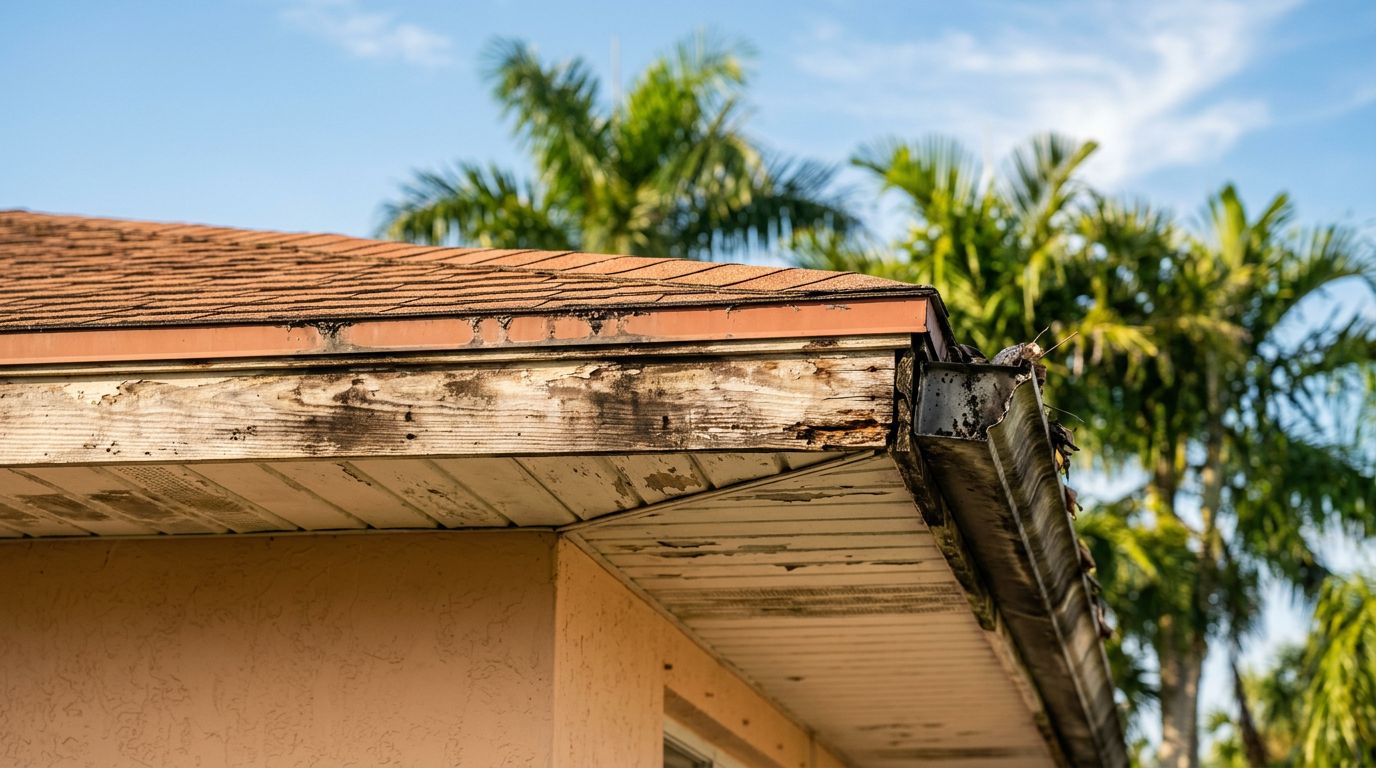
Peeling or bubbling paint Moisture is trapped behind the surface
Black, green, or brown stains Mold, mildew, or repeated water overflow
Soft, swollen, or crumbling areas Rot from long-term moisture exposure
Sagging panels or open seams Failed fasteners, water damage, or pests
Gutters pulling away from the house Weak fascia that can't hold the gutter load

The first clue is often paint failure. If the fascia paint blisters or flakes, don't treat it like a simple cosmetic issue. In Cape Coral, paint usually breaks down because water keeps getting into the material below.

Staining matters too. Dark streaks, green film, or mildew spots under the eaves often mean the area stays wet. That could come from poor drainage, clogged gutters, or gaps that let rain in. Because the air is already humid here, those damp spots don't dry fast.

Next, look for soft, swollen, or sagging sections. Fascia boards should look straight. Soffit panels should sit flat. If either one bows, dips, or looks uneven, there may be rot behind the surface.

A gutter pulling away from the house often points to fascia damage, not just a gutter problem.

That's a big one in Southwest Florida. During heavy downpours, gutters fill fast. If the fascia behind them is weak, the added weight can pull screws loose and make the whole line dip.

Also watch for pest activity. Small gaps along the eaves attract wasps, birds, squirrels, and insects. If you notice nesting material, buzzing near the soffit, or tiny openings at the roof edge, damage may already be present.

Signs inside the home can point to roof-edge damage

Not every soffit or fascia problem shows up outside first. Sometimes the clues appear in the attic or along your interior walls.

A musty smell near the attic is one example. So is damp insulation. When soffit vents fail or get blocked, airflow drops. Then heat and moisture build up under the roof. That stale, humid air can feed mold and mildew, especially during Cape Coral's wetter months.

Higher cooling bills can also be a clue. Proper soffit ventilation helps move hot air out of the attic. When that system struggles, your attic stays hotter, and your AC works harder. You may not notice the damaged panel right away, but you'll feel the effect on comfort and energy use.

Water stains near the top of exterior-facing walls are another red flag. In some homes, roof-edge leaks travel farther than people expect. Instead of dripping straight down, water follows framing and shows up away from the actual opening.

Roof-edge trouble also tends to travel with other roofing issues. If you're seeing curled shingles, missing tabs, or ceiling spots too, it helps to compare those symptoms with these signs your shingle roof needs repair.

Why waiting costs more, and what to do next

Soffit and fascia damage rarely stays small. Moisture spreads. Wood weakens. Mold grows. Pests find a path in. Then a basic trim repair can turn into gutter replacement, roof decking work, or attic cleanup.

That's why waiting is expensive in Cape Coral. Storm season doesn't give damaged areas much time to recover. One loose panel or soft fascia board can become a much larger problem after the next heavy rain. If you're weighing the cost of acting now versus later, this guide on what roof repairs typically cost can help you plan.

Start with a ground-level check after storms. Look under the eaves, around corners, and behind the gutter line. Don't paint over stains or seal over rot. Those fixes hide the issue, but they don't stop it.

Then call a licensed local contractor. Ask for an inspection of the soffit, fascia, gutter attachment points, roof edge, and attic ventilation. A contractor who knows Cape Coral homes can spot the moisture patterns, storm wear, and salt-air damage that often get missed.

The roof edge may not get much attention, but it protects a lot. When soffit and fascia start to fail, the signs are usually there if you know where to look. Early repair protects your attic, gutter system, and roof from bigger problems. In a climate like Cape Coral's, acting fast is usually the cheaper move.

By Infinity Roofing March 25, 2026
How much should you budget when a leak shows up after a hard Cape Coral rain? In March 2026, the short answer is cape coral roof repair cost usually falls between $100 and $2,000+ , with storm-driven or hidden damage pushing totals much higher. That wide range exists for a rea...
By Infinity Roofing March 24, 2026
Ever cleaned your gutters and found gritty, black sand? That material is usually shingle granules, and in Southwest Florida, it gets homeowners' attention fast. The short answer is simple. Some shingle granule loss is normal, especially as a roof ages. However, heavy or uneven...
By Infinity Roofing March 23, 2026
A roof claim can look simple until the deductible shows up. Then the numbers change fast. For Florida homeowners, Florida hurricane deductibles often decide whether a roof claim pays a lot, a little, or nothing at all. If the storm meets Florida's hurricane rules, the deductib...
By Infinity Roofing March 22, 2026
A roof leak can feel like a small problem at first. Then the bucket comes out, the stain spreads, and the permit question shows up right behind it. If you're planning roof work in Cape Coral, here's the short version: full re-roofs need permits, and many repairs do too . Small...