Clay Tile Vs Concrete Tile Roofs In Southwest Florida

Clay Tile Vs Concrete Tile Roofs In Southwest Florida

A tile roof looks solid, feels solid, and in Southwest Florida it has to act solid. Between summer downpours, salt air, and hurricane season, your roof is your home's main shield.

If you're weighing a clay vs concrete tile roof , the best choice usually comes down to three things: how your home is built, what style you want, and what you expect over the next 20 to 50 years. Both materials can perform well here, but they don't behave the same once real weather hits.

This guide breaks down the differences in plain language, with proposal tips you can use right away.

What Southwest Florida weather demands from a tile roof

Tile roofs succeed in Lee, Collier, Charlotte, and Sarasota counties because they handle heat and sun well, and they don't rot like wood products. Still, the tile itself is only part of the system. In practice, Southwest Florida performance depends on how the whole assembly resists wind, sheds water, and survives salt and UV.

High wind is the big one. Tile is heavy, which helps, but wind doesn't "lift weight" so much as it finds edges and weak points. Ridge lines, hips, rakes, and eaves take the worst pressure changes. That's why attachment patterns, foam adhesives (when approved), and edge details matter as much as the tile material.

Rain is the next stress test. Tile is a water shedding roof covering, not a waterproof lid. Wind driven rain can push under laps, especially on complex roofs. As a result, the underlayment, flashing, and transitions around walls and penetrations do the real waterproofing work.

Salt air adds another layer. Near the coast, corrosion shows up first at fasteners, clips, and flashing. That means the metal type and coating choices matter. Even inland, Southwest Florida humidity can speed up wear if ventilation is poor.

So when someone asks, "Is clay or concrete better in Florida?", the honest answer is: both can work, but only if the roof is designed and installed as a high wind, high rain system. The tile choice is the final look and the long-term durability layer.

Clay vs concrete tile roof: how they really compare on homes in SWFL

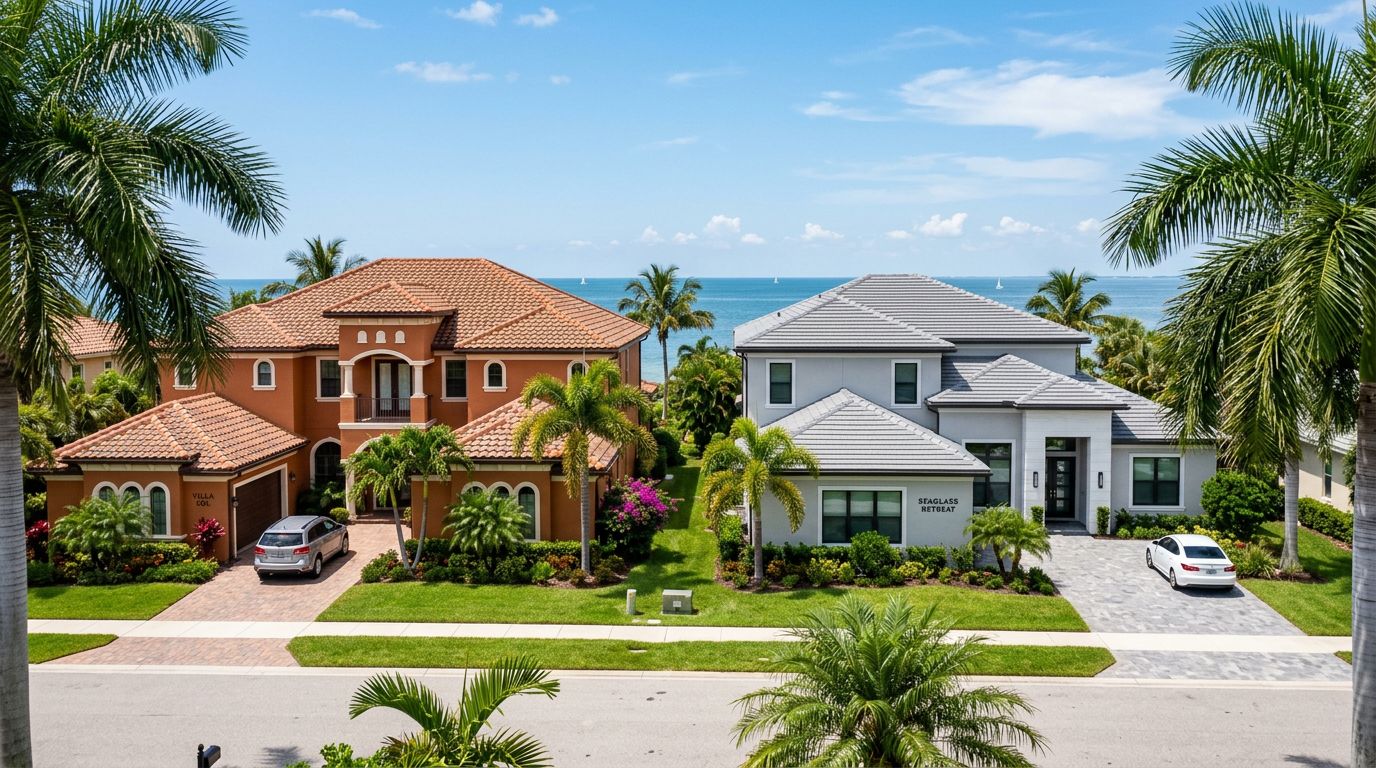
Clay and concrete tiles can look similar from the street, especially in popular barrel profiles. Up close, they differ in density, color behavior, and how they age.

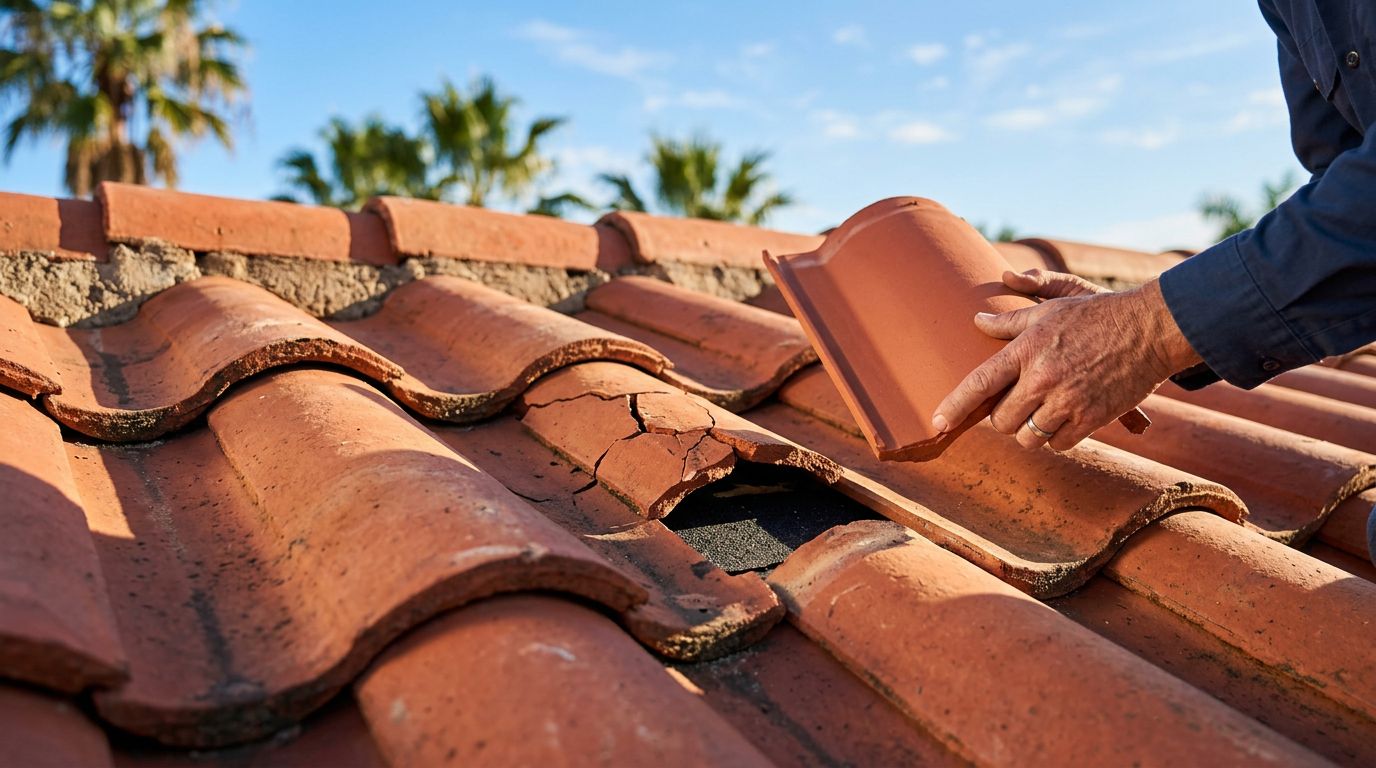
Clay tile is kiln-fired. It tends to hold color well because the color is often part of the body (depending on the product). Many homeowners like the crisp edges and classic Mediterranean look. Clay can last a long time, but individual tiles can still crack from impact, foot traffic, or a bad installation.

Concrete tile is made from a cement-based mix. It's widely used across Southwest Florida because it often hits a sweet spot on cost, availability, and style options. Concrete can be very durable, but it's typically more porous than clay. That can make staining, mildew, or color change more noticeable over time, especially in shaded areas.

Here's a quick comparison to ground the decision:

Category Clay tile (typical) Concrete tile (typical)
Look Classic, refined finish Wide range of profiles and finishes
Color over time Often holds color longer Can weather faster depending on finish
Weight Heavy Usually heavier or similar, varies by profile
Moisture behavior Less porous in many products More porous in many products
Breakage risk Can be brittle under impact Strong, but still cracks under impact
Common SWFL fit Premium look, long-term ownership Popular choice for value and availability

The takeaway: for most homeowners, clay's biggest advantage is long-term appearance and tradition, while concrete's biggest advantage is value and flexibility.

One more point that surprises people: your roof's life is often limited by components you don't see. The tile can outlast the underlayment, sealants, and flashings if they weren't chosen well.

If a tile roof leaks, the problem is usually the underlayment or flashing, not "bad tiles."

If you want a broader overview of systems used locally, start with these tile roof systems SWFL options and how they fit different home styles.

Installation, code realities, and what to demand in your proposal

In Florida, tile roofing isn't just "nail it down." Installers must match the roof to design wind speed, deck type, slope, and the specific tile's approved installation method. In other words, the tile brand and model matter, and so does the paperwork behind it.

At a high level, expect these items to drive performance in Southwest Florida:

  • Product approval and system matching : Your tiles and accessories should be approved for use in Florida, and installed exactly per the tested method for that tile.
  • Attachment method : The fastening pattern (and whether foam adhesive is allowed) should match your roof's wind design and geometry.
  • Underlayment choice : Self-adhered membranes, high-temp peel-and-stick in valleys, or upgraded synthetics may be appropriate depending on slope and details.
  • Flashing and metals : Valleys, wall flashings, drip edges, pipe boots, and chimney details should use corrosion-resistant metals suited to coastal exposure.
  • Ventilation : Poor attic ventilation traps heat and moisture, which can shorten underlayment life and stress the structure.

Because requirements can vary by municipality and insurer, treat this as general education, not a substitute for a local evaluation. Always confirm details with a licensed Florida roofing contractor , and when structural questions come up, a licensed engineer.

To keep quotes comparable, use this short checklist.

What to verify on tile roofing proposals (before you sign)

  • Exact tile : Manufacturer, profile, and color name, plus matching ridge and hip products.
  • Underlayment scope : Type, layers, where peel-and-stick is used (valleys, eaves, transitions), and how it's sealed.
  • Fastening plan : Fastener type and corrosion rating, fastening pattern by roof zone, and ridge and hip attachment.
  • Flashing details : Valley metal type, wall flashings, kickout flashings where needed, and how penetrations are sealed.
  • Ventilation plan : Intake and exhaust method, and how they keep pests and wind driven rain out.
  • Permits and inspections : Who pulls the permit, and what inspections are included.

If you're also trying to ballpark budget, focus on what drives cost, not a single number. Tile roof totals swing based on tile type, roof height, tear-off needs, deck repairs, underlayment level, and the amount of hips, valleys, and penetrations. For a deeper breakdown of those line items, see this tile roof replacement cost Cape Coral guide.

Questions to ask a roofer about clay vs concrete

  • Which tile models are readily available right now? Lead times can change fast.
  • How will you protect tiles during installation? Ask about walk pads, staging, and breakage policy.
  • What's your plan for valleys and wall transitions? Those details make or break leak resistance.
  • How do you handle cracked tiles later? Ask if they stock attic spares or can source matches.
  • Will you inspect the deck and structure for tile load? This matters on older homes and additions.

Red flags that often lead to problems

  • The proposal doesn't name the tile, underlayment, or fastening method.
  • The contractor talks mostly about tile and barely mentions flashing.
  • You hear "we always do it this way" with no reference to the specific tile system.
  • There's no plan for replacing damaged wood, or they won't discuss deck attachment.
  • They dismiss maintenance, especially on roofs under trees.

If you're on the fence between patching and full replacement, compare the long-term risk using this tile roof repair vs replacement Cape Coral resource.

Conclusion: choosing the right tile for your home, not just the neighborhood

Clay and concrete can both be great choices in Southwest Florida. Clay often wins on long-term appearance, while concrete often wins on availability and value. Still, the best looking tile won't help if the system under it is weak.

Focus on the proposal details, especially underlayment, flashing, and attachment. Then pick the tile that fits your home's style and your timeline. If you'd like, bring two quotes side by side and ask one simple question: which one proves what you're getting?

By Infinity Roofing March 7, 2026
Sticker shock is common when you start pricing a Cape Coral metal roof . The good news is the numbers make more sense once you see what you're actually buying: thicker materials, tougher attachment, better water control, and longer service life than most roofs. In March 2026,...
By Infinity Roofing March 6, 2026
Replacing a roof in Florida comes with more paperwork than most homeowners expect. One form, the Florida notice of commencement , can affect your permit, your timeline, and even whether you face surprise lien claims later. If your roof replacement is $2,500 or more (most are),...
By Infinity Roofing March 5, 2026
A roof claim can feel simple. A storm hits, shingles lift, water shows up, you file. Yet Florida roof claim denials still happen every day in 2026, often for reasons that frustrate homeowners because they sound like technicalities. The good news is that many denials follow pat...
By Infinity Roofing March 4, 2026
A new roof is a big deal in Florida. It's also one of the easiest jobs to get burned on if you skip basic checks. Before any deposit, confirm the contractor holds an active Florida roofing license , carries real insurance, and plans to pull the right permits. Think of it like...